Hot runner systems rely on high-performance heating elements to maintain precise plastic melt temperatures at the injection nozzle. However, failing to accurately specify a custom hot runner coil heater leads to poor nozzle contact, thermal lag, and premature element failure.
For procurement engineers and B2B buyers sourcing an oem injection mold heater, providing a rough sketch or generic wattage is not enough. A coil heater is a highly engineered component that must perfectly match the nozzle’s spatial constraints and thermodynamic requirements.
To ensure rapid prototyping and accurate manufacturing at Hongtai heater factory, buyers must extract and specify five critical engineering parameters from their mold drawings.
1. Specify the Coil ID and Length for a Custom Hot Runner Coil Heater
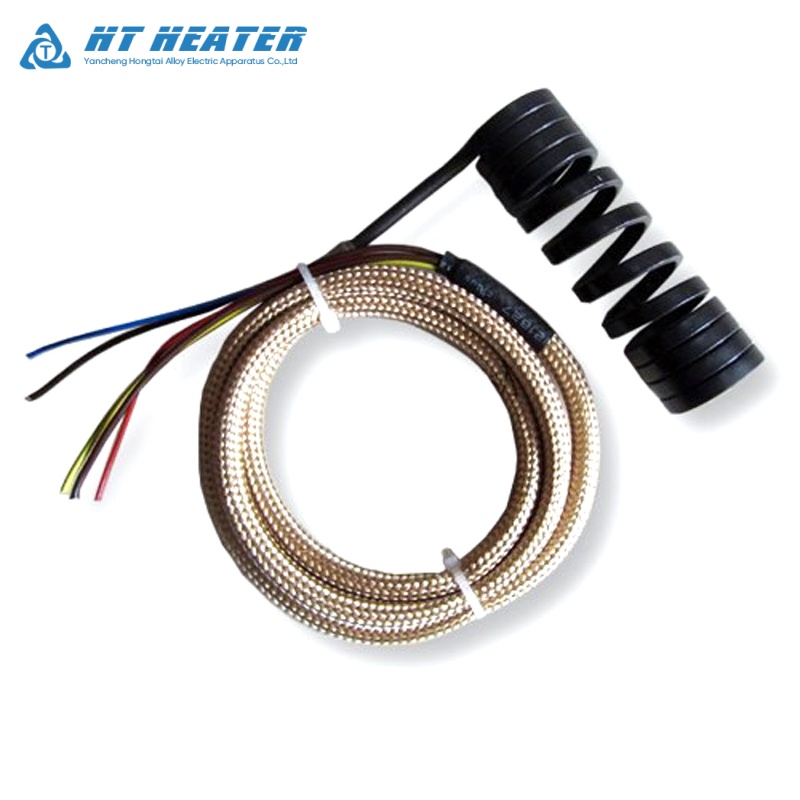
The mechanical fit between the coil heater and the hot runner nozzle directly dictates heat transfer efficiency and installation reliability. Engineers at Hongtai heater factory always emphasize that getting the Inner Diameter (ID) right is the most critical step.
Coil Inner Diameter (ID)
Always provide the actual outside diameter of the nozzle, not just a nominal heater size. The manufacturer will determine the appropriate coil ID and negative dimensional tolerance based on:
- The actual nozzle outside diameter and sheath materials.
- The heater’s cross-sectional profile and operating temperature.
- The required installation and removal method (achieving reliable contact without making it difficult to assemble).
To understand how we calculate this, read Hongtai HT-CR Coil Heater ID Tolerance: Ensuring Perfect Nozzle Fit Without Thermal Lag.
Finished Coil Length vs. Heated Length
You must separate the overall dimensions into specific zones:
- Finished Coil Length: The overall length of the fully formed coil.
- Heated Length: The active heating zone delivering power to the nozzle.
- Unheated Length: Required cold zones or transition areas.
- Total Flat Length: If ordering a straight heater for on-site forming, provide the uncoiled length and explicitly identify the heated and unheated sections.
Note: A loose fit increases thermal resistance. To avoid mechanical damage during assembly, review our How to Install Hot Runner Coil Heaters: Mounting SOP & Preventing Heater Deformation.
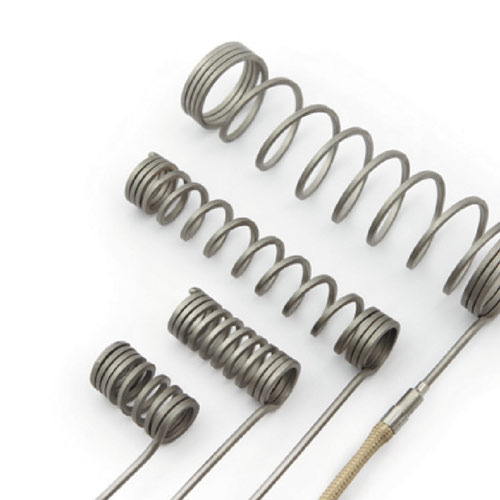
2. Select the Correct Cross-Sectional Profile
The cross-sectional shape impacts the radial footprint, mechanical strength, and the contact area with the nozzle. When Hongtai heater factory designs a custom hot runner coil heater, the profile is selected based on the nozzle diameter and available mold cavity clearance. For an in-depth geometric analysis, see Hot Runner Coil Heater Cross Section: Round vs. Square vs. Rectangular.
| Profile Type | Standard Dimensions | Application Advantages |
| Rectangular | 2.2 × 4.2 mm, 3.0 × 3.0 mm | Provides a broad flat contact surface; ideal when nozzle geometry allows a larger heating area. |
| Square | 3.3 × 3.3 mm | Balances maximum contact area with structural integrity and compact installation requirements. |
| Round | Ø3.0 mm, Ø4.0 mm | Used in highly compact designs or specialized groove/sleeve assemblies requiring a smaller or more flexible profile. |
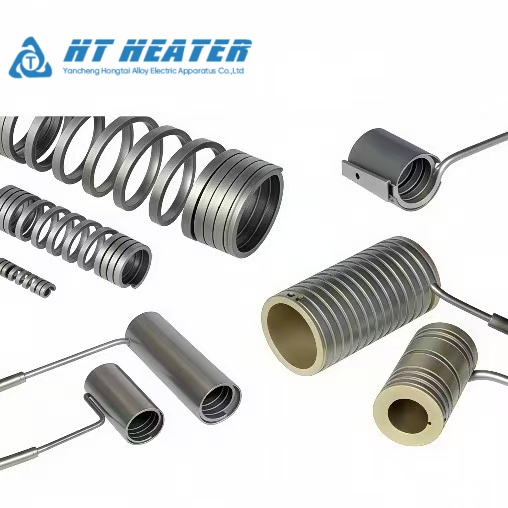
3. Define Voltage, Wattage, and Heating Distribution
Total wattage alone does not fully describe the electrical design of an OEM hot runner heater. Heat loss is rarely uniform; the tip touching the cold mold and the base touching the manifold lose heat faster than the center.
Voltage and Total Wattage
Specify the exact electrical input (e.g., 230V, 400W) so the manufacturer can determine the appropriate internal resistance and wire design. For replacement applications, specify required resistance tolerances, electrical insulation norms, and grounding requirements.
Wattage Distribution
Heat loss is rarely uniform; the tip touching the cold mold and the base touching the manifold lose heat faster than the center.
- A custom coil heater utilizes a distributed wattage profile (e.g., higher winding density at the ends) to balance the thermal load.
- While distributed wattage does not guarantee a perfectly linear temperature profile, it significantly improves uniformity and compensates for the assembly’s actual thermal behavior.
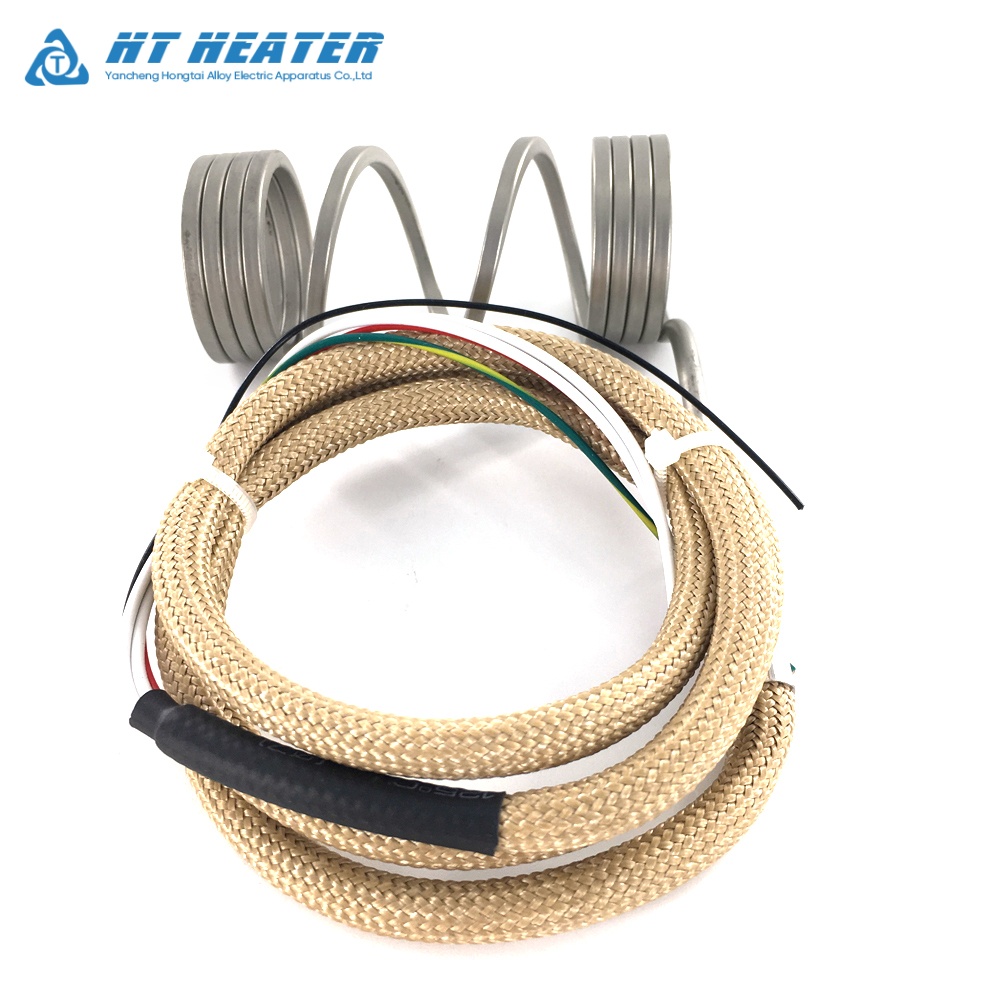
4. Thermocouple Type and Lead Exit Direction
Integrated Thermocouples
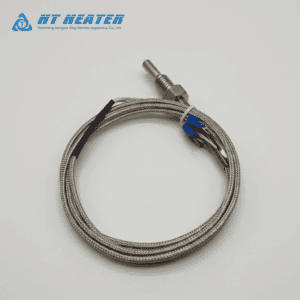
Specify Type J or Type K sensors based on the controller and target temperature range. Proper sensor placement is key to preventing dry-firing.
- Grounded Junctions: Provide faster thermal response times.
- Ungrounded Junctions: Help improve electrical isolation and reduce signal noise.
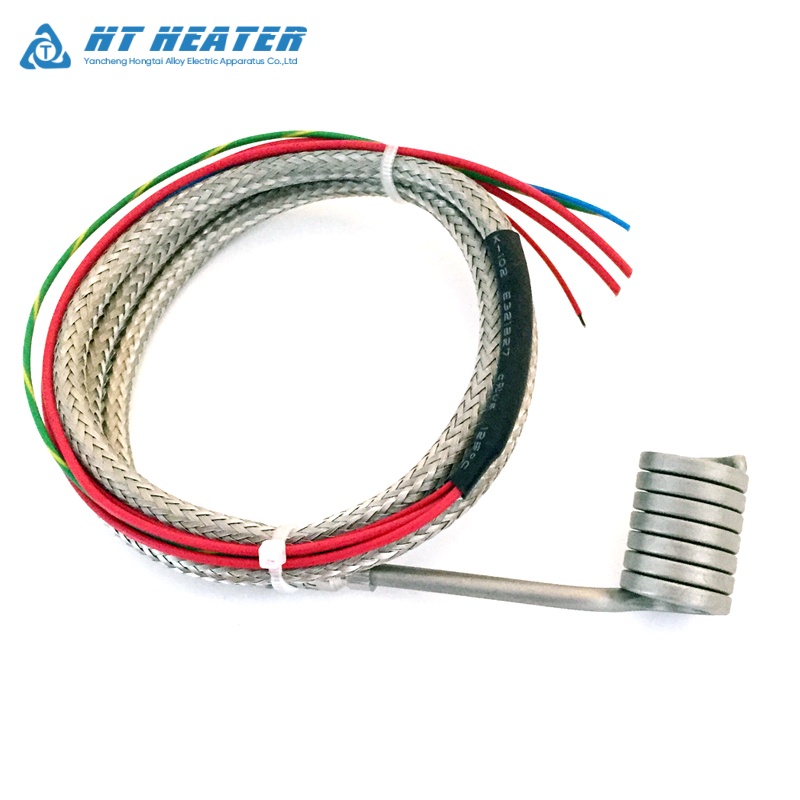
Lead Exit Orientation
Lead exit direction is a critical mechanical specification. To understand which configuration suits your mold plates, refer to Hongtai Coil Heater with Built-in Thermocouple: Type J vs. K and Lead Exit Engineering.
- Axial / Back Exit: Strictly required for modern compact mold designs to reduce the overall radial footprint. The thermocouple and power leads exit straight back, parallel to the nozzle.
- Radial / Side Exit & Right-Angle Exit: Only use if specifically required, as they protrude outward and can interfere with the mold plate.
5. Choose Lead Wire Length and Protective Sleeving
Lead wires must withstand the thermal, mechanical, and physical conditions of the injection molding environment. For a complete breakdown of sleeving choices, read Coil Heater Lead Wires: Selection, Temperature Ratings, and Protection Options.
Hongtai heater factory offers multiple sleeving options to prevent wire degradation:
- Fiberglass Sleeving: Provides flexible, high-temperature insulation for standard applications.
- Stainless Steel Overbraid: Delivers improved abrasion resistance for moving platens.
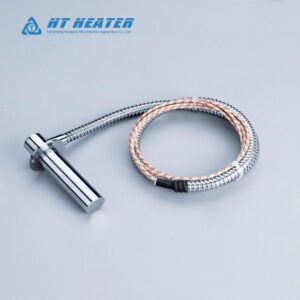
- Stainless Steel Armor Cable: Offers the highest mechanical and crush protection against plastic leakage.
- Custom Transition Head: Provides additional sealed protection against moisture or chemical contamination.
6. OEM Manufacturing Documentation (Drawings vs. Samples)
A dimensioned 2D drawing is often sufficient for straightforward replacement heaters. However, you should provide a 3D CAD model when:
- The nozzle features a complex geometry or multiple heating zones are required.
- The mold cavity has highly limited clearance and the lead exit must weave around adjacent components.
- The custom hot runner coil heater includes a customized transition head.
7. Pre-Coiled vs. Straight Delivery
- Order Pre-Coiled When: The nozzle dimensions, coil ID, and winding pattern are strictly defined, and the heater will be installed directly into the mold. Factory-formed coils are the safest choice for precision applications.
- Order Straight When: The customer will perform the final forming process, the installation requires a highly specialized shape, or the final geometry is not yet fixed.
Upgrade Your Injection Molds with Hongtai Heater Factory
Frequent heater failures due to incorrect sizing, poor thermal contact, or plastic leakage cause unacceptable downtime in high-volume injection molding. Hongtai heater factory custom-engineers every custom hot runner coil heater using precision winding techniques, high-temperature epoxies, and robust outer sheaths to guarantee reliable performance in the harshest mold environments.
Do You Want to Specify the Ideal Hot Runner Heater for Your Mold?
Hongtai heater factory provides comprehensive custom engineering to ensure your coil heaters match your precise OEM specifications. By integrating exact wattage distribution, built-in back-exit thermocouples, and high-grade lead protection, we help global mold builders eliminate thermal lag and minimize costly maintenance downtime.
Company: Hongtai heater factory
Technical Sales Consultation: Contact Hongtai Engineering Team
Contact Us Hot Runner Experts: www.hongtai-heater.com
B2B Related Technical Resources
- Nozzle Fit & Tolerance: Hongtai HT-CR Coil Heater ID Tolerance: Ensuring Perfect Nozzle Fit Without Thermal Lag
- Thermal Profile Design: Distributed Wattage Coil Heater: Optimizing Hot Runner Temperature Profiles
- Air-Gap Elimination: Hongtai Pressed-In Brass Hot Runner Heater Design: Eliminate Air Gaps & Thermal Lag in Hot Runners
- Sensor & Feedback Integration: Coil Heater with Built-in Thermocouple: Type J vs. K and Lead Exit Engineering
- Sheath Metallurgy Selection: Sheath Materials for Hot Runner Coil Heaters: Stainless Steel vs. Nickel
- Cross-Section Geometry: Hot Runner Coil Heater Cross Section: Round vs. Square vs. Rectangular
- Lead Wire & Terminal Protection: Coil Heater Lead Wires: Selection, Temperature Ratings, and Protection Options
- Installation Standard SOP: How to Install Hot Runner Coil Heaters: Mounting SOP & Preventing Heater Deformation
- Energy Efficiency Upgrades: Insulated Coil Heater Guide for Hot Runners
- Field Failure Diagnostics: Troubleshooting Hot Runner Coil Heater Failures: Element Burnout and Current Leakage