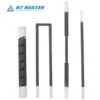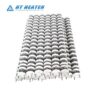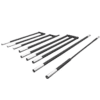
In the design of high-temperature industrial furnaces and precision ceramic kilns, when the chamber temperature exceeds the physical limits of metallic resistance alloys, non-metallic Silicon Carbide (SiC) and Molybdenum Disilicide (MoSi2) Heating Elementsbecome the two dominant heating technologies. If you are still mapping the thermal boundaries between metal wire and basic ceramics, our foundational guide on Industrial Furnace Heating Elements: NiCr vs. SiC vs. MoSi₂ provides a comprehensive baseline. However, many OEM engineers fall into a common trap…
In reality, deciding between SiC vs. MoSi2 Heating Elements is a complex systems engineering task. It requires designers to comprehensively evaluate thermal cycling frequency, atmosphere chemical compatibility, power supply architecture, and long-term maintenance costs. This guide uses real-world engineering scenarios and technical comparisons to help you match the most reliable heating solution to your industrial kiln.
1. SiC vs MoSi2: Key Differences at a Glance
| Engineering Parameter | Silicon Carbide (SiC) | Molybdenum Disilicide (MoSi2) |
|---|---|---|
| Max Element Temp (Air) | Typically 1550°C–1625°C (varies by grade) | Typically 1700°C–1850°C |
| Resistance Behavior | Progressively oxidizes and increases in resistance (Aging) | Resistance remains relatively stable; does not age |
| Power Supply Requirement | Multi-tap transformer (to compensate for resistance aging) | SCR phase-angle controller + step-down transformer (to limit cold-state inrush current) |
| Mechanical Characteristics | Brittle and rigid at all temperatures | Extremely brittle at room temp, but becomes plastic and deformable at high temps (> 1200°C) |
| Element Replacement | Must be replaced in complete series sets (to avoid new/old resistance mismatch) | Supports individual element replacement (new and old elements can be mixed) |
2. Operating Temperature: When Should You Choose SiC or MoSi2 Heating Elements?
Temperature is the first threshold in selection, but you must strictly distinguish between furnace chamber temperature and element surface temperature.
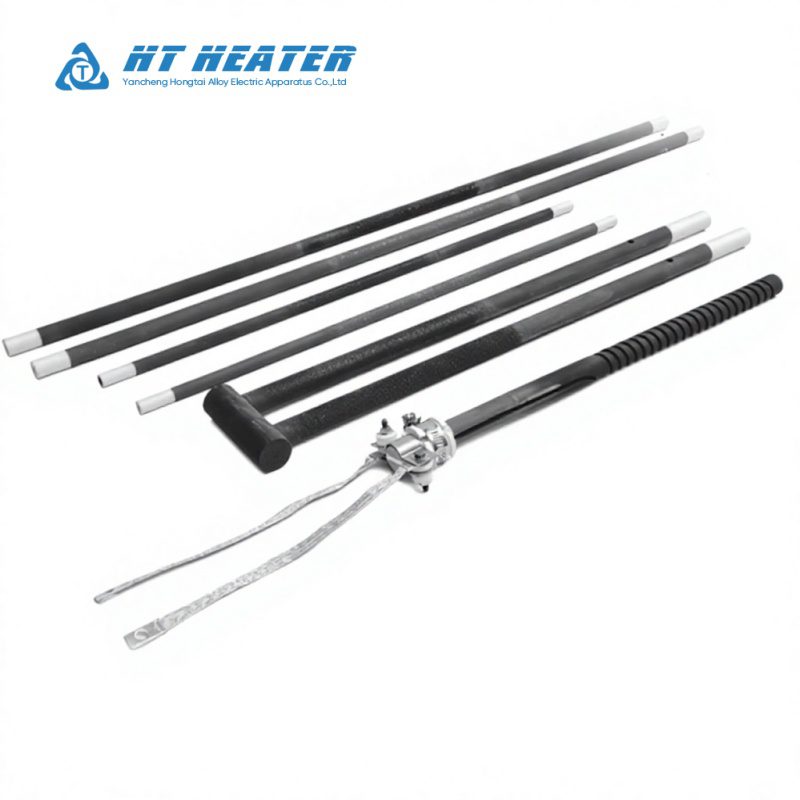
- The SiC Sweet Spot (1000°C – 1450°C): For most standard ceramic sintering, powder metallurgy, and glass melting, SiC is a highly cost-effective choice. Note that while some high-density SiC grades can reach surface temperatures of 1600°C, running the furnace chamber continuously at this absolute limit will drastically shorten the element’s service life.
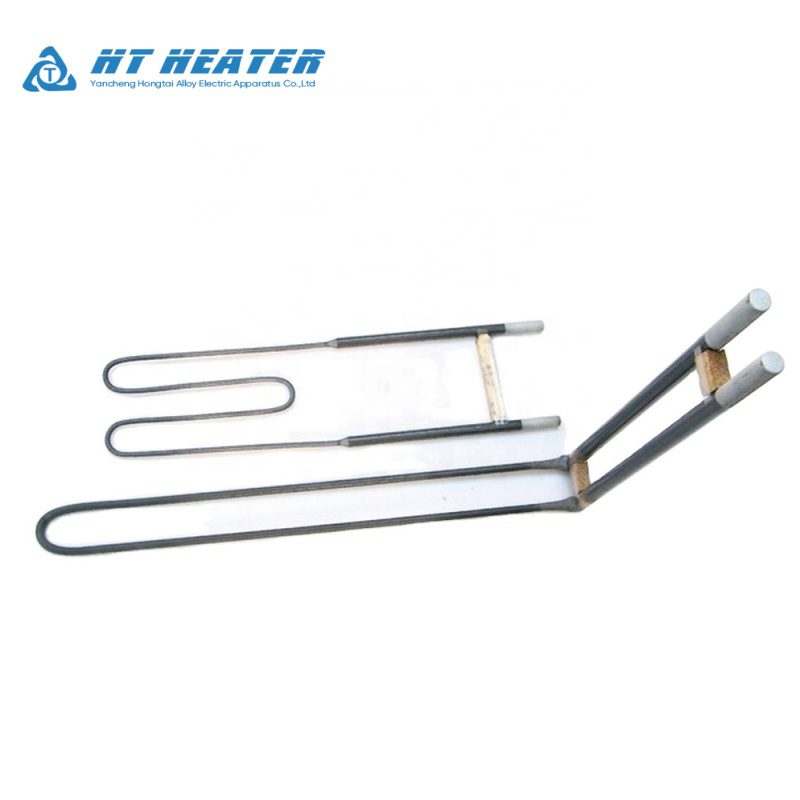
- The MoSi2 Dominance Zone (1500°C – 1750°C): When furnace temperature requirements exceed 1500°C, MoSi2 is practically the only stable and reliable heating element for oxidizing atmospheres. Its protective silicon dioxide (SiO2) glass film possesses exceptional self-healing capabilities at extreme temperatures.
3. Furnace Atmosphere: Oxidizing, Reducing and Nitrogen Environments
The chemical composition of the furnace atmosphere often has a devastating impact on heating element lifespan. Never apply maximum temperature limits from clean air to special atmospheres.
- Oxidizing Atmospheres: Both materials perform exceptionally well. The SiO2 protective film maintains optimal protection in these conditions.
- Nitrogen Environments: In high-temperature pure nitrogen, SiC reacts above 1350°C to form insulating silicon nitride, causing severe resistance drift. Standard MoSi2 is similarly attacked by nitrogen above 1250°C. If operation in high-temperature nitrogen is mandatory, you must specify specialized grades optimized for nitrogen from the manufacturer.
- Reducing Atmospheres (e.g., H2, CO): Reducing gases strip away the SiO2 protective layer. In dry hydrogen, the maximum operating temperature for SiC must typically be derated to around 1150°C, while special MoSi2 grades can withstand up to 1350°C or higher depending on the dew point.
4. Resistance Aging and Power Control
The fundamental differences in electrical characteristics directly dictate the design and cost of your control panel.
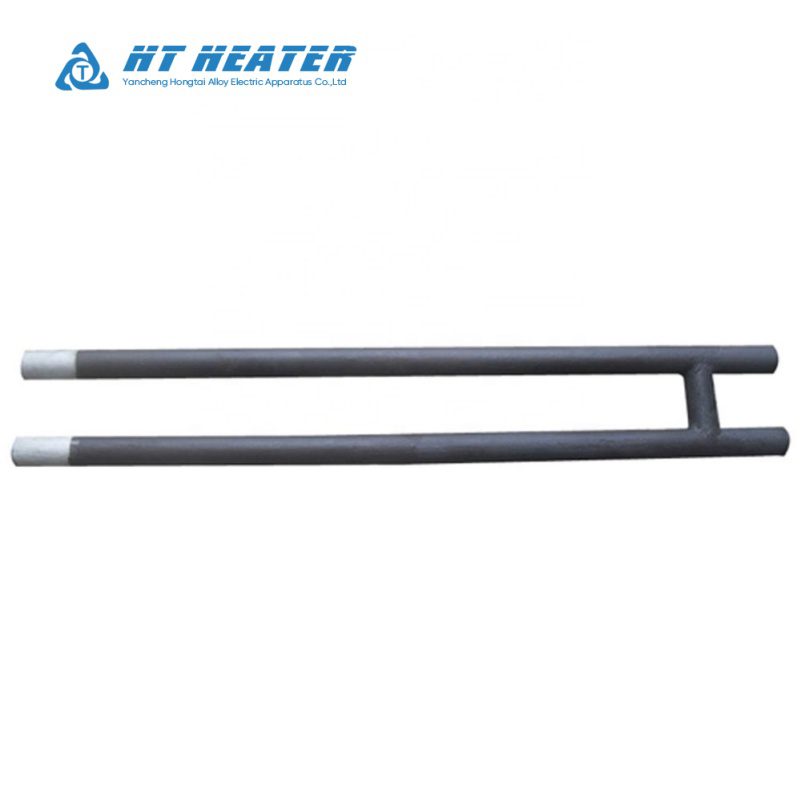
- SiC Aging Compensation: SiC elements slowly oxidize during operation, causing their resistance to increase progressively. To maintain a constant heating power, the power supply must be equipped with a Multi-Tap Transformer to provide sufficient voltage headroom to compensate for this rising resistance.
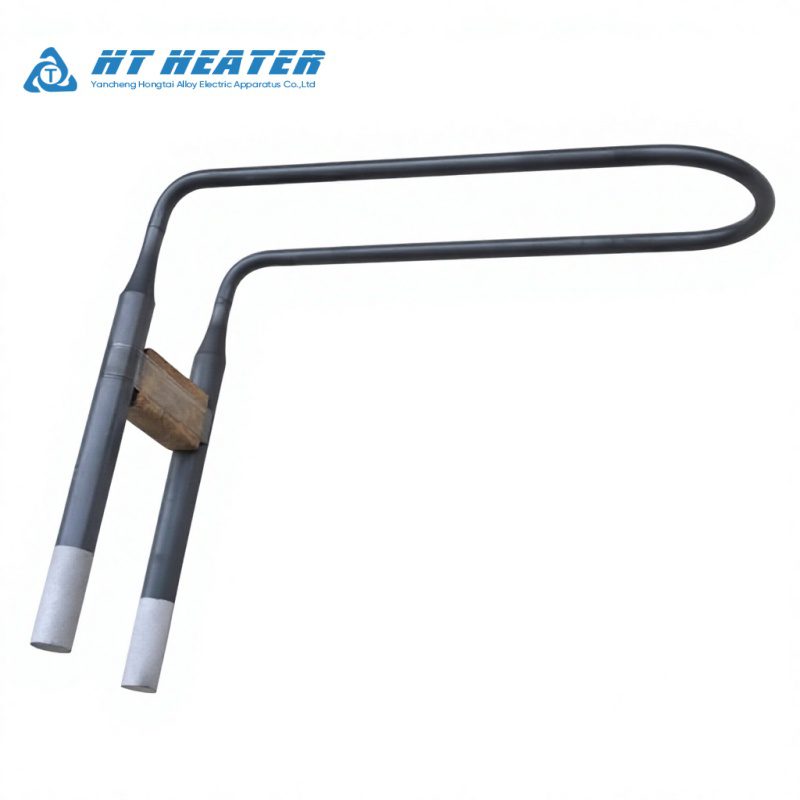
- MoSi2 Constant Resistance & Cold-State Current Limiting: MoSi2 does not experience significant resistance aging. However, its cold resistance at room temperature is extremely low (exhibiting a strong Positive Temperature Coefficient, PTC). Applying full voltage during a cold start will trigger a catastrophic short-circuit-level inrush current. Therefore, it must be paired with an SCR power controller featuring soft-start and current-limiting functions.
5. Thermal Cycling, Installation and Mechanical Design
Thermal stress and mechanical structure are critical factors determining the continuous operational stability of an industrial furnace.
- Thermal Cycling & Pesting Risk: For intermittent kilns with frequent startups, shutdowns, and rapid heating/cooling rates, SiC exhibits better thermal shock resistance. Conversely, if standard MoSi2 elements dwell in the 400°C – 700°C temperature range for extended periods, they are prone to intergranular oxidation, which causes the element to disintegrate into powder (known as “pesting”). If the process requires frequent passes through this zone, modified anti-pesting MoSi2 grades must be selected.
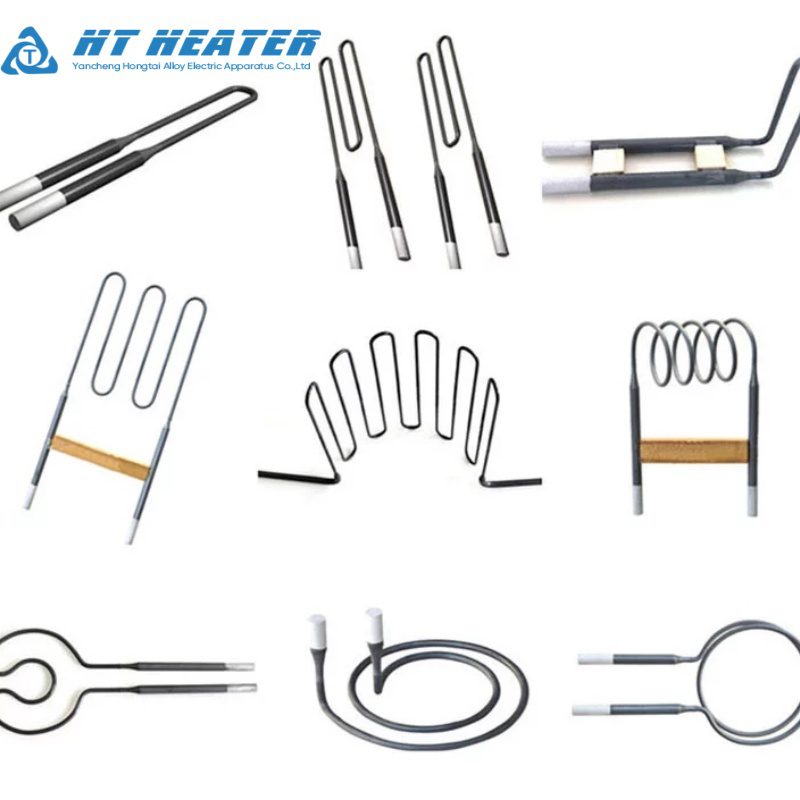
- Mounting Clearances and Orientation: Straight-rod SiC can be flexibly mounted horizontally or vertically. To properly specify straight, dumbbell, and U-shapes based on your wall thickness and mounting clearances, refer to our Silicon Carbide Heating Elements: Types, Shapes & Selection Guide.In contrast, standard U-shaped MoSi2 elements soften and deform at high temperatures and generally require vertical suspended mounting from the furnace roof. Horizontal mounting of MoSi2 requires specialized structural refractory supports.
6. Element Surface Loading and Furnace Temperature Uniformity
The element’s surface loading (Watt Density, W/cm²) directly impacts both furnace temperature uniformity and element lifespan.
- Excessively high surface loading forces the element’s surface temperature to run much hotter than the chamber temperature, accelerating oxidation and aging.
- During the design phase, increasing the number of heating elements, reducing element spacing, and moderately lowering the individual surface loading will not only extend service life but also significantly improve the chamber’s temperature uniformity through denser radiant heat transfer.
7. Service Life and Total Cost of Ownership
Evaluating the Total Cost of Ownership (TCO) requires looking beyond the initial purchase price of the heating element to calculate system-level expenditures:
- SiC TCO Structure: Lower initial procurement cost, but requires replacing elements in complete sets (increasing consumable costs) and involves manual/automatic transformer adjustments over long-term operation.
- MoSi2 TCO Structure: High initial capital expenditure for both the elements and the matching SCR power system. However, because of its exceptionally long lifespan and support for individual element replacement (without forcing batch scrappage), its downtime costs in medium-to-long-term heavy-duty operation are significantly lower.
8.Furnace Heater Selection: Three Engineering Scenarios
The following three typical engineering scenarios demonstrate how to translate theory into selection practice:
Case 1: Ceramic Kiln Operating at 1,250°C
- Condition: Continuously operating ceramic tunnel kiln, air atmosphere.
- Decision: Prioritize SiC elements. 1250°C is well within the safe and efficient zone for SiC. It offers low initial investment, and multi-tap transformers are easy to maintain. There is no need to pay a premium for MoSi2 just to gain unnecessary high-temperature headroom.
Case 2: Advanced Ceramic Sintering Furnace at 1,650°C
- Condition: High-end alumina/zirconia sintering furnace requiring extremely high temperature uniformity and single-ended roof termination.
- Decision: Must use MoSi2 elements (1800 Grade). SiC cannot survive this temperature. Focus on verifying the vertical roof mounting space and configuring an accurate SCR current-limiting controller to handle cold startups.
Case 3: Intermittent Furnace with Frequent Thermal Cycling
- Condition: Lab or R&D box furnace, frequent daily start/stops with very fast heating rates.
- Decision: If the maximum temperature does not exceed 1450°C, prioritize SiC elements due to their strong thermal shock resistance, avoiding the low-temperature pesting risks of MoSi2 cycling frequently through 400°C-700°C. if the furnace operates entirely below 1100°C and requires maximum physical durability against mechanical shock, deploying Ceramic Bobbin Heaters: Construction, Resistance Wire & Applications inside heavy-duty radiant tubes offers a rugged, alloy-based alternative to brittle ceramics.
9.SiC and MoSi2 Heating Element Specification Checklist
Submitting a precise Request for Quote (RFQ) to a manufacturer drastically shortens the design cycle. Prepare the following parameters before purchasing:
- Element Geometry: Shape category (Straight rod ED, U-shape, W-shape, Dumbbell, etc.).
- Dimensions: Hot Zone length (HZ), Cold End length (CZ), Element Outer Diameter (OD), and center spacing.
- Electrical Specs: Target rated power (kW), voltage connection method, and transformer tap range.
- Furnace Conditions: Maximum/continuous chamber temperature, furnace atmosphere composition, and horizontal/vertical mounting orientation.
Partner with Hongtai for Engineered High-Temperature Furnace Heating Solutions
Achieving uniform high-temperature radiant heating and extended kiln campaign life requires mastering refractory ceramic physics, surface watt density limits, and resistance-matched electrical zoning.Hongtai Heater Factory manufactures custom industrial silicon carbide (SiC) and molybdenum disilicide (MoSi2) heating elements engineered precisely to your hot zone dimensions, resistance tolerances, and furnace atmosphere specifications..
- Consult our Engineers: Send your wiring schematics to the Hongtai Heater Factory technical team for a free design review.
- Visit Us:: www.hongtai-heater.com