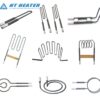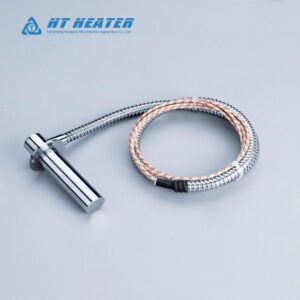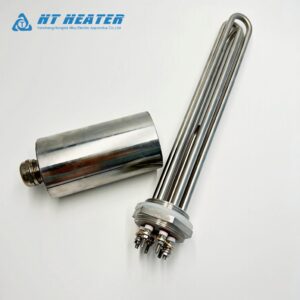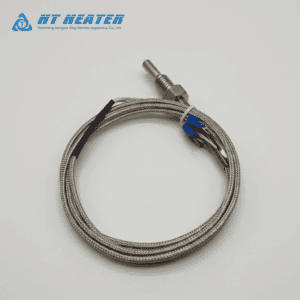
An insulated coil heater—specifically a hot runner heater with reflection tube—is a vital upgrade for achieving energy efficient injection molding by eliminating stray radiant heat loss to surrounding mold plates. In conventional hot runner tooling, unshielded nozzle coil heaters radiate up to 35% of their total thermal energy into the cold mold steel, forcing controllers to draw excessive power while overheating adjacent mold plates, core pins, and wiring.
At Hongtai Industry Heater, our thermal engineers design high-efficiency coil assemblies equipped with polished stainless steel reflection sleeves and multi-layer thermal shrouds. This technical guide outlines the thermodynamics of radiant heat transfer, structural differences between reflection tubes and insulated jackets, energy ROI metrics for plant managers, and retrofit installation procedures.
1. The Physics of Radiant Heat Loss in Unshielded Hot Runner Nozzles
Hot runner nozzles typically operate between 200°C and 380°C, positioned within mold cavities maintained at 20°C to 60°C. According to the Stefan-Boltzmann law for radiant thermal emissions:
q = ε · σ · A · (Theater4 – Tmold4)Where q represents thermal flux, ε is sheath emissivity, σ is the Stefan-Boltzmann constant, A is the exterior surface area, and T is absolute temperature. Because radiant emission scales with the fourth power of absolute temperature (T⁴), an unshielded heater sheath radiating freely into a cold mold pocket experiences massive heat dissipation.
Thermal Overloading of Heat-Sensitive Tooling Components
Uncontrolled radiant heat loss does not merely waste electrical power—it actively damages surrounding tooling infrastructure:
- Wiring & Insulation: High radiant flux degrades PTFE and fiberglass lead wire insulation, causing premature short circuits.
- Thermocouple Signal Drift: Ambient radiation warms reference junctions, introducing measurement errors in PID control loops.
- Actuator & O-Ring Degradation: Excess heat conducted into cylinder plates dries out hydraulic seals and causes pneumatic valve binding.
2. Engineering Comparison: Reflection Tubes vs. Insulated Shrouds
Energy efficiency retrofits utilize two distinct structural designs depending on space availability within the mold cavity:
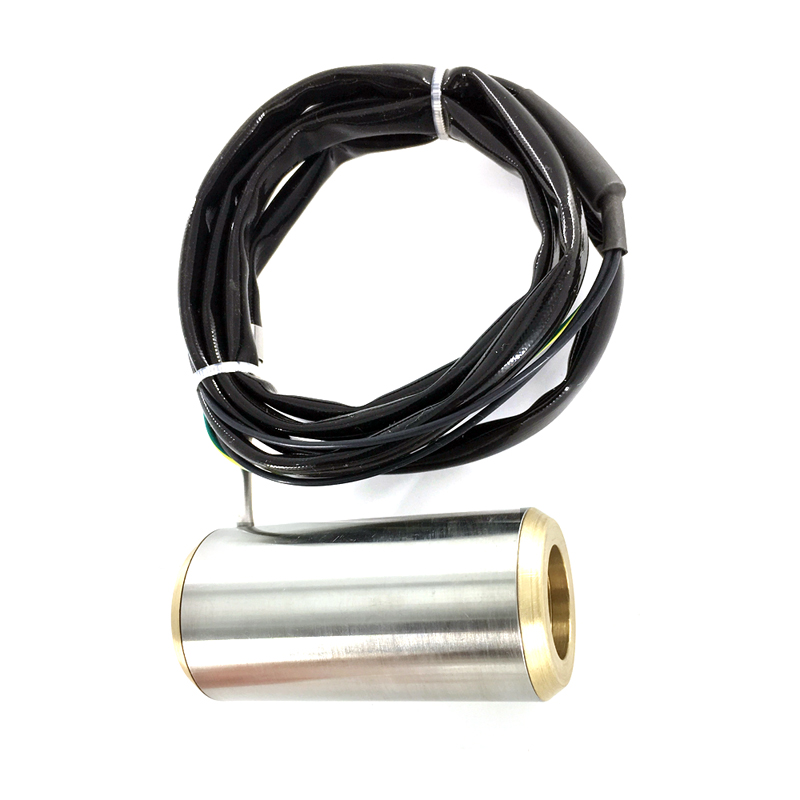
Polished Stainless Steel Reflection Tubes
A reflection tube consists of a thin (0.3 mm – 0.5 mm), highly polished stainless steel sleeve fitted tightly over the outer diameter of the coiled element. The internal mirror finish exhibits an emissivity coefficient as low as ε ≈ 0.10 – 0.15, reflecting up to 85%–90% of infrared radiation back toward the melt channel. Check our breakdown on sheath materials for hot runner coil heaters to evaluate high-temperature oxidation resistance.
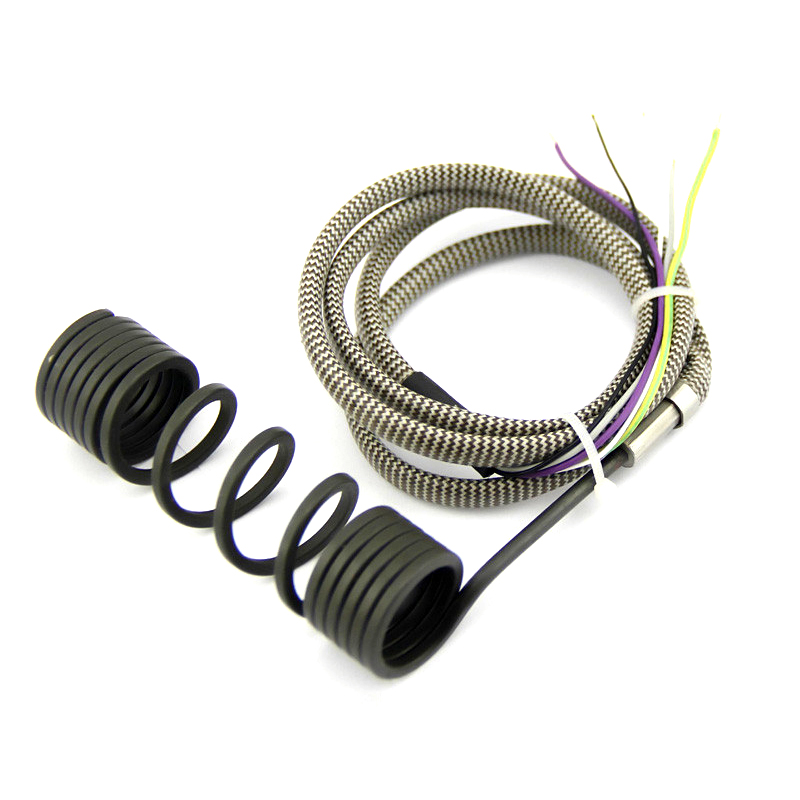
Double-Walled Insulated Shrouds
For extreme processing conditions (e.g., PEEK or PEI molding above 350°C), double-walled shrouds feature an encapsulated air gap or micro-porous ceramic fiber layer between two metal walls. This barrier restricts both radiant and convective heat loss, making it ideal for tight geometry channels analyzed in hot runner coil heater cross section profiles.
3. Energy Savings ROI & Thermal Performance Comparison
Implementing reflective and insulated heater assemblies delivers immediate reduction in kilowatt-hour usage and lowers the cooling load on factory water chillers:
| Performance Metric | Uninsulated Standard Coil | Polished Reflection Tube | Double-Wall Air/Ceramic Shroud |
| Radiant Loss to Mold Steel | 30% – 35% | 8% – 12% | 3% – 5% |
| Steady-State Power Draw | 100% (Baseline) | 75% – 80% (20-25% Savings) | 68% – 72% (28-32% Savings) |
| Nozzle Warm-Up Time | Baseline (100%) | 25% Faster | 40% Faster |
| Mold Pocket Cavity Temp | Elevated (70°C – 95°C) | Controlled (40°C – 50°C) | Minimal Rise (25°C – 35°C) |
| Estimated Payback Period | N/A | 2.5 – 4 Months | 3.5 – 6 Months |
Integrating reflective shielding alongside distributed wattage coil heaters ensures that energy is focused exclusively into cold nozzle zones rather than escaping into tool steel. For high-conduction applications, combine reflective shrouds with the Hongtai pressed-in brass hot runner heater design to maximize both internal conduction and external radiation resistance.
4. Retrofit Installation SOP for Plant Engineers
Follow this Standard Operating Procedure (SOP) when retrofitting existing hot runner tooling with reflective and insulated heater assemblies:
- Cavity Clearance Inspection: Verify that mold plate pocket dimensions allow at least 1.0 mm clearance around the outer reflection tube diameter to prevent mechanical rubbing during thermal expansion.
- Nozzle Fit & Surface Prep: Clean nozzle surfaces thoroughly. Ensure heater ID tolerances conform to HT-CR coil heater ID tolerance standards to guarantee intimate conduction before mounting the outer reflective shell.
- Sensor & Lead Clearance: Route internal sensor leads through designated sleeve cutouts without pinching. Refer to coil heater with built-in thermocouple options for proper lead orientation.
- Wiring Harness Protection: Protect lead transition points from convective heat rising out of the pocket by installing protective sleeving detailed in coil heater lead wire selection and protection.
- Pre-Flight Diagnostic: Test cold resistance and insulation values prior to closing mold plates. If electrical faults or short circuits occur during startup, follow steps in troubleshooting hot runner coil heater failures.
5. Featured Energy-Efficient Hot Runner Heating Products
Hongtai produces specialized heating assemblies engineered for rapid energy payback in continuous molding operations:
- 6mm Hot Runner Coil Heater for Injection Nozzle: Precision-wound heating coil designed to accept modular stainless steel reflection sleeves for high-density multi-cavity tooling.
- 220V Brass Sleeve Hot Runner Coil Heater: Combines internal brass thermal conduction with an outer polished radiation barrier to eliminate thermal lag and cut power consumption.
- 300W Coil Heater with Built-in Thermocouple: Features integrated Type J or Type K temperature sensing paired with an insulated protective jacket for precise, energy-efficient PID control.
Contact Hongtai for Custom Energy Audit & Retrofit Quotes
Hongtai Industry Heaterengineers design custom insulated coil heaters, reflection tube assemblies, and multi-layer thermal shrouds specifically engineered to eliminate stray radiant heat loss in injection molding tooling. Featuring polished stainless steel reflection sleeves, low-emissivity internal mirrors, and high-purity MgO insulated coils, our thermal assemblies block up to 90% of stray infrared radiation, resist thermal fatigue, and prevent unwanted heat transfer to cold mold plates. By supplying application-engineered energy-saving elements, we resolve thermal instability and high electrical draw, delivering uniform temperature profiles, reduced power consumption, and reliable long-term performance across demanding processing environments.
Looking to lower factory electricity costs and stabilize mold temperatures?
Hongtai Industry Heater provides custom-engineered insulated coil heaters, reflection tubes, and complete hot runner heating upgrades for global injection molding facilities.
B2B Related Technical Resources
- Nozzle Fit & Tolerance: Hongtai HT-CR Coil Heater ID Tolerance: Ensuring Perfect Nozzle Fit Without Thermal Lag
- Thermal Profile Design: Distributed Wattage Coil Heater: Optimizing Hot Runner Temperature Profiles
- Air-Gap Elimination: Hongtai Pressed-In Brass Hot Runner Heater Design: Eliminate Air Gaps & Thermal Lag in Hot Runners
- Sensor & Feedback Integration: Coil Heater with Built-in Thermocouple: Type J vs. K and Lead Exit Engineering
- Sheath Metallurgy Selection: Sheath Materials for Hot Runner Coil Heaters: Stainless Steel vs. Nickel
- Lead Wire & Terminal Protection: Coil Heater Lead Wires: Selection, Temperature Ratings, and Protection Options
- Field Failure Diagnostics: Troubleshooting Hot Runner Coil Heater Failures: Element Burnout and Current Leakage