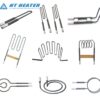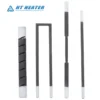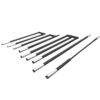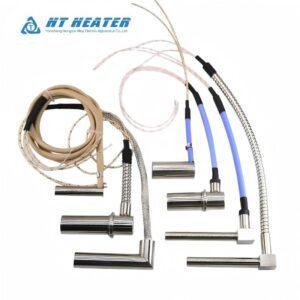
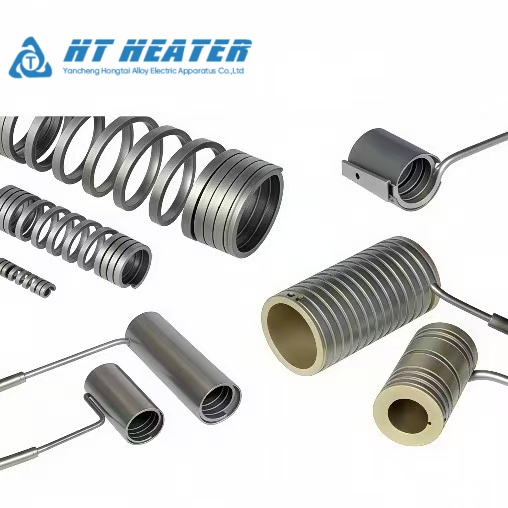
Selecting the right hot runner coil heater sheath material is a critical decision for procurement managers, mold designers, and system integrators aiming to maximize operational uptime. The outer sheath of a coil heater acts as the primary barrier protecting internal magnesium oxide (MgO) insulation and Nichrome resistance wire from high-temperature oxidation, molten plastic leakage, and corrosive outgassing. Choosing between a standard stainless steel alloy and a high-performance nickel alloy dictates whether your hot runner system runs reliably for millions of cycles or fails prematurely due to sheath pitting, scaling, or thermal fatigue.
At Hongtai Industry Heater, we engineer every hot runner coil heater sheath with application-specific metallurgy to ensure maximum thermal transfer, corrosion resistance, and structural integrity under extreme injection molding pressures.
1. High-Temperature Oxidation and Thermal Expansion Dynamics
During operation, a hot runner coil heater sheath is exposed to continuous thermal cycles ranging from ambient shop temperatures to over 450°C (842°F). Under these conditions, outer sheath metals undergo thermal expansion, which must closely match the expansion rate of the steel injection nozzle to maintain physical clamping force without causing mechanical stress.
The linear thermal expansion of the sheath material is calculated using the following thermodynamic relationship:
ΔL = L0 · α · ΔT
Where:
- ΔL = Change in sheath length or diameter (mm)
- L₀ = Initial cold dimension (mm)
- α = Coefficient of Thermal Expansion (10⁻⁶/°C)
- ΔT = Temperature differential between cold and operating state (°C)
If the hot runner coil heater sheath possesses an excessively high Coefficient of Thermal Expansion (α) relative to the tool steel nozzle, the heater will expand away from the nozzle surface, creating an insulating air gap that leads to severe thermal contact resistance and localized overheating.
2. Stainless Steel Sheaths: AISI 304, 316L, and 321
A stainless steel 304 heating coil serves as the industry baseline option when selecting a hot runner coil heater sheath for general-purpose applications processing non-corrosive commodity resins (such as Polypropylene, Polyethylene, and Polystyrene).
- Stainless Steel 304 / 304L: Offers balanced mechanical strength, excellent formability during coiling, and adequate oxidation resistance up to 600°C. It is the most cost-effective choice for standard hot runner nozzles.
- Stainless Steel 316L: Formulated with molybdenum, 316L provides enhanced resistance to pitting and chemical corrosion, making it suitable for environments with mild chemical exposure or humid storage conditions.
- Stainless Steel 321: Titanium-stabilized to prevent chromium carbide precipitation during welding and high-temperature operation. SS 321 excels in continuous high-temperature cycling without losing intergranular corrosion resistance.
- Limitations: Stainless steel sheaths can suffer from stress-corrosion cracking and rapid surface oxidation when exposed to corrosive off-gassing from halogenated polymers (e.g., PVC, flame-retardant ABS, or PBT).
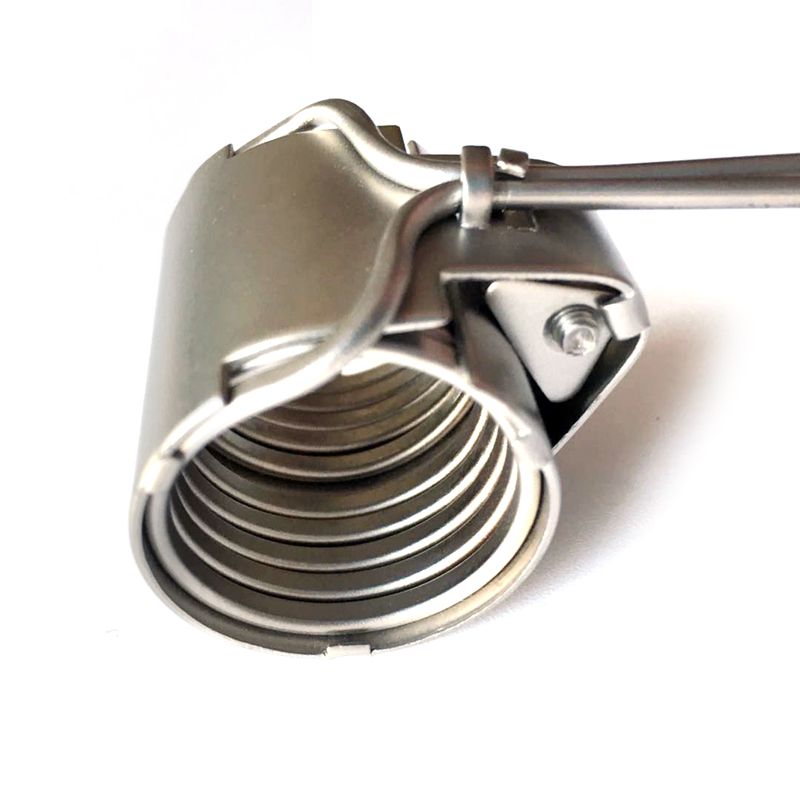
3. Nickel Alloy Sheaths: Incoloy 800, Inconel 600, and Nickel 200
For processing high-temperature engineering polymers (such as PEEK, PEI, PSU, and Fluoropolymers), upgrading your hot runner coil heater sheath to a high-grade nickel alloy coil heater is strictly required to prevent sheath degradation and short circuits.
- Incoloy 800 / 840 (Nickel-Iron-Chromium): Engineered specifically to resist high-temperature oxidation and carburization. Incoloy maintains superior mechanical stability at operating temperatures exceeding 700°C, preventing the sheath from swelling or scaling off.
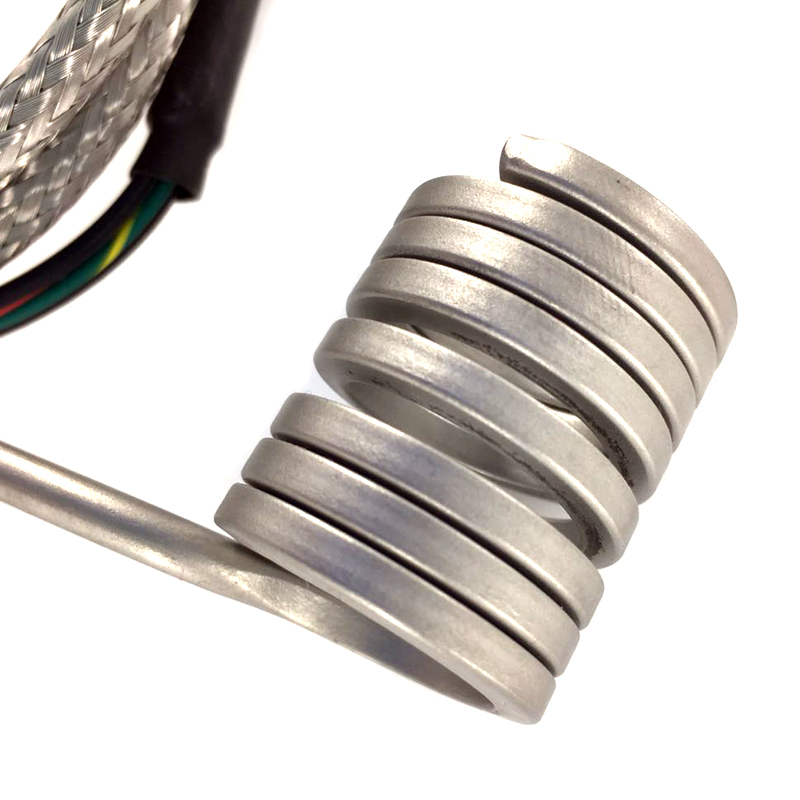
- Inconel 600 / 625 (High-Nickel Content): Offers exceptional resistance to chloride-ion stress-corrosion cracking and acidic outgassing released by flame-retardant additives. Inconel forms a tight, passivating oxide scale that protects the internal heating element even during severe thermal shock.
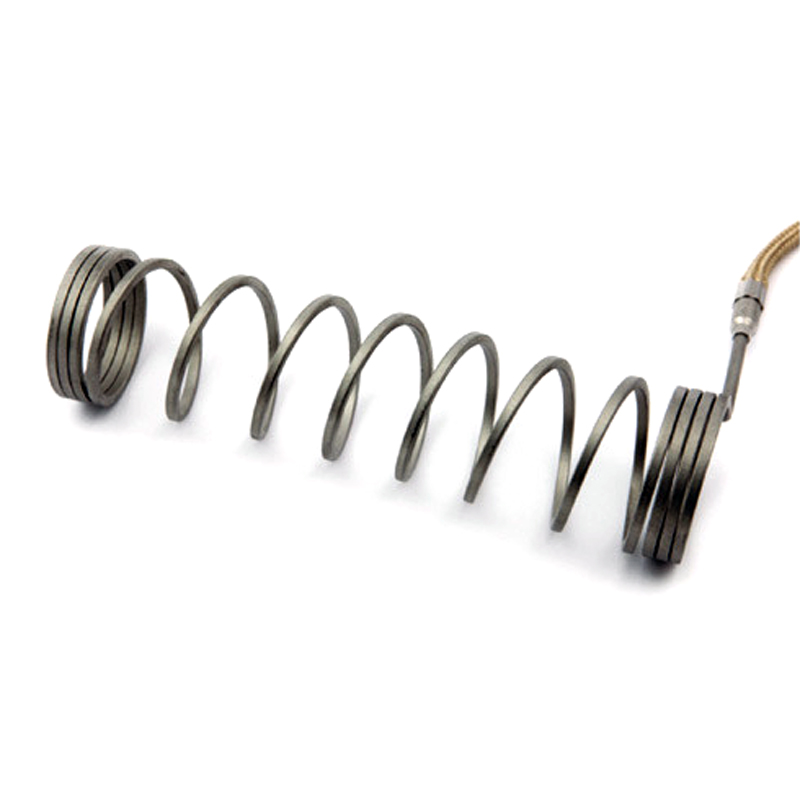
- Nickel 200 / 201: Provides maximum thermal conductivity among sheath materials, allowing rapid heat dissipation from the internal wire to the nozzle, reducing internal element core temperatures.
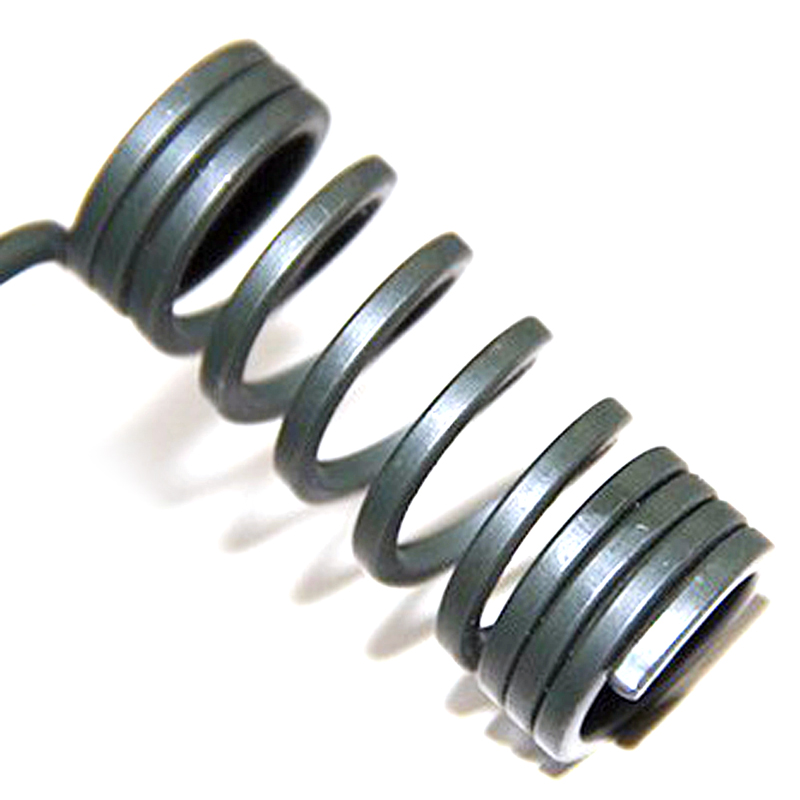
Best Applications: High-speed multi-cavity molds, medical grade molding, automotive components with flame retardants, and processing engineering resins requiring melt temperatures above 350°C.
4. B2B Material Selection Comparison Matrix
To evaluate which hot runner coil heater sheath material aligns with your mold specifications and budget, refer to the engineering comparison matrix below:
| Sheath Material | Max Continuous Temp | Oxidation Resistance | Chemical / Corrosion Resistance | CTE (α) (10⁻⁶/°C) | Ideal Application |
| Stainless Steel 304 | 600°C / 1112°F | Moderate | Standard (Commodity Plastics) | ~17.2 | Standard packaging, consumer goods (PP, PE, PS). |
| Stainless Steel 321 | 650°C / 1202°F | Good | High Intergranular Stability | ~16.6 | High-cycle molds with frequent thermal ramping. |
| Incoloy 800 | 800°C / 1472°F | Excellent | High (Resists Carburization) | ~14.4 | High-watt-density nozzles, technical resins. |
| Inconel 600 | 900°C / 1652°F | Superior | Maximum (Halogens & Acidic Gas) | ~13.3 | Fluoropolymers, PEEK, Flame-retardant resins. |
For detailed metallurgical and thermal property specifications across industrial alloys, consult MatWeb Material Property Data and ISO Machinery Metallurgy Standards.
Custom Sheath Engineering from Hongtai Industry Heater
Selecting the optimal hot runner coil heater sheath prevents catastrophic heater burnouts, protects expensive hot runner nozzles, and reduces unscheduled mold maintenance. Hongtai Industry Heater provides OEM and replacement coil heaters in custom lengths, wattages, and cross-sections, fully tailored with high-grade 304/321 stainless steel or Incoloy/Inconel nickel alloy sheathing.
Contact Hongtai Industry Heater‘s technical engineering department today to discuss your resin processing requirements, request CAD models, or receive a fast quote for high-performance hot runner heating elements.
B2B Related Technical Resources
- Cross-Section Selection:Hot Runner Coil Heater Cross Section: Round vs. Square vs. Rectangular
- Thermodynamic Sizing:Cast in Heater kW Calculation: Sizing, Thermal Mass, and Ramp-Up Time
- Thermal Contact Optimization: Cast-in Heater Maintenance Guide: Surface Cleaning and Thermal Compound Application
- Mechanical Clamping Systems:Clamping and Mounting Systems for Cast-in Heaters: Spring Loading vs. Bolt-On Design
- Quality & Testing Protocol:Quality Control Standards for Cast-in Heaters: Hi-Pot, Insulation, and X-Ray Inspection