Establishing rigorous quality control standards for cast-in heaters is essential to ensure operational safety, regulatory compliance, and maximum service life across heavy processing machinery. For quality managers and export certification officers, auditing internal structural integrity alongside precision cast in heater surface machining prevents catastrophic field failures, electrical leakage accidents, and unscheduled downtime.
During high-pressure liquid metal pouring, embedded heating elements undergo extreme thermal turbulence and hydraulic compression that can shift internal resistance wire centration or introduce porous casting voids.Without standardized cast in heater hi pot testing, continuous insulation resistance monitoring, and comprehensive cast aluminum heater x ray inspection, hidden internal defects lead to localized core overheating, dielectric breakdown, and safety hazards.
To guarantee zero-defect field performance and strict international compliance, Hongtai Industry Heater integrates multi-stage non-destructive testing, automated high-voltage verification, and 100% radiographic fluoroscopy across all cast aluminum, bronze, and iron thermal assemblies—delivering fully certified, high-reliability heating solutions for demanding global applications.
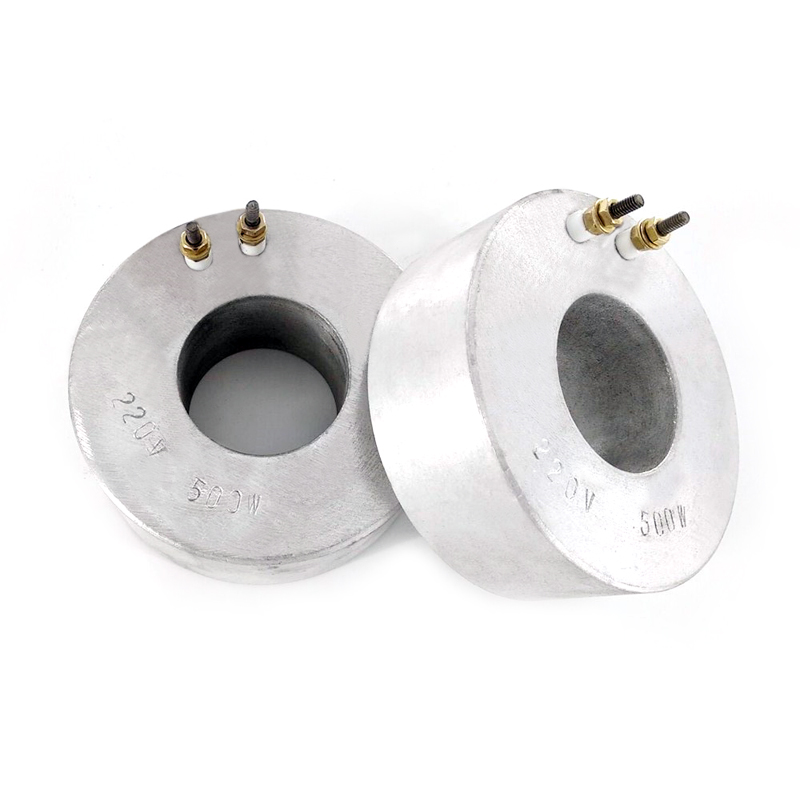
1. Non-Destructive X-Ray Fluoroscopy: Internal Structural Audit
Nondestructive cast aluminum heater x ray inspection is the ultimate quality verification method for auditing internal physical structures without damaging the cast matrix.
Detecting Critical Internal Casting Defects
During molten metal pouring, high flow velocity and thermal shock can shift embedded heating elements or form internal air voids:
- Internal Element Displacement: High pouring velocity can displace the internal tubular element toward the outer cast wall, reducing the protective metal sheath boundary and causing severe thermal hot spots.
- Internal Porosity & Air Voids: Gas entrapment during casting forms internal voids around the element sheath. Air voids act as thermal barriers, leading to heat accumulation, localized element burnout, and structural casting fractures.
- Coil Centering & MgO Uniformity: Radiographic imaging verifies that the internal Nichrome resistance wire remains perfectly centered within the compressed Magnesium Oxide (MgO) dielectric powder, maintaining a minimum clearance of ≥ 1.0 mm along tight bend radii.
To prevent hidden casting defects and internal element drift, Hongtai Industry Heater subjects 100% of manufactured heating assemblies to real-time digital cast aluminum heater x ray inspection. By auditing coil centration, MgO density, and internal porosity prior to final machining, Hongtai Industry Heater guarantees complete internal structural integrity across all heavy-duty processing heaters.
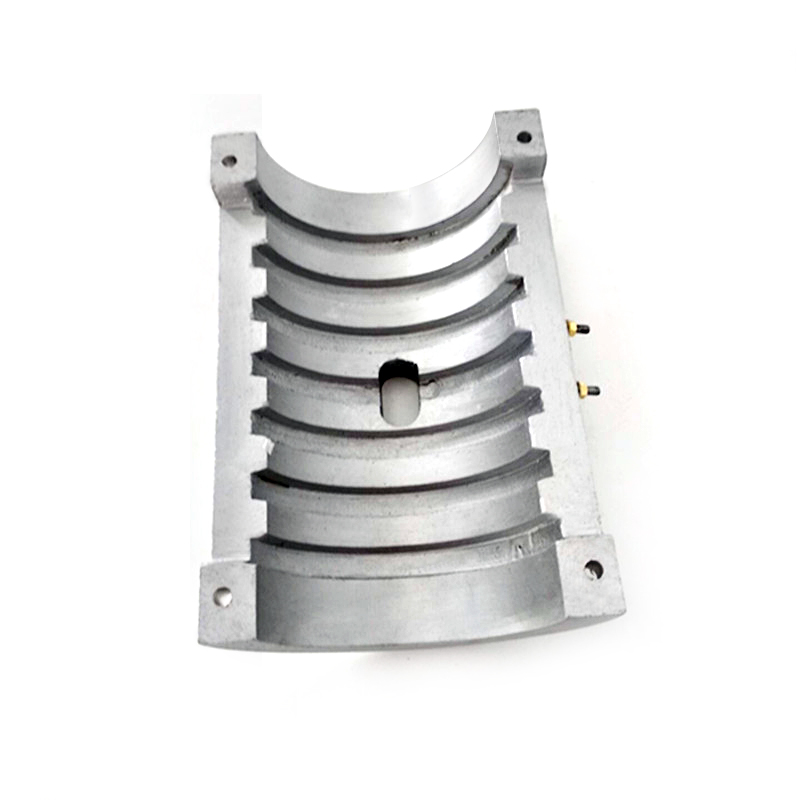
To learn more about how internal air voids impact overall thermal conductivity, read How Porosity Affects Heat Transfer in Cast-in Heating Elements.
2. Electrical Dielectric Verification & Safety Protocols
Guaranteeing operator safety and preventing electrical leakage require strict adherence to high-voltage dielectric testing and industrial heater insulation resistance audits.
Dielectric Breakdown Resistance (Hi-Pot)
Performing cast in heater hi pot testing verifies the electrical insulation breakdown strength between active current-carrying terminals and the grounded outer metallic casting:
- Test Standard: Apply a high-voltage potential of 1,500V AC (or 2 × Vnominal + 1,000V) for 60 seconds between electrical terminals and the external metal sheath.
- Acceptance Threshold: Leakage current must remain strictly below 0.5 mA. Any sudden current spike or dielectric arc indicates compromised insulation and results in immediate rejection.
Cold Insulation Resistance (IR) Audit
Before and after high-voltage testing, industrial heater insulation resistance must be audited using a calibrated megohmmeter:
- Testing Voltage: Apply 1,000V DC across cold pins and the outer casting.
- Acceptance Baseline: Cold insulation resistance readings must exceed 500 MΩ under dry room conditions, confirming zero moisture ingress and complete dielectric compaction.
To maintain strict electrical safety compliance across global export markets, Hongtai Industry Heater incorporates automated cast in heater hi pot testing and digital industrial heater insulation resistance logging into its end-of-line testing workflow, delivering fully traceable electrical safety certification with every dispatch.
3. Comprehensive Quality Control Standards Matrix
| Quality Audit Stage | Inspection Method | Key Parameter / Target | Failure Threshold | Primary Defect Prevented | Hongtai Certification Standard |
| Radiographic NDT | Cast aluminum heater x ray inspection | 100% Full-body fluoroscopy | Element shift or void > 0.5 mm | Internal hot spots & core wire burnout | 100% Radiographic Verification |
| Dielectric Strength | Cast in heater hi pot testing | 1,500V AC for 60 seconds | Leakage current > 0.5 mA | Short circuits & ground leakage hazards | Zero-Defect Hi-Pot Protocol |
| Insulation Audit | Industrial heater insulation resistance | 1,000V DC Megohmmeter test | Insulation resistance < 500 MΩ | Moisture absorption & leakage risks | Traceable IR Certification |
| Thermal Distribution | Infrared Thermography Audit | Active surface thermogram (±1°C) | Temperature variation > ±3°C | Surface cold spots & uneven processing | Full-Face Thermal Imaging |
For international industrial safety standards and export compliance guidelines, consult UL Electrical Safety Standards and certification frameworks from CE Marking Compliance.
4. Preventative Inspection SOP & Maintenance Protocols
Implementing standardized quality verification procedures ensures consistent safety and performance throughout the operational lifecycle of cast-in thermal systems:
- Pre-Shipment Quality SOP: Verify 100% completion of cast aluminum heater x ray inspection, cast in heater hi pot testing, and industrial heater insulation resistance logging. Attach physical test certificates to export documentation.
- Field Receiving & Pre-Installation Audit: Inspect terminal seals for transit damage. Re-verify industrial heater insulation resistance (1,000V DC) prior to mounting. If resistance drops below 50 MΩ due to atmospheric humidity during transport, perform low-voltage bake-out drying.
- Operational Infrared Verification: Conduct full-face infrared thermal imaging during initial equipment commissioning to verify uniform heat transfer across active processing faces.
Every industrial thermal assembly manufactured by Hongtai Industry Heater undergoes complete radiographic inspection, high-voltage testing, and infrared thermography auditing. By combining high-density pressure casting with rigorous cast aluminum heater x ray inspection and automated cast in heater hi pot testing, Hongtai Industry Heater provides global OEMs and plant operators with reliable, fully certified thermal heating solutions.
Industrial Heating Solutions from Hongtai Industry Heater
The quality control standards for cast-in heaters and non-destructive inspection protocols detailed above address the core safety and reliability requirements of plastic machinery manufacturers, packaging equipment OEMs, and export compliance officers. Hongtai Industry Heater collaborates directly with quality managers and system integrators to supply custom-engineered cast aluminum, bronze, and iron heaters supported by complete quality certification and international compliance documentation.
If you require customized technical inspections, export compliance certification, or specialized cast-in heater designs for your processing equipment, contact Hongtai Industry Heater’s engineering department directly for a comprehensive technical review and custom thermal design solution.
B2B Related Technical Resources
- Extrusion & Blow Molding Thermal Solutions: Air Cooled Cast in Heater: Extruder Barrel Cooling Guide. and Extruder Barrel Cast in Heater: Blow Molding Thermal Guide.
- Band Heater Installation & Diagnostics: Band Heater Installation Guide: Clamping SOP for Long Life, Band Heater Watt Density: Guide to Preventing Failure, and Troubleshooting 101: 5 Common Causes of Band Heater Burn-Out
- Cast-In Troubleshooting & Custom Specifications: Troubleshooting Cast-in Heater Failures: Internal Element Burnout and Warping and How to Specify Custom Cast-in Heaters for Industrial Machinery