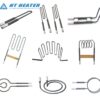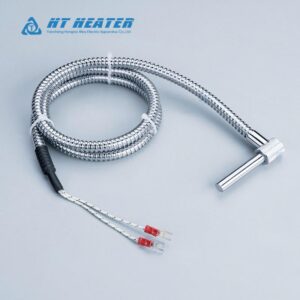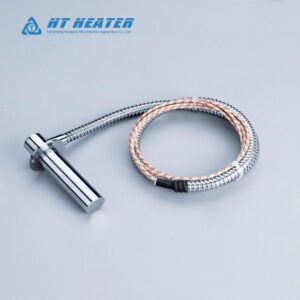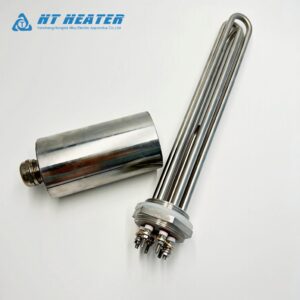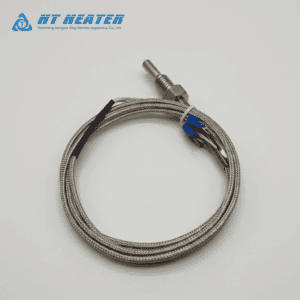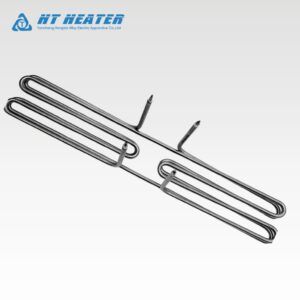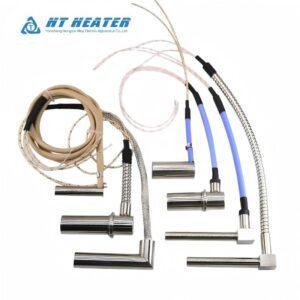
Integrating an internal element cast in heater matrix into industrial machinery requires rigorous metallurgy, precision tube forming, and high-density casting protocols. For R&D engineers and foundry technicians, embedding preformed tubular heating elements into cast aluminum, bronze, or iron matrices presents severe mechanical and thermal demands. During pouring, the embedded heating tubes must withstand high-temperature molten metal impacts—exceeding 660°C for aluminum and 950°C for bronze—alongside intense hydraulic compression without sheath rupture or internal wire displacement.
Without controlled bend radius calculations and stress-relief annealing, unoptimized internal elements risk Magnesium Oxide (MgO) dielectric breakdown and Nichrome coil shift, leading to premature electrical short circuits. Hongtai Industry Heater applies computer-controlled CNC element bending, bright atmospheric annealing, and proprietary pressure-casting protocols to ensure complete structural symmetry, superior dielectric insulation integrity, and long-term thermal reliability across heavy plastic extrusion and high-stress molding applications.
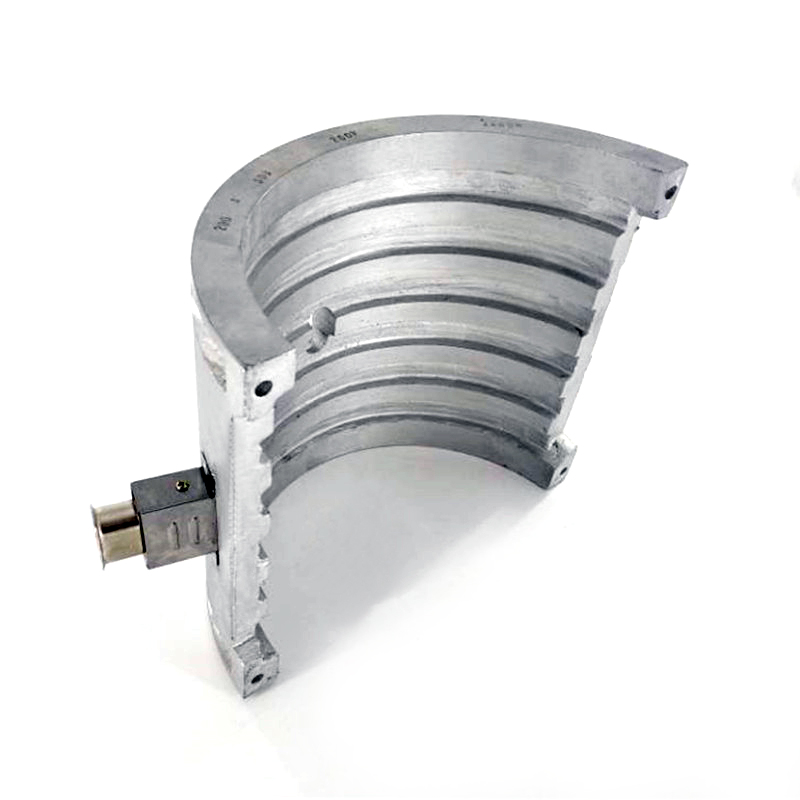
1. Tensile Strain Dynamics in Tubular Element Bending Cast Aluminum Systems
Forming a tight bend in a tubular element induces tensile stress along the outer radius and compressive stress along the inner radius. When engineering a tubular element bending cast aluminum preform, process engineers must limit outer wall strain (ε) to prevent work-hardening micro-cracks and sheath thinning:
Where:
- ε = Outer sheath wall tensile strain
- d = Outer diameter of the tubular heating element (mm)
- R = Centerline bend radius (mm)
Recommended Bending Ratios & Coil Drift Prevention
To ensure dielectric integrity during cast in heater manufacturing, adhere to these baseline engineering limits:
- Minimum Bend Radius: The centerline radius (R) must be maintained at ≥ 2.5 × d (preferably 3.0 × d for high-voltage elements).
- MgO Core Insulation Safeguard: When R drops below 2.0 × d, localized sheath thinning compromises the compressed MgO powder. Under high molten velocity during cast in heater manufacturing, the internal helical coil can shift off-center toward the wall, resulting in dielectric breakdown during high-voltage testing.
- Terminal Cold-Pin Clearance: Bends must start at least 15 mm away from the cold-pin terminal transition inside the internal element cast in heater to prevent terminal seal rupture and moisture contamination.
Hongtai Precision Forming Solutions:To address these critical forming challenges, Hongtai Industry Heater integrates multi-axis CNC bending machinery with automated radius verification. By maintaining precise centerline bending ratios and exact cold-pin clearances, Hongtai Industry Heater eliminates localized wall thinning and keeps internal coils perfectly centered during high-velocity casting runs.
High-Temperature Annealing Protocols in Cast in Heater Manufacturing
Cold swaging, roll reducing, and CNC bending induce heavy strain-hardening in stainless steel (SS304/SS316) and nickel-alloy (Incoloy 800/840) sheaths. To restore ductility before placing preforms into the mold, every internal element cast in heater component must undergo full bright annealing.
Key Metallurgical Annealing Guidelines
- Atmosphere Control: Annealing must take place in a continuous mesh-belt furnace under a protective atmosphere (cracked ammonia or dry pure Hydrogen/Nitrogen mixture, dew point ≤ −40°C). This eliminates surface oxidation, keeping the outer sheath chemically clean for optimal metallurgical bonding with molten aluminum.
- Temperature Profile: Stainless steel 304/316 elements are annealed at 1,020°C – 1,050°C, while high-nickel Incoloy 800/840 elements require 1,050°C – 1,080°C.
- Ductility Restoration: Post-anneal elongation capacity must exceed 35%. Restoring grain ductility allows the internal element cast in heater matrix to absorb thermal shock and minor mold compaction flexing without wall fracture.
Unannealed or improperly annealed elements retain internal residual stresses, making them prone to severe displacement or surface cracking when exposed to thermal turbulence during aluminum pouring.
To evaluate how casting density and voids impact heat distribution across embedded elements, review How Porosity Affects Heat Transfer in Cast-in Heating Elements.
3. Sheath Alloy Selection and Hydraulic Shock Safeguards
During molten metal injection or gravity permanent mold pouring, the preform experiences high kinetic impact and hydraulic pressure. Selecting the appropriate alloy grade for an internal element cast in heater is vital to structural survival during cast in heater manufacturing:
| Sheath Alloy Grade | Max Operating Sheath Temp | Bright Annealing Temp Range | Yield Strength (Post-Anneal) | Application in Cast-in Heater Manufacturing |
| Stainless Steel 304 | 400°C – 450°C | 1,020°C – 1,050°C | ~205 MPa | Standard tubular element bending cast aluminum applications |
| Stainless Steel 316L | 450°C – 500°C | 1,020°C – 1,050°C | ~220 MPa | Corrosive washdown & chemical processing castings |
| Incoloy 800 / 840 | 650°C – 800°C | 1,050°C – 1,080°C | ~240 MPa | High-watt-density bronze, brass, & cast iron heaters |
| Incoloy 825 | 600°C – 750°C | 1,040°C – 1,070°C | ~250 MPa | Finned air-cooled & liquid-chilled extrusion castings |
Mold Positioning & Hydraulic Anchoring
- Ceramic Standoff Pins: Position the internal element cast in heater preform using precision ceramic locating pins to prevent buoyancy shift when molten metal enters the mold.
- Gating Stream Alignment: Direct molten streams away from sharp tube bends to minimize localized thermal erosion during cast in heater manufacturing.
Hongtai anti-impact engineering scheme: To absorb these hydraulic forces during production, Hongtai Industry Heater combines custom ceramic positioning fixtures with high-strength alloy sheath materials and optimized mold runner geometries. By carefully managing fluid dynamics within the mold cavity, Hongtai Industry Heater keeps embedded heating elements perfectly centered and protected against thermal erosion throughout the pouring and solidification cycles.
For a comprehensive comparison of matrix metals, thermal expansion rates, and compressive load capacities, consult our Cast-in Heater Material Selection Guide: Aluminum vs. Bronze vs. Iron.
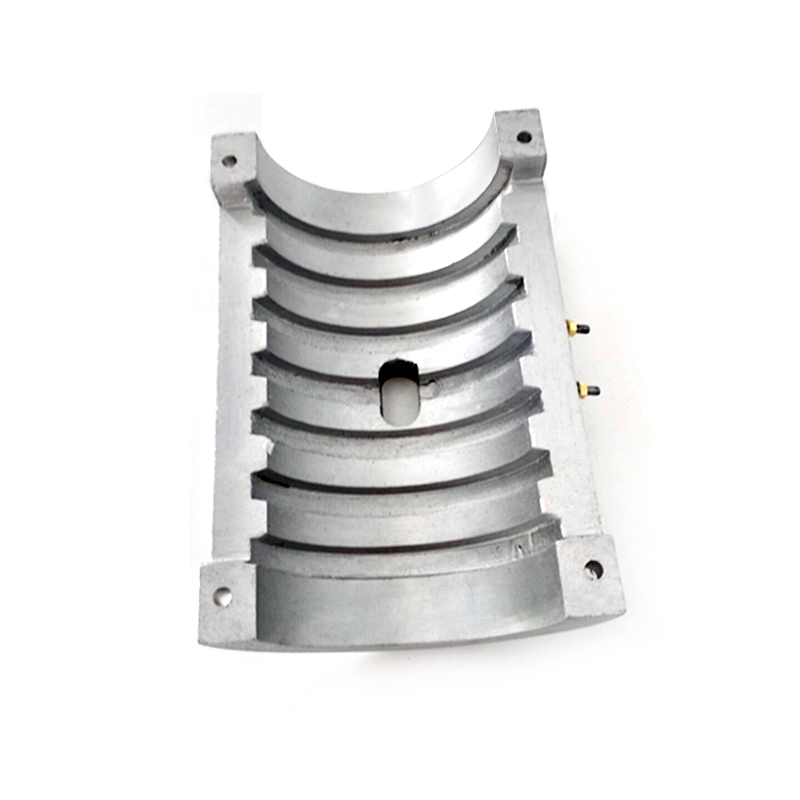
4. Quality Control Workflow for an Internal Element Cast in Heater
To maintain zero electrical defect rates, process technicians should execute this 3-step quality verification before transferring an internal element cast in heater preform to the foundry floor:
- X-Ray Fluoroscopy Inspection: Inspect 100% of tight-radius bends to confirm that the Nichrome coil inside the internal element cast in heater remains centered in the MgO matrix with ≥ 1.0 mm clearance.
- High-Voltage Dielectric Test (Hi-Pot): Apply 1,500V AC for 60 seconds between cold pins and the outer sheath. Leakage current must stay below 0.5 mA.
- Insulation Resistance (IR) Audit: Test cold insulation resistance with a 1,000V DC megohmmeter to ensure dry readings exceed 500 MΩ.
Hongtai’s rigorous quality control commitment: Backing this rigorous workflow, Hongtai Industry Heater subjects every completed cast-in thermal assembly to comprehensive final quality audits prior to dispatch. By combining 100% X-ray fluoroscopy verification, high-voltage dielectric testing, and full-face infrared thermography, Hongtai Industry Heater ensures exact internal element centration, maximum insulation breakdown strength, and dead-level surface temperature uniformity with zero internal air voids.
Industrial Heating Solutions from Hongtai Industry Heater
Hongtai Industry Heater engineers design custom cast aluminum, bronze, and iron heaters specifically for aging, worn, or demanding processing machinery. Featuring precision CNC-bent tubular elements, bright atmospheric annealing, and high-density pressure casting, our thermal assemblies withstand severe mechanical shock, resist thermal fatigue, and eliminate air gaps on complex barrel surfaces. By supplying application-engineered thermal elements, we resolve frequent field replacement challenges, delivering uniform heat distribution, exceptional vibration resistance, and reliable long-term performance across demanding processing environments.
If you are facing element burnout, sheath cracking, or die-casting challenges with your thermal components, contact Hongtai Industry Heater’s engineering department directly for custom element bending designs, CAD support, and comprehensive metallurgical consultations.
B2B Related Technical Resources
Precision element forming is equally vital when integrating embedded cooling loops into extruder assemblies, as detailed in Air Cooled Cast in Heater: Extruder Barrel Cooling Guide. To specify terminal configurations, sheath diameters, and wattage distribution for new tooling, refer to How to Specify Custom Cast-in Heaters for Industrial Machinery.
For high-duty extrusion line applications, explore Extruder Barrel Cast in Heater: Blow Molding Thermal Guide. To diagnose field failures, casting fractures, or core burnouts, consult Troubleshooting Cast-in Heater Failures: Internal Element Burnout and Warping or review standard failure modes in Troubleshooting 101: 5 Common Causes of Band Heater Burn-Out.
For installation guidelines and clamping SOPs, refer to Band Heater Installation Guide: Clamping SOP for Long Life and check watt density thresholds in Understanding Watt Density: The Key to Preventing Premature Band Heater Failure.