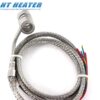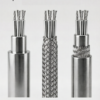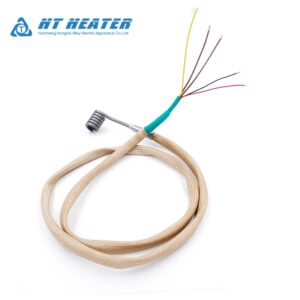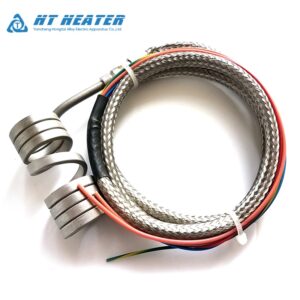
Executing a rigorous coil heater hi-pot test alongside insulation resistance coil heater measurements is the definitive quality control standard for validating electrical safety, dielectric strength, and international export compliance. In high-voltage hot runner injection molding systems, an unverified heater with micro-cracks in its Magnesium Oxide (MgO) insulation layer can cause dielectric flashovers, ground faults, and immediate tripping of plant GFCI breakers.
At Hongtai heater factory, every heating element undergoes 100% pre-shipment factory testing to guarantee strict compliance with CE (IEC 60335-1) and UL (UL 499) standards. This quality control guide outlines our testing protocols, dielectric breakdown thresholds, cold insulation benchmarks (> 500 MΩ), and QA verification workflows for global procurement and compliance specialists.
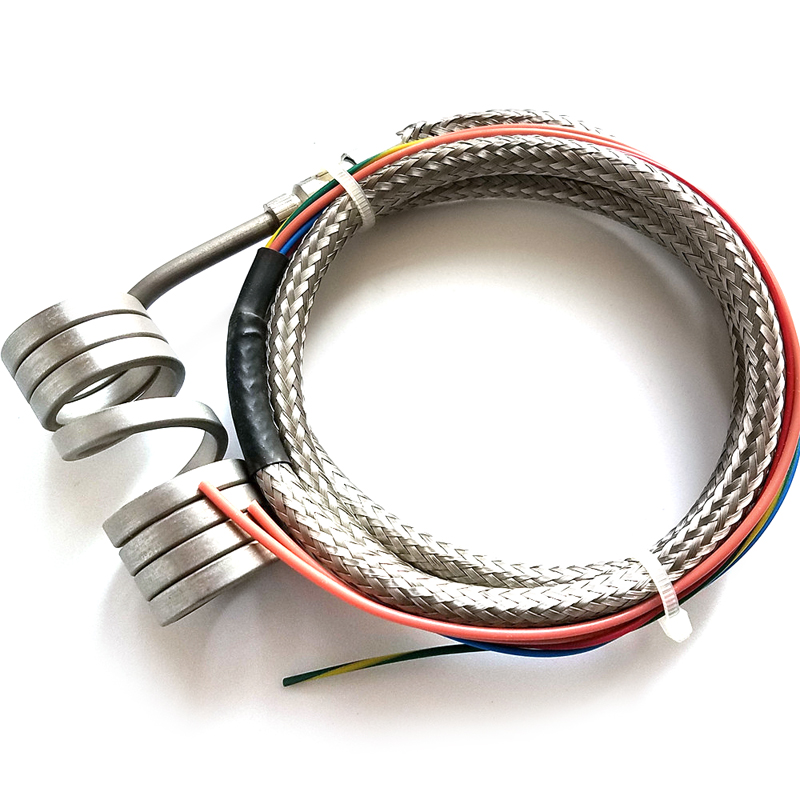
1. Electrical Safety Compliance: CE & UL Standard Requirements
For B2B equipment manufacturers and export compliance officers, heating elements must meet strict dielectric strength and leakage current limits prior to shipment:
Factory QA Testing & Export Compliance Path

Key Regulatory Benchmarks
- CE Marking (IEC 60335-1 / EN 60335-1): Mandates that heating elements demonstrate zero insulation flashover when subjected to high voltage between live terminals and the ungrounded metal sheath.
- UL Recognition (UL 499 / CSA C22.2): Specifies that maximum leakage current under operating conditions must not exceed 0.5 mA, requiring high-density insulation compaction.
- Sheath Integrity: High-temperature corrosion resistance is critical to maintaining ground continuity; evaluate material selection in our guide on sheath materials for hot runner coil heaters.
2. Executing a Coil Heater Hi-Pot Test for Dielectric Strength
The Hi-Pot test applies a high AC potential between the internal nickel-chromium resistance wire and the outer metallic sheath to test the dielectric integrity of the compacted MgO powder.
Test Voltage & Duration Protocols
- Routine Production Test (100% Inspection): Applied potential of 1000V AC for 1 to 3 seconds with a leakage current trip limit set at < 5 mA.
- Type / Qualification Test (Sampling Audits): Applied potential of 1500V AC for 60 seconds to verify dielectric margins under extreme stress.
- Failure Criteria: Any sudden voltage drop, arc flashover, or leakage current exceeding 5 mA results in immediate rejection of the production lot.
3. Cold Insulation Resistance Testing (> 500 MΩ Benchmark)
Magnesium Oxide (MgO) is an exceptional thermal conductor and electrical insulator, but it is naturally hygroscopic. Absorbing atmospheric moisture drastically reduces insulation resistance, leading to current leakage during cold start-ups.
Testing Parameters & Thresholds
- Test Equipment: 500V DC Megohmmeter (Megger).
- Factory Acceptance Benchmark: Cold insulation resistance must exceed 500 MΩ at ambient conditions (25°C, < 65% RH).
- Moisture Mitigation & Hermetic Sealing: End-seals (Teflon, Silicone, or Ceramic Epoxy) prevent ambient moisture ingress during international transit.
- Field Recovery: If a heater exhibits reduced insulation resistance (< 10 MΩ) after long-term storage, follow the soft-start preheat routine outlined in troubleshooting hot runner coil heater failures.
4. Comprehensive Quality Control & Factory Testing Matrix
| Inspection Stage | QA Test Parameter | Test Instrument / Condition | Target Acceptance Criteria | CE / UL Standard Reference |
| Raw Material Inspection | Wire Resistance & MgO Purity | Precision Resistance Meter | ± 3% Nominal Resistance | IEC 60228 / ASTM B344 |
| Post-Swaging / Coiling | Dimensional ID & OD Fit | Digital Micrometer / Plug Gauge | Conforms to HT-CR ID tolerance standards | ISO 2768-mK |
| Electrical Safety (Cold) | High Potential (Hi-Pot) | 1000V / 1500V AC Tester | Zero Flashover, Cutoff < 5 mA | UL 499 / IEC 60335-1 |
| Insulation Resistance | Dielectric Insulation | 500V DC Megohmmeter | > 500 MΩ (Cold State) | EN 60335-1 Sec 13 |
| Thermocouple Validation | Sensor Output & Calibration | Calibrator (Type J / K) | ± 1.1°C Tolerance | ASTM E230 / DIN IEC 584 |
| Final Assembly Inspection | Mounting & Lead Strain Relief | Mechanical Pull Tester (50 N) | No Junction Deformation | How to install coil heaters |
5. Featured Quality-Tested Hot Runner Heating Components
All Hongtai coil heaters are 100% batch-tested with complete factory inspection reports:
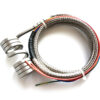
- 6mm Hot Runner Coil Heater for Injection Nozzle: Compact profile element rigorously tested at 1000V AC to ensure dielectric reliability in high-density molds.
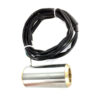
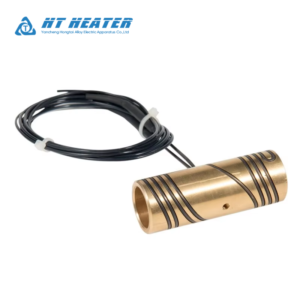
- 220V Brass Sleeve Hot Runner Coil Heater: Features encapsulated brass construction tested for 360° heat transfer and zero current leakage.
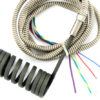
- 300W Coil Heater with Built-in Thermocouple: Integrated Type J/K sensor unit tested for dielectric isolation between heating element and thermocouple wires. Review configuration options in coil heater with built-in thermocouple options.
Contact Hongtai for Certified Heating Assemblies & QA Documentation
Hongtai heater factory engineers perform 100% pre-shipment Hi-Pot and insulation resistance testing on all custom hot runner coil heaters, brass sleeve assemblies, and integrated sensor units. Utilizing high-density swaged Magnesium Oxide (MgO) insulation and hermetic end-sealing, our thermal assemblies withstand 1500V dielectric stress, eliminate ground leakage, and comply with strict CE and UL safety standards. By supplying fully documented, factory-certified heating elements, we resolve import compliance hurdles and prevent field dielectric breakdowns, delivering safe, reliable, and international-standard performance for global OEM mold builders.
Looking for CE/UL Certified Coil Heaters with Factory QA Documentation?
Hongtai heater factory supplies robust hot runner coil heaters, brass sleeve assemblies, and flexible lead options to injection molding plants worldwide.
B2B Related Technical Resources
- Nozzle Fit & Tolerance: Hongtai HT-CR Coil Heater ID Tolerance: Ensuring Perfect Nozzle Fit Without Thermal Lag
- Thermal Profile Design: Distributed Wattage Coil Heater: Optimizing Hot Runner Temperature Profiles
- Air-Gap Elimination: Hongtai Pressed-In Brass Hot Runner Heater Design: Eliminate Air Gaps & Thermal Lag in Hot Runners
- Sensor & Feedback Integration: Coil Heater with Built-in Thermocouple: Type J vs. K and Lead Exit Engineering
- Sheath Metallurgy Selection: Sheath Materials for Hot Runner Coil Heaters: Stainless Steel vs. Nickel
- Cross-Section Geometry: Hot Runner Coil Heater Cross Section: Round vs. Square vs. Rectangular
- Lead Wire & Terminal Protection: Coil Heater Lead Wires: Selection, Temperature Ratings, and Protection Options
- Installation Standard SOP: How to Install Hot Runner Coil Heaters: Mounting SOP & Preventing Heater Deformation
- Energy Efficiency Upgrades: Insulated Coil Heater Guide for Hot Runners
- Field Failure Diagnostics: Troubleshooting Hot Runner Coil Heater Failures: Element Burnout and Current Leakage