htwaimaokuaiche@gmail.com

Tubular Heaters with Integrated Thermocouples: Solving Thermal Lag & Preventing Dry-Fire

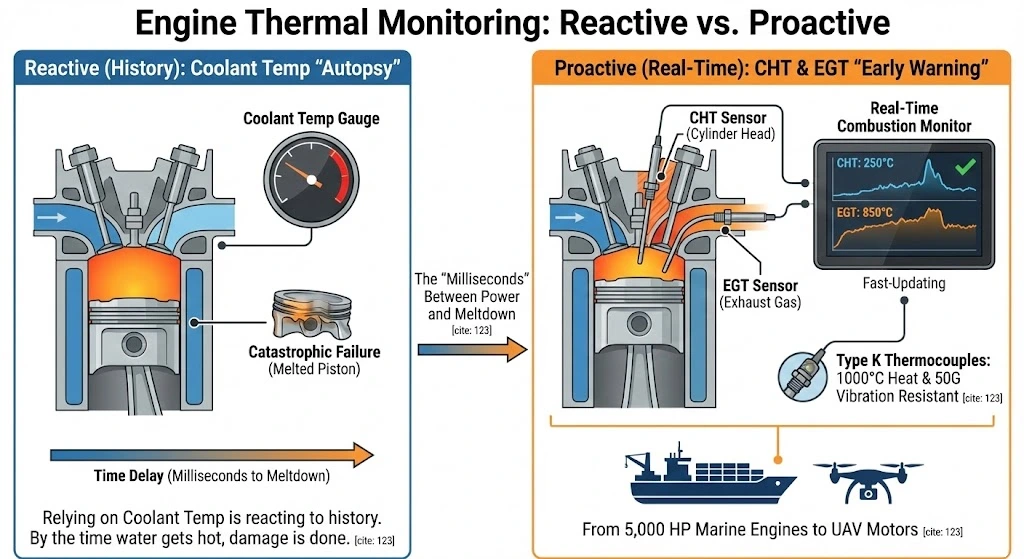
The Invisible “Time Gap” That Kills Heaters Imagine driving a car at 100 mph while blindfolded, with a passenger telling you “Turn Left” five seconds after you’ve already hit the wall. This is exactly how a standard heating system works without internal monitoring. For process engineers, the Tubular Heater with Thermocouple is the solution to […]

Tubular Heaters with Integrated Thermocouples: Solving Thermal Lag & Preventing Dry-Fire Read More »

Beyond 316L: Why Electropolishing & Passivation are Critical for Sanitary Heating Elements

The Microscopic World: Why “Shiny” Isn’t Enough In the food and pharmaceutical industries, a common misconception is: “If it’s Stainless Steel 316L, it’s safe.” Not necessarily. You can buy the best 316L material in the world, but if the surface finish is microscopic “sandpaper,” your system is at risk. Under a microscope, a standard mechanically

Beyond 316L: Why Electropolishing & Passivation are Critical for Sanitary Heating Elements Read More »

Low Insulation Resistance? Don’t Scrap It! The “Bake Out” Guide to Reviving Wet Industrial Heaters

The “Monday Morning” Panic It’s a classic scenario. You took out a batch of heating tubes that had been in the warehouse for several months. Your quality control team pulls one out, hooks up a Megohmmeter (Megger), and sees a reading of 0.5 MΩ. The immediate reaction? “Defective product. Return it.” Stop. Put down the

Low Insulation Resistance? Don’t Scrap It! The “Bake Out” Guide to Reviving Wet Industrial Heaters Read More »

Tubular Heaters vs. Cartridge Heaters: Which Element Fits Your Mold & Platen Application?

The Engineering Dilemma: Fit, Heat, or Budget? For a mold designer or maintenance manager, choosing the right heating element is a balance of three constraints: Space, Temperature Uniformity, and Cost of Ownership. While both Cartridge Heaters and Tubular Heaters rely on Joule heating, their application logic is fundamentally different. At Hongtai, we manufacture both. However,

Tubular Heaters vs. Cartridge Heaters: Which Element Fits Your Mold & Platen Application? Read More »

ht-heater goods delivery (1)

Boosting HVAC Efficiency and Corrosion Resistance for a Mexican OEM

Executive Summary Mexico’s industrial sector, particularly in the Monterrey and Bajío regions, is driving a surge in demand for high-performance Air Handling Units (AHUs) and industrial drying ovens. However, standard heating components often struggle to cope with the dual challenges of high humidity environments and rigorous continuous operation cycles. This case study examines how Hongtai

Boosting HVAC Efficiency and Corrosion Resistance for a Mexican OEM Read More »

The Global Passport for Machinery: Navigating UL CE LVD & ROHS Material Traceability for Heating Elements

The Nightmare Scenario: A $100k Machine Stopped by a $50 Component Imagine your latest packaging line arrives at the Port of Hamburg or Long Beach. The customs officer asks for the technical file. The motors have certificates, the PLC is compliant, but the heating elements in the shrink tunnel lack documentation. The entire shipment is

The Global Passport for Machinery: Navigating UL CE LVD & ROHS Material Traceability for Heating Elements Read More »

ht-heater custom-tubular-heaters-usa-case-study

Case Study: Overcoming Premature Heater Failure in High-Volume US Food Processing Lines

Executive Summary For US-based industrial manufacturers, the Total Cost of Ownership (TCO) for heating elements extends far beyond the initial unit price. It encompasses operational lifespan, energy efficiency, and logistics integrity. This case study details how Hongtai (HT-Heater) addressed a critical failure rate in commercial frying equipment for a Texas-based client. We delivered a solution

Case Study: Overcoming Premature Heater Failure in High-Volume US Food Processing Lines Read More »

Economics of Industrial Thermal Management: Cutting TCO by 20% Through a “Thermal Loop” Approach

The Executive Summary: The 5% That Controls the 95% Let’s be honest about the P&L (Profit and Loss) statement. When you review your MRO (Maintenance, Repair, and Operations) budget, heating elements likely appear as a rounding error. A standard tubular heater costs $50. In the grand scheme of a million-dollar production line, it is negligible.

Economics of Industrial Thermal Management: Cutting TCO by 20% Through a “Thermal Loop” Approach Read More »

ht-heater The Total Cost of Ownership (TCO) Reality.

The Hidden Cost of Industrial Heating: Reducing OPEX by 15% Through Optimized Heater Design & Material Selection

The Iceberg Theory: The $50 Component Costing You $5,000 When evaluating industrial heating costs, purchase price is only the tip of the iceberg. In the procurement office, the focus is often on the unit price. A $50 tubular heater seems like a commodity. But in the utility room, that same heater is an energy-hungry asset

The Hidden Cost of Industrial Heating: Reducing OPEX by 15% Through Optimized Heater Design & Material Selection Read More »

ht-heater CORRECT INSTALLATION

Tubular Heater Installation & Wiring Guide: Torque Specs, Cold Pin Alignment & Terminal Protection

The Weakest Link: It’s Not the Element, It’s the Connection Correct tubular heater installation is vital for preventing premature failure and ensuring electrical safety. The tubular heating element itself is built like a tank—compressed MgO and heavy-gauge alloys. But the connection point? That is the Achilles’ heel. In the field, 9 out of 10 “heater

Tubular Heater Installation & Wiring Guide: Torque Specs, Cold Pin Alignment & Terminal Protection Read More »

Scroll to Top