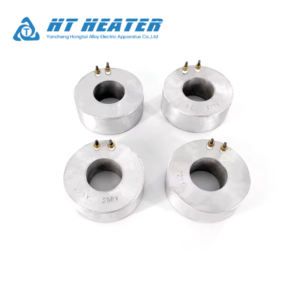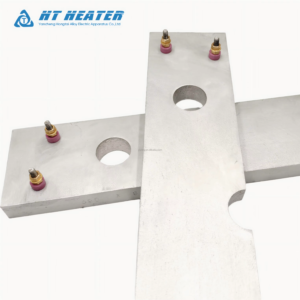
Customer Query: “My high-speed VFFS packaging machine constantly snaps internal heating elements. I need a heavy-duty, high-precision solution.”
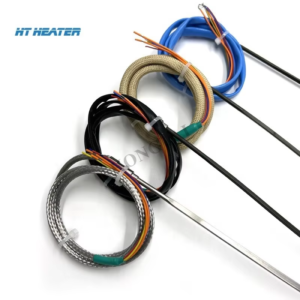
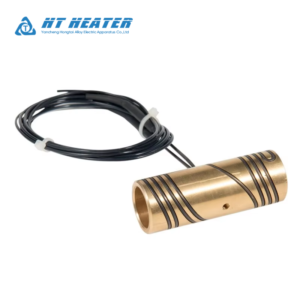
Hongtai Engineering Response: Replacing fragile, air-gapped cartridge heaters with a Hongtai cast bronze sealing jaw heater featuring an encapsulated high-temperature sealing bar element replaces vibration-sensitive assemblies with a solid, shock-absorbing copper-alloy structure capable of withstanding severe mechanical impacts without wire shear.
A cast bronze sealing jaw heater is designed specifically to solve continuous element burnout and shock fatigue on high-speed packaging equipment. In modern vertical form-fill-seal (VFFS), horizontal flow-wrapping (HFFS), and thermoforming machinery, heat-sealing components undergo extreme mechanical acceleration and deceleration. When operating at 120 to 200+ cycles per minute, a standard cast bronze sealing jaw heater or hot platen cast in heater eliminates the catastrophic resistance wire failure common in conventional drilled aluminum blocks.
1. Physical & Metallurgical Standards: The Cast Bronze Advantage
While cast aluminum is standard for plastic extrusion barrels, high-speed sealing jaws and high-pressure pressing platens require the physical strength of copper alloys.
By fully encapsulating a specialized high temperature sealing bar element directly inside a dense bronze matrix, engineers eliminate structural air voids and internal wire movement.
Cast Aluminum (A356 Grade)
- Primary Role: Standard low-impact industrial heating.
- Tensile Strength: 180 to 220 MPa
- Max Continuous Operating Temp: 350°C to 400°C
- Limitations: Susceptible to micro-plastic deformation under high impact and clamping tonnage, leading to jaw alignment failure.
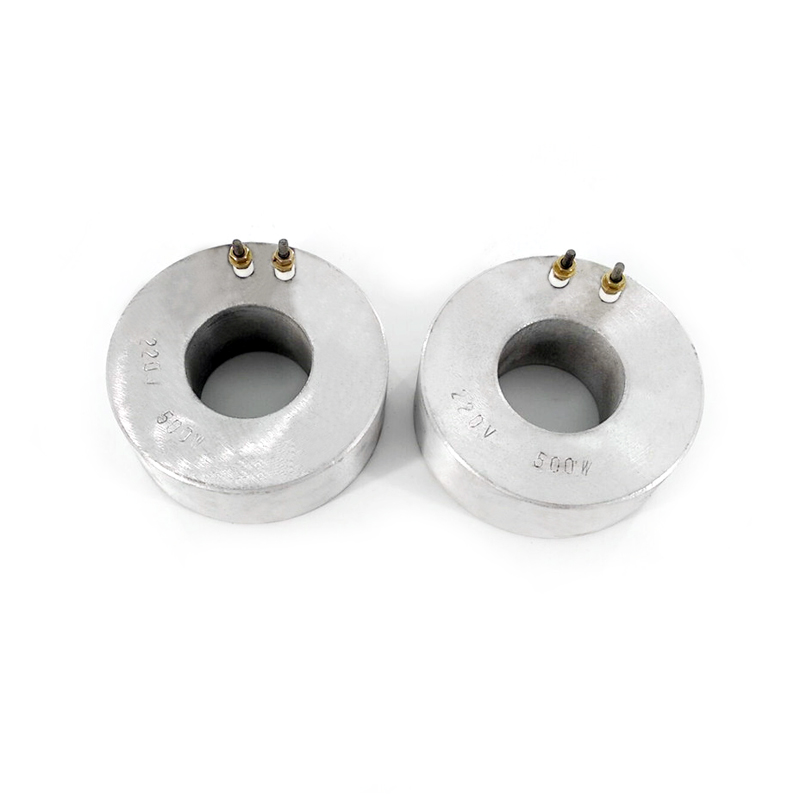
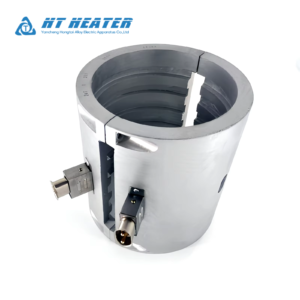
To overcome these structural limitations, Hongtai Industry Heater manufactures custom cast aluminum heaters for extruder engineered specifically for demanding extruder and injection molding barrels. By combining vacuum-assisted pressure casting with precision CNC contact surface machining and integrated leak-proof seals, Hongtai Industry Heater eliminates air gaps and protects against plastic melt ingress—providing a durable replacement solution for worn, aging, or thermally distorted barrel equipment.
Cast Bronze (CuSn10 / Aluminum Bronze)
- Primary Role: Heavy-duty, high-impact, high-temperature packaging and pressing applications.
- Tensile Strength: 350 to 550 MPa (approaching structural steel).
- Max Continuous Operating Temp: 450°C to 650°C
- Typical Applications: High-speed VFFS/HFFS sealing jaws, high-tonnage thermoforming hot platens, aerospace composite molds.
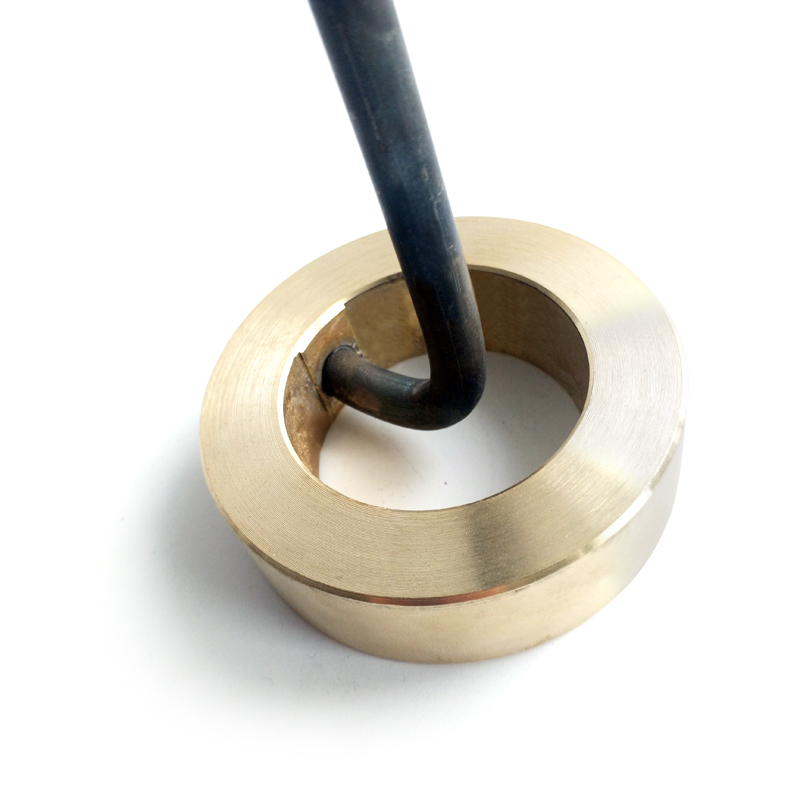
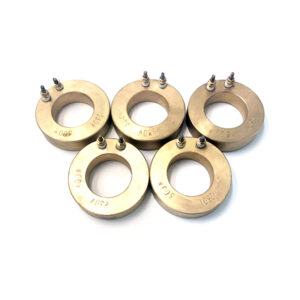
Hongtai Industry Heater produces custom cast bronze heaters for high-speed packaging sealing jaws and high-pressure hot platens, incorporating dense pressure casting, precise internal element positioning, and high-density dielectric insulation designed specifically for equipment facing internal wire snapping or uneven sealing temperatures under extreme mechanical shock, continuous high-frequency vibration, and heavy clamping tonnage. These are frequent thermal component failure issues in modern high-speed packaging and thermoforming equipment that we help customers solve through thoughtfully engineered, application-specific heating systems.
For a complete structural comparison between aluminum, bronze, and iron alloys across industrial machinery, see our Cast-in Heater Material Selection Guide: Aluminum vs. Bronze vs. Iron.
2. Acceleration & Wire Fatigue Dynamics
In high-speed packaging, mechanical deceleration forces generate severe impact stress (σ_impact) upon jaw closure:
Where:
- m = Mass of the sealing jaw or moving hot platen assembly (kg)
- apeak = Peak deceleration during mechanical jaw closure (m/s², frequently reaching 15g to 30g)
- Acontact = Effective load-bearing contact surface area (mm²)
- σthermal = Residual stress caused by thermal expansion (MPa)
Why a Cast Bronze Sealing Jaw Heater Prevents Wire Failure
- Drilled Aluminum with Loose Cartridge Heaters: Air gaps between the heater sheath and mounting hole allow internal resistance wires to vibrate during 20g decelerations. Rapid work-hardening causes the internal wire to snap.
- Encapsulated Cast Bronze Sealing Jaw Heater Assembly: Casting the high temperature sealing bar element directly into bronze eliminates internal air gaps and mechanical movement. The bronze body acts as structural armor, absorbing kinetic energy and reducing wire shear stress by over 90%.
Hongtai Shock-Resistance Engineering: To counteract extreme deceleration forces on high-speed packaging lines, Hongtai Industry Heater applies precision element positioning and high-density compaction processes prior to casting. This keeps the internal resistance coil securely immobilized within the bronze casting, protecting element wires from chatter and mechanical fatigue during high-frequency cycles
To review exact tube forming rules and sheath stress calculations, consult Internal Element Cast in Heater Design: Bending and Annealing Standards.
3. Heat Transfer Efficiency in a Hot Platen Cast in Heater
Integrating a hot platen cast in heater into thermoforming presses or pouch-sealing stations eliminates heat transfer bottlenecks:
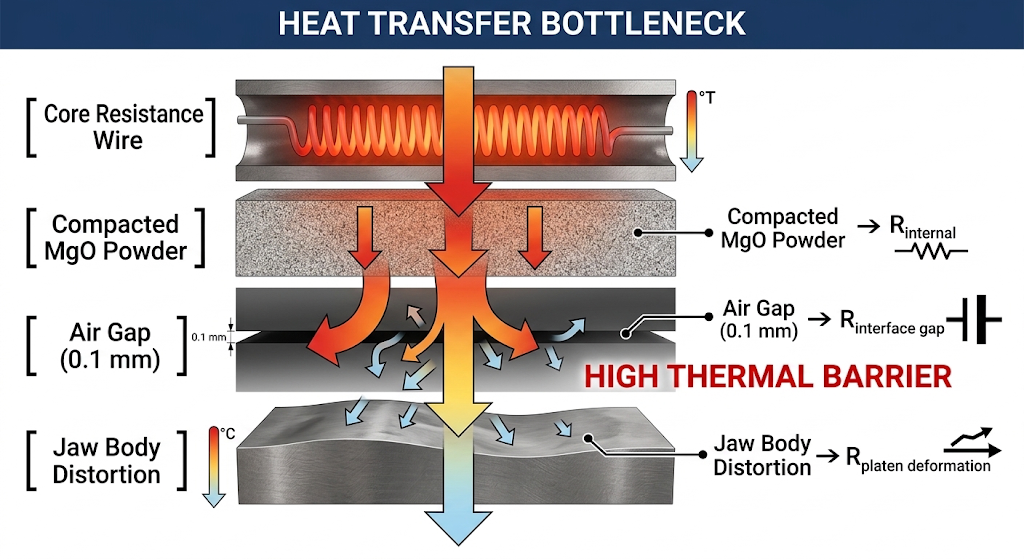
The Air Gap Thermal Barrier
In drilled installations, an air gap (Δx) introduces massive thermal resistance (Rc):
Because stagnant air has minimal thermal conductivity (kair ≈ 0.026 W/m·K), internal heater core temperatures spike beyond 700°C while the outer face suffers cold spots. In contrast, a cast bronze sealing jaw heater or hot platen cast in heater transfers heat directly through solid metal, eliminating air-gap resistance and maintaining uniform face temperatures within ±1°C.
Hongtai Precision Machining: To eliminate air-gap thermal resistance (Rinterface gap) and maintain uniform thermal output, Hongtai Industry Heater subjects all cast bronze sealing jaws and hot platens to precision CNC machining and surface grinding. Achieving tight surface planarity helps ensure rapid conductive heat transfer and consistent temperature profiles across high-speed packaging runs.
To analyze how casting density prevents internal voids and thermal drop-offs, read How Porosity Affects Heat Transfer in Cast-in Heating Elements.
4. Quality Control Standards for a High Temperature Sealing Bar Element
Hongtai Quality Commitment:Every cast bronze sealing jaw heater and hot platen cast in heater manufactured by Hongtai Industry Heater undergoes systematic manufacturing quality audits prior to dispatch:
- X-Ray Radiographic Inspection: 100% fluoroscopy verifies that the high temperature sealing bar element remains centered in its insulation matrix with zero coil distortion.
- High-Voltage Dielectric Test (Hi-Pot): Testing applies 2,000V AC for 60 seconds between electrical terminals and the bronze body to verify dielectric strength.
- Thermal Imaging Audit: Infrared thermography verifies dead-level temperature profile uniformity across the entire sealing face.
International machinery safety standards can be referenced through the [International Organization for Standardization (ISO)] packaging machinery safety compliance guidelines.
5.Engineering Selection Matrix
| Application Scenario | Recommended Solution | Engineering Rationale |
| Low-Speed Bag Sealing (<60 SPM) | Cast Aluminum Sealing Heater | Low mechanical shock; cast aluminum provides cost-effective, uniform heat. |
| High-Speed VFFS Packaging (120~200+ SPM) | Cast Bronze Sealing Jaw Heater | High acceleration forces; cast bronze’s superior yield strength prevents wire breakage. |
| High-Pressure Thermoforming / Hot Press | Hot Platen Cast in Heater | High compression resistance; maintains face planarity under heavy tonnage. |
| Washdown & Pharmaceutical Packaging | Nickel-Bronze or SS-Clad Bronze | Corrosion-resistant alloy matrix withstands aggressive chemical sanitizers. |
To specify terminal configurations, mounting geometries, and power distribution during machine design, consult How to Specify Custom Cast-in Heaters for Industrial Machinery.
6.Frequently Asked Questions (FAQ)
Why is a cast bronze sealing jaw heater preferred over a standard drilled aluminum block?
A cast bronze sealing jaw heater offers significantly higher tensile strength (350–550 MPa) and operating temperatures (up to 650°C). Bronze fully encapsulates the high temperature sealing bar element, absorbing mechanical vibration and preventing internal wire fatigue on high-speed lines.
How does a hot platen cast in heater prevent thermal deformation under heavy clamping loads?
A hot platen cast in heater utilizes heavy-duty copper alloys with high yield strength. Under multi-ton hydraulic or pneumatic clamping forces, bronze maintains strict surface planarity (±0.02 mm), preventing the center-point sagging and uneven seals common in aluminum platens.
Can a cast bronze sealing jaw heater handle high-frequency thermal drawdown?
Yes. The higher density (~8.9 g/cm3) of a cast bronze sealing jaw heater provides high thermal inertia. This thermal reservoir prevents temperature drops when the sealing knife strikes cold packaging film at high speeds, ensuring continuous hermetic seals.
Industrial Heating Solutions from Hongtai Industry Heater
The comparisons and technical frameworks above reflect common engineering challenges encountered across high-speed packaging sealing jaws, thermoforming platens, and heavy-duty thermal processing equipment. Hongtai Industry Heater’s technical team works closely with machine builders and plant engineers to diagnose thermal fatigue issues, supplying custom cast bronze sealing jaw heaters, high-precision cartridge elements, and zoned hot platen assemblies engineered for specific operational demands.
If you are facing a sealing jaw, hot platen, or high-vibration thermal control challenge with parameters beyond those described above, contact Hongtai Industry Heater’s engineering department directly for a comprehensive technical review and custom thermal design solution..
B2B Related Technical Resources
- Extrusion & Blow Molding Thermal Solutions: Air Cooled Cast in Heater: Extruder Barrel Cooling Guide. and Extruder Barrel Cast in Heater: Blow Molding Thermal Guide.
- Failure Analysis & Troubleshooting: Troubleshooting Cast-in Heater Failures: Internal Element Burnout and Warping and Troubleshooting 101: 5 Common Causes of Band Heater Burn-Out
- Packaging Line Auxiliary Heating: Band Heater Installation Guide: Clamping SOP for Long Life, Band Heater Watt Density: Guide to Preventing Failure,and Brass Nozzle Heater: Eliminating Plastic Leakage Downtime.