Faulty wiring and insulation degradation cause over 60% of premature coil heater failures in injection molding tools. Coil heater lead wires must withstand continuous thermal expansion, high ambient temperatures inside mold bases, and mechanical abrasion from mold plate movements without short-circuiting or burning out at the transition header.
At Hongtai Industry Heater, we engineer the HT-CLW Series lead wire assemblies using solid Nickel 200 or 27% nickel-clad copper conductors mapped to UL temperature standards (UL 5128 / UL 5335) to maintain continuous electrical conductivity up to 550°C.
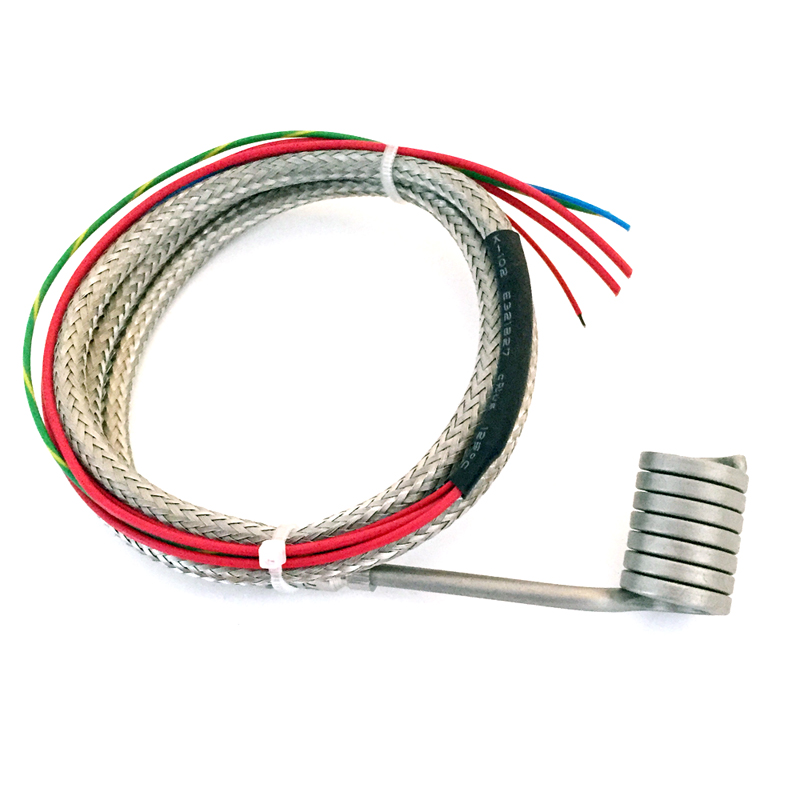
1. Conductor Metallurgy & Insulation Specifications
Matching internal conductor metallurgy and dielectric insulation to ambient mold temperatures prevents insulation embrittlement, conductor oxidation, and voltage drops:
| Hongtai Model | Insulation Material | Max Operating Temp | Dielectric Strength | Primary Molding Application |
| HT-CLW-200 | PTFE / Teflon | 200°C – 260°C | 15–20 kV/mm | Cleanrooms, high-moisture processing |
| HT-CLW-450 | Silicone Glass Fiber | 300°C – 450°C | Moderate | Standard hot runner nozzles, general tooling |
| HT-CLW-550 | Mica Tape / Glass Braid (UL 5128) | 450°C – 550°C | Very High | Engineering resins (PEEK, PEI), high watt density |
Solid Nickel 200 conductors eliminate terminal oxidation, preserving low electrical resistance across thousands of thermal cycles.
2. Protective Sleeving: Stainless Steel Braid vs. Armor Cable
Unprotected high temperature lead wires for coil heaters running through mold raceways risk cut-through from sharp plate edges or contamination from plastic blowback.
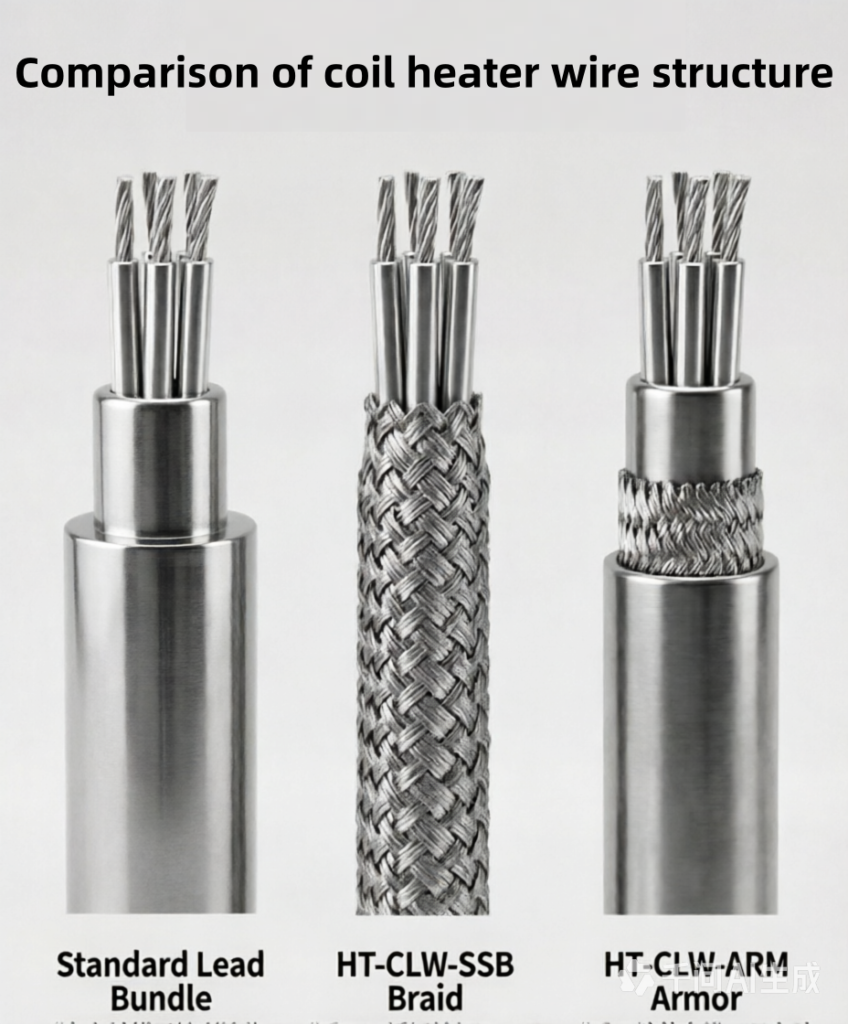
Stainless Steel Braided Wire (HT-CLW-SSB)
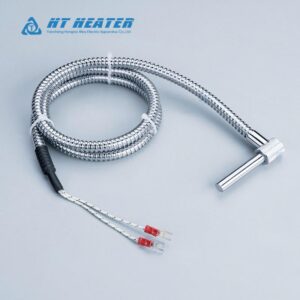
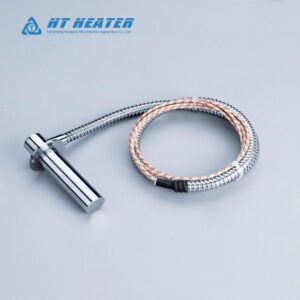
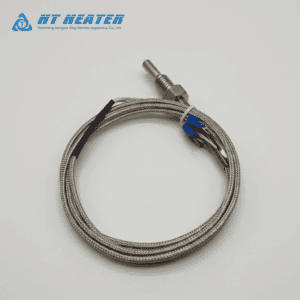
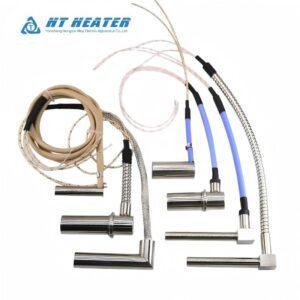
Woven from 304 stainless steel strand wire directly over the insulated nickel conductors, stainless steel braided coil heater leads offer maximum flexibility for complex wiring raceways while providing an auxiliary ground path for stray EMI/RFI noise.
Flexible Armor Cable (HT-CLW-ARM)
Enclosed in a square-lock or interlocked stainless steel metallic hose, armor cable hot runner heater lead protection forms a rigid, crush-proof conduit. This design protects conductors against plate pinch points, clamping vibrations, and direct molten resin leakage during nozzle seal blowouts, especially when paired with pressed-in brass coil heaters.
3. Transition Header & Strain Relief Engineering
The junction where cold nickel lead wires join the internal 80/20 NiCr resistance core experiences severe mechanical and thermal stress. Bending leads directly at this joint causes strain concentration and internal weld breakage.
- Transition Recessing: Keep the ceramic transition header at least 15 mm outside the active heated zone into the cooler mold plate recess.
- Minimum Bend Radius: Maintain a minimum bend radius of at least 5 times the cable outer diameter (OD) near the junction header.
- Hermetic Potting Seals: High-temperature ceramic or epoxy potting seals the hygroscopic Magnesium Oxide (MgO) insulation inside Incoloy 800 and Stainless Steel sheath materials, stopping atmospheric humidity ingress during storage.
4. Field Wiring Best Practices & Troubleshooting
Implementing proper wiring protocols during mold assembly eliminates localized hot spots and control loop errors:
- Terminal Torque Control: Tighten terminal block screws to manufacturer torque specs. Over-tightening crushes multi-strand wires, reducing current-carrying area and causing local hot spots exceeding 300°C.
- Thermocouple Isolation: Route Type J or Type K thermocouple compensation wires in dedicated wiring channels separate from 230V AC power leads to eliminate signal noise and PID temperature hunting.
- Soft-Start Moisture Elimination: Test insulation resistance with a Megohmmeter at 500V DC before startup. If insulation measures below 5 MΩ due to humidity, execute a 100°C soft-start preheat cycle on the PID controller to bake out moisture safely, or consult our detailed hot runner cohttps://www.ht-heater.com/hot-runner-coil-heater-troubleshooting-guide/il heater troubleshooting manual.
Contact Hongtai for Custom Lead Assemblies & B2B Quotes
Selecting the right lead wire configuration prevents electrical downtime, avoids mold plate short circuits, and ensures smooth machine integration. Hongtai Industry Heater manufactures custom hot runner coil heaters with tailored lead wire lengths, specialized protective armors, and integrated thermocouple options built for continuous industrial production.
Contact Our Engineering Team
Ready to upgrade your mold harness layout or need factory-direct replacement heaters?
Contact Hongtai for Coil heater lead wires selection guide.
What Related B2B Technical Resources Are Available?
- Sensor Integration: HT Coil Heater with Built-in Thermocouple: Type J vs. K & Lead Exit Selection Guide
- Thermal Distribution Design: Distributed Wattage Coil Heater Design & Temperature Profiles
- Sheath Metallurgy Selection:Sheath Materials for Hot Runner Coil Heaters: Stainless Steel vs. Nickel
- Cross-Section Selection:Hot Runner Coil Heater Cross Section: Round vs. Square vs. Rectangular