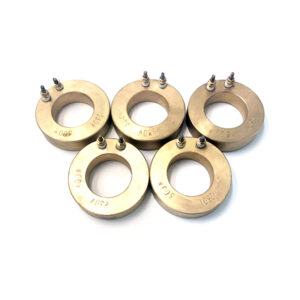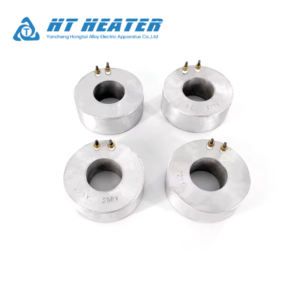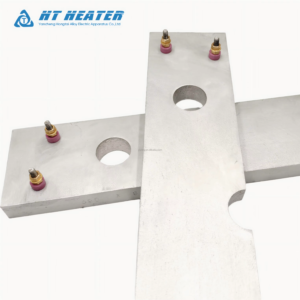
Selecting between cast aluminum heaters and ceramic band heaters directly impacts the operational lifespan, shock resistance, and Total Cost of Ownership (TCO) of your processing barrels. While mica and ceramic bands offer a lower initial CAPEX, solid cast-in aluminum elements deliver superior vibration resistance, uniform heat distribution, and protection against thermal distortion in high-stress environments.
Whether retrofitting an existing plastic extrusion line or specifying thermal components for new machinery, evaluating the trade-off between clamped surface heaters and solid cast-in elements ensures optimized capital allocation. Hongtai Industry Heater provides custom-engineered thermal assemblies, specialized casting configurations, and expert technical support designed to eliminate unscheduled downtime and maximize energy efficiency across demanding molding lines.
1. Structural Construction and Mechanical Shock Resistance
The structural design of each heating technology determines how well it withstands mechanical vibration, physical impact, and thermal expansion on the factory floor.
Mica Band Heaters: Lightweight & Low Initial Cost
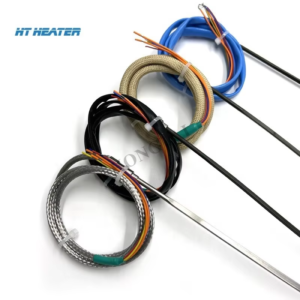
Mica band heaters consist of a precision-wound Nickel-Chromium (NiCr) resistance ribbon wrapped around dielectric mica insulation sheet, encased in a thin stainless steel or brass sheath.
- Mechanical Resilience: Low. Flexible metal construction renders the internal mica sheets vulnerable to cracking under direct impact or over-tightening.
- Vibration Tolerance: Poor. High-frequency vibration from hydraulic pumps or reciprocating cutters causes internal wire chattering and rapid dielectric breakdown.
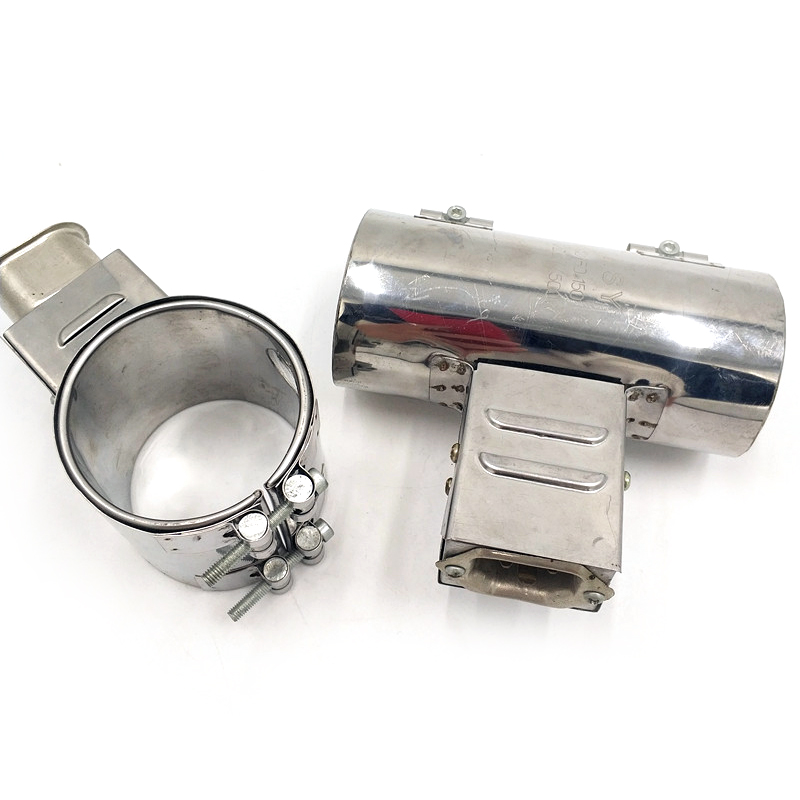
Hongtai Industry Heater manufactures customized mica band heaters for injection molding barrels, including quick-release clamping mechanisms, European-style plug connectors, and specialized terminal exits. These are specifically engineered for light-duty plastic processing equipment that requires frequent tooling changes, has spatial constraints, or is susceptible to mechanical impacts. These are common replacement challenges we help customers solve with properly engineered, application-specific heating elements designed to simplify installation and improve connection reliability.
Ceramic Band Heaters: Higher Temperatures & Segmented Flexibility
Ceramic band heaters utilize interlocking steatite ceramic tiles through which a helical NiCr heating coil is threaded, backed by an outer stainless steel shroud with built-in ceramic fiber insulation.
- Mechanical Resilience: Moderate. While the outer stainless steel shell protects internal coils, localized severe mechanical impacts can shatter individual ceramic tiles.
- Vibration Tolerance: Fair. Interlocking tiles absorb moderate vibration, though continuous reciprocal shock can degrade internal coil positioning over time.
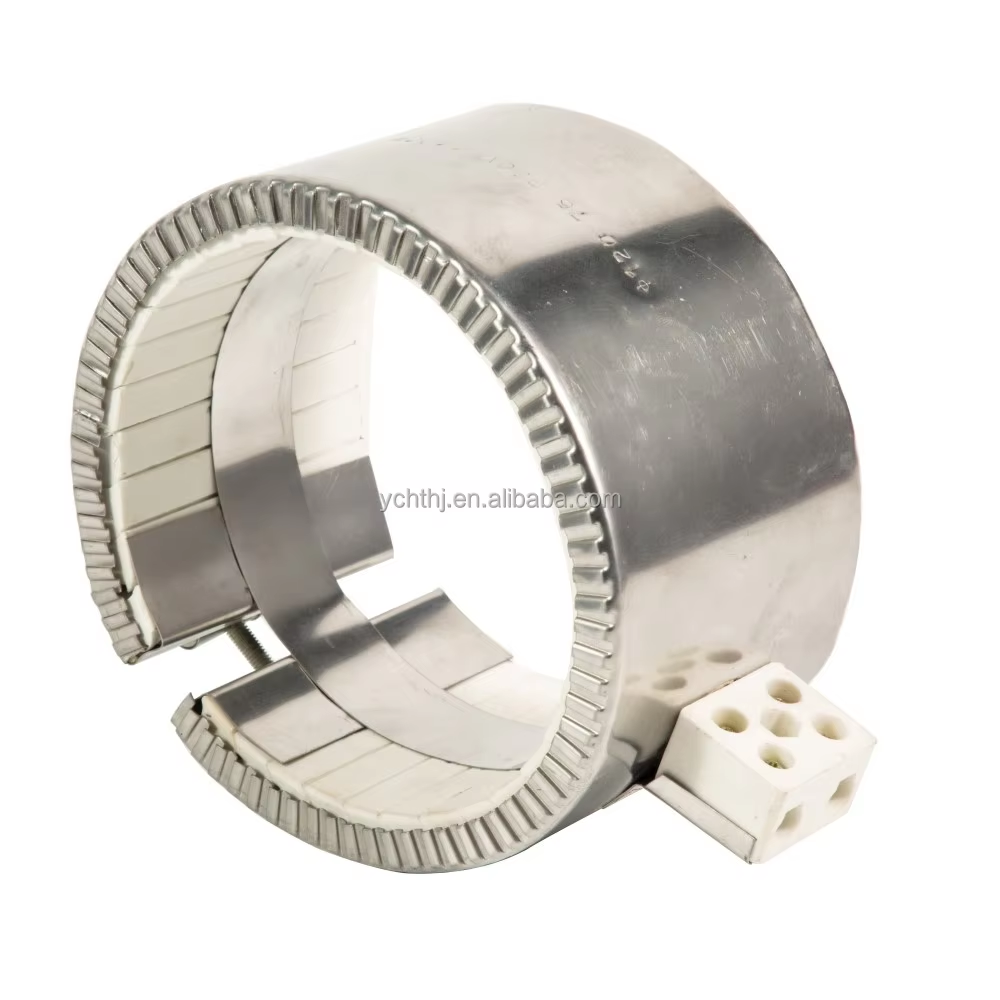
Hongtai Industry Heater manufactures customized ceramic band heaters for Engineering Plastics, including split adjustable designs, dense ceramic fiber insulation blankets, and heavy-duty spring-loaded clamping bands. These are specifically engineered for severe high-temperature operations processing engineering polymers (such as PEEK or PTFE) that require barrel temperatures between 400°C and 700°C. These are common replacement challenges under severe vibration and high-temperature conditions we help customers solve with properly engineered, application-specific heating elements designed to maintain constant barrel contact, minimize thermal dissipation, and maximize energy efficiency.
Cast Aluminum Heaters: Solid Heavy-Duty Encapsulation
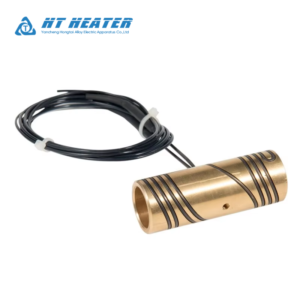
A cast-in aluminum heater encapsulates a continuous tubular heating element inside a solid, pressure-poured A356 aluminum alloy matrix.
- Mechanical Resilience: Outstanding. The solid metal body acts as a heavy duty band heater shield, making it impervious to physical strikes, tool drops, and plastic melt overflow.
- Vibration Tolerance: Superior. Completely encapsulating the internal resistance coil inside compacted Magnesium Oxide (MgO) and solid aluminum eliminates internal wire movement and mechanical fatigue.
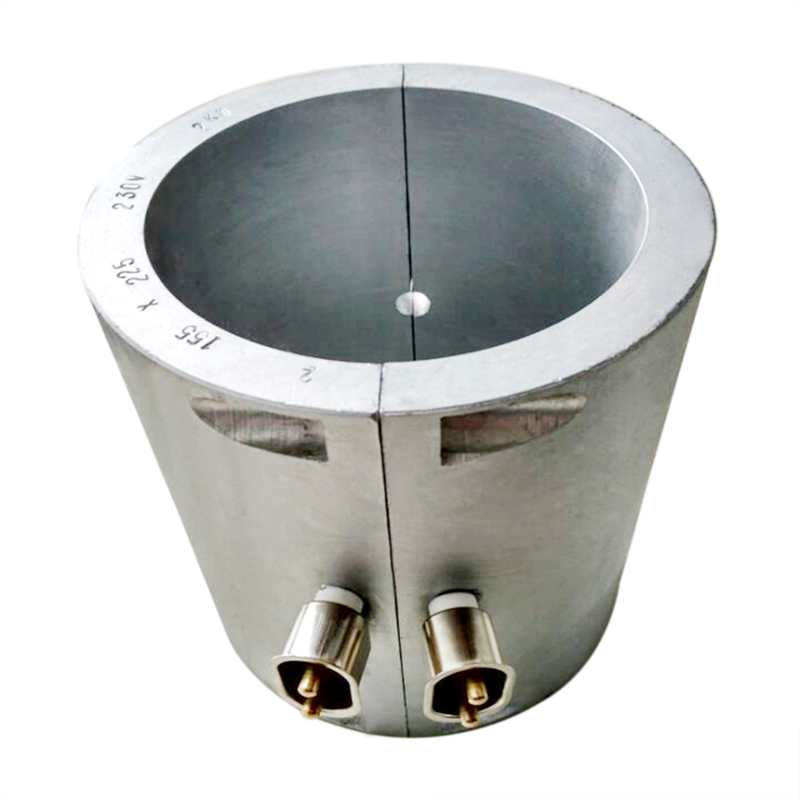
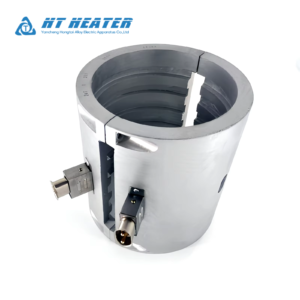
Hongtai Industry Heater engineers custom cast aluminum heaters engineered specifically for aging, worn, or thermally distorted injection molding and extrusion barrels. Featuring split-hinged designs, dense high-temperature insulation, and precise aluminum casting, our units withstand heavy mechanical shock, resist thermal fatigue, and eliminate air gaps on deformed barrels. We solve common field replacement challenges with application-specific thermal elements—delivering uniform heat distribution, superior vibration resistance, and reliable long-term performance in demanding processing environments.
For detailed material property data regarding aluminum alloys and mechanical stress limits, consult [MatWeb Material Property Data] and foundry metallurgical standards from [ASM International].
To explore alloy selection beyond aluminum (including bronze and iron for extreme thermal conditions), review our Cast-in Heater Material Selection Guide: Aluminum vs. Bronze vs. Iron.
2. Heat Transfer Physics and Thermal Dynamics
Evaluating a cast aluminum heater vs ceramic band heater requires analyzing how thermal energy moves from the resistance element into the barrel body.
Fourier’s Law of Thermal Conduction
Heat transfer efficiency across solid metal contact surfaces follows Fourier’s Law:
Where:
- q = Heat transfer rate (W)
- k = Thermal conductivity of the interface material (W/m·K)
- A = Effective surface contact area (m2)
- dT/dx = Temperature gradient across the wall thickness (K/m)
Thermal Conductivity Comparison
- Cast Aluminum Alloys (A356): Thermal conductivity k ≈ 160 – 180 W/m·K. High thermal conductivity allows rapid, uniform heat dissipation throughout the cast body, eliminating localized hotspots.
- Ceramic Band Assemblies: Thermal conductivity of steatite ceramic k ≈ 2 – 4 W/m·K. Primary heat transfer relies on radiant emission from the inner ceramic surface and direct conductive contact across the clamping face.
- Mica Band Assemblies: Thermal conductivity of natural mica k ≈ 0.5 – 0.7 W/m·K. Requires tight clamping force to maintain conductive transfer; air gaps beneath the band severely impede heat flow.
Because solid cast heaters eliminate air gaps and deliver high thermal conductivity, internal element core temperatures remain significantly lower during high-wattage operation. For an in-depth breakdown of how micro-voids impact heat flux, read How Porosity Affects Heat Transfer in Cast-in Heating Elements.
3. CAPEX vs. OPEX Total Cost of Ownership (TCO) Matrix
When comparing a mica band vs cast in heater deployment, calculating total operating cost over a 3-to-5 year production window provides clear financial clarity for line upgrade decisions.
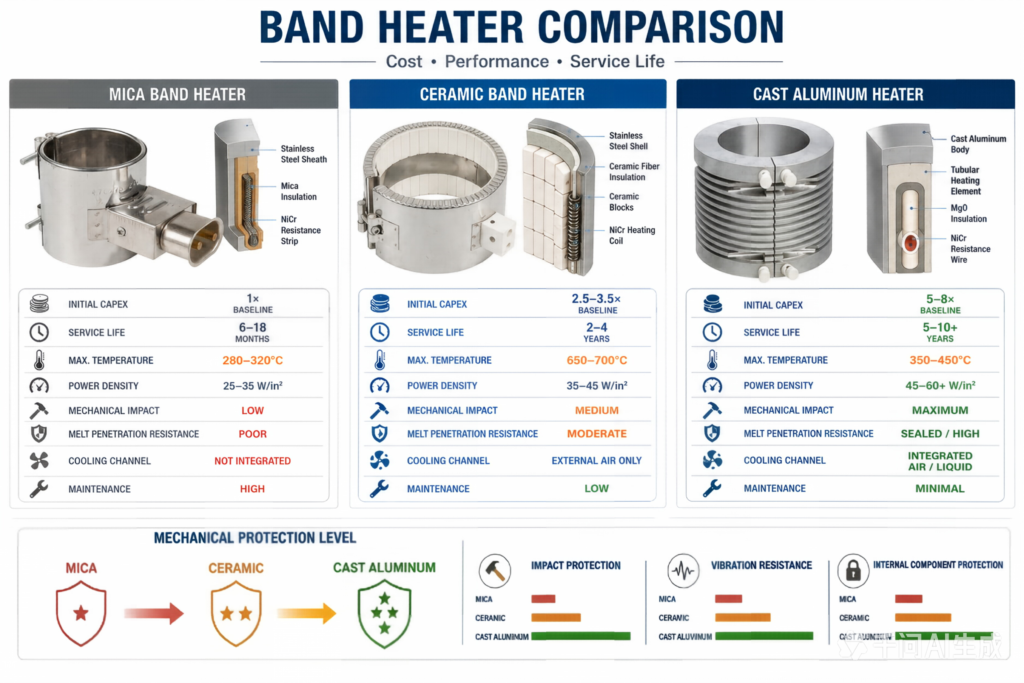
| Performance & Economic Metric | Mica Band Heater | Ceramic Band Heater | Cast Aluminum Heater (Cast-In) |
| Initial Procurement Cost (CAPEX) | Lowest (1x baseline) | Moderate (2.5x – 3.5x baseline) | Highest (5x – 8x baseline) |
| Average Service Lifespan | 6 – 18 Months | 2 – 4 Years | 5 – 10+ Years |
| Max Operating Barrel Temp | 280°C – 320°C | 650°C – 700°C | 350°C – 450°C |
| Max Watt Density Capacity | 25 – 35 W/in2 | 35 – 45 W/in2 | 45 – 60+ W/in2 |
| Mechanical Shock Tolerance | Low (Fragile) | Moderate | Maximum (Heavy Duty) |
| Resistance to Melt Ingress | Poor (Burnout risk) | Moderate | Impervious (Sealed) |
| Cooling Channel Integration | Not Possible | External Blowers Only | Integrated Liquid/Air Tubes |
| Maintenance Frequency | High (Frequent Swaps) | Low | Minimal (Fit and Forget) |
For compliance with international industrial equipment standards and energy efficiency protocols, refer to [ISO Machinery Standards].
4. Application Decision Framework: Lightweight vs. Heavy-Duty Scenarios
Selecting the ideal technology depends on operating temperature, environmental contamination risks, and mechanical duty cycles.
Scenario A: Lightweight & Rapid-Changeover Machines
- Recommended Solution: Mica Band Heaters
- Engineering Context: Small injection molding nozzles, low-temperature blow molding heads, or budget-constrained machinery where frequent nozzle size changes make cast-in units impractical.
- Hongtai Customization Support: Hongtai Industry Heater supplies precision-built mica band heaters with customized quick-clamping straps, European-style plug options, and reinforced terminal leads to simplify fast tooling changes and ensure reliable electrical connections.
Scenario B: High-Temperature Resin Processing
- Recommended Solution: Ceramic Band Heaters
- Engineering Context: Processing engineering polymers (such as PEEK, PTFE, or Polycarbonate) requiring barrel temperatures between 400°C and 700°C. Built-in ceramic fiber insulation blankets minimize radiative heat loss into ambient workspace.
- Hongtai Thermal Optimization: Hongtai Industry Heater builds high-temperature ceramic band heaters incorporating high-purity steatite ceramic tiles and dense ceramic fiber blankets engineered to reduce surface heat loss and optimize energy efficiency on high-heat barrels.
Scenario C: Heavy-Duty Continuous Extrusion & High-Vibration Lines
- Recommended Solution: Cast Aluminum Heaters
- Engineering Context: Heavy-duty blown film extruders, compounding lines, cable machinery, and rubber processing barrels where downtime costs thousands of dollars per hour. Cast aluminum units function as a heavy duty band heater with integrated cooling tubes for precise PID thermal management.
- Hongtai Heavy-Duty Engineering: Hongtai Industry Heater specializes in custom cast aluminum heaters engineered with integrated liquid or air cooling tubes and void-free metal encapsulation, delivering precise PID temperature control and high vibration resistance for continuous extrusion operations.
To understand internal element bending and sheath strain parameters inside cast-in units, review Internal Element Cast in Heater Design: Bending and Annealing Standards. For high-speed packaging machinery sealing applications, consult Cast Bronze Sealing Jaw Heater & Hot Platen Engineering Guide.
5. Preventative Installation and Quality Assurance
Regardless of whether you choose a cast aluminum heater vs ceramic band heater, adhering to strict engineering installation protocols extends heating element life:
- Surface Alignment & Torque Verification: Clamped band heaters require uniform surface contact. Inspect barrels for plastic residue and torque mounting straps evenly to prevent localized air gaps.
- Dielectric Inspection (Hi-Pot & IR Audit): Prior to powering up new cast-in or band assemblies, perform a 1,500V AC dielectric test and verify insulation resistance (IR) exceeds 500 MΩ using a 1,000V DC megohmmeter.
- Watt Density Management: Ensure actual watt density does not exceed surface dissipation limits for the target barrel material.
Frequently Asked Questions (FAQ)
What is the primary advantage of a cast aluminum heater vs ceramic band heater?
A cast aluminum heater fully encapsulates the heating element inside solid metal, providing maximum mechanical shock resistance, complete protection against plastic melt ingress, and a service lifespan reaching 5 to 10+ years. Ceramic band heaters offer lower initial costs and higher operating temperature capabilities (up to 700°C), but remain more susceptible to mechanical damage.
When evaluating a mica band vs cast in heater, how do I justify the higher initial cost of cast aluminum?
While cast aluminum heaters carry a higher initial procurement cost (CAPEX), their multi-year service life, zero vibration failure rate, integrated cooling option, and minimal maintenance yield a significantly lower Total Cost of Ownership (TCO) on continuous production lines where unscheduled downtime is costly.
Can a heavy duty band heater made of cast aluminum incorporate cooling channels?
Yes. Cast aluminum heaters are routinely manufactured with integrated stainless steel or copper cooling tubes cast alongside the heating element. This allows precise dual-heating and liquid/air-cooling temperature control on high-shear plastic extrusion barrels.
What happens if plastic resin leaks over a ceramic band heater versus a cast aluminum heater?
Plastic melt entering a ceramic band heater can contaminate internal ceramic tiles and carbonize against the resistance wire, causing electrical short circuits and catastrophic burnout. A cast aluminum heater features a solid, sealed metallic exterior that is completely impervious to plastic melt ingress.
Industrial Heating Solutions from Hongtai Industry Heater
The comparisons and technical frameworks above reflect common engineering challenges encountered across extrusion barrel heaters, injection molding units, and heavy-duty thermal processing applications. Hongtai Industry Heater’s technical team works closely with equipment manufacturers and plant engineers to diagnose temperature control issues, supply customized cast-in aluminum heaters, high-efficiency ceramic band heaters, and precision-engineered thermal assemblies tailored to specific equipment and operating conditions.
If you are facing an extrusion, molding, or hot platen thermal control challenge with unique parameters beyond those described above, contact Hongtai Industry Heater’s engineering department directly for a comprehensive technical review and custom thermal design solution.
B2B Related Technical Resources
- Extrusion & Blow Molding Thermal Solutions: Air Cooled Cast in Heater: Extruder Barrel Cooling Guide. and Extruder Barrel Cast in Heater: Blow Molding Thermal Guide.
- Band Heater Installation & Diagnostics: Band Heater Installation Guide: Clamping SOP for Long Life, Band Heater Watt Density: Guide to Preventing Failure, and Troubleshooting 101: 5 Common Causes of Band Heater Burn-Out
- Cast-In Troubleshooting & Custom Specifications: Troubleshooting Cast-in Heater Failures: Internal Element Burnout and Warping and How to Specify Custom Cast-in Heaters for Industrial Machinery