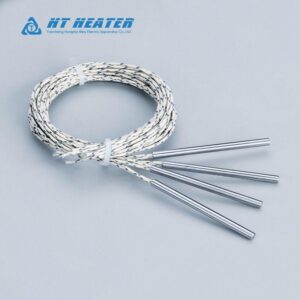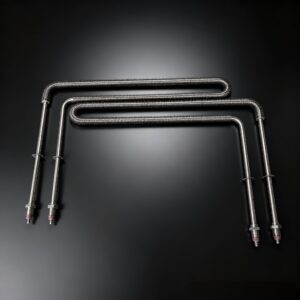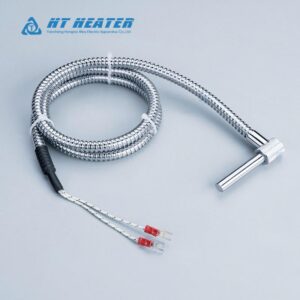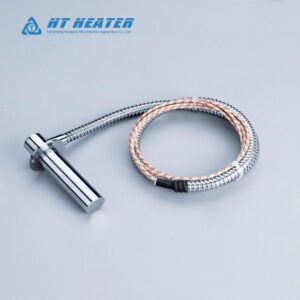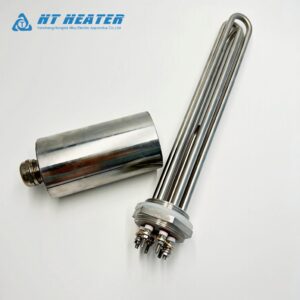
Tubular heaters are highly versatile elements that can be factory-formed into complex, custom shapes to fit precise equipment boundaries. However, bending tubular heaters requires strict adherence to mechanical and electrical engineering constraints. The allowable bend radius depends heavily on the tube diameter, sheath material, and forming process. Furthermore, field bending is not equivalent to factory bending, and critical internal zones—such as cold sections and terminal transitions—must be rigorously protected.
This guide provides mechanical engineers and equipment designers with the critical design rules required to calculate minimum bend radii, dimension U-shape heating elements, specify cold end clearances, and prepare accurate manufacturing drawings.
1. Can Tubular Heaters Be Bent?
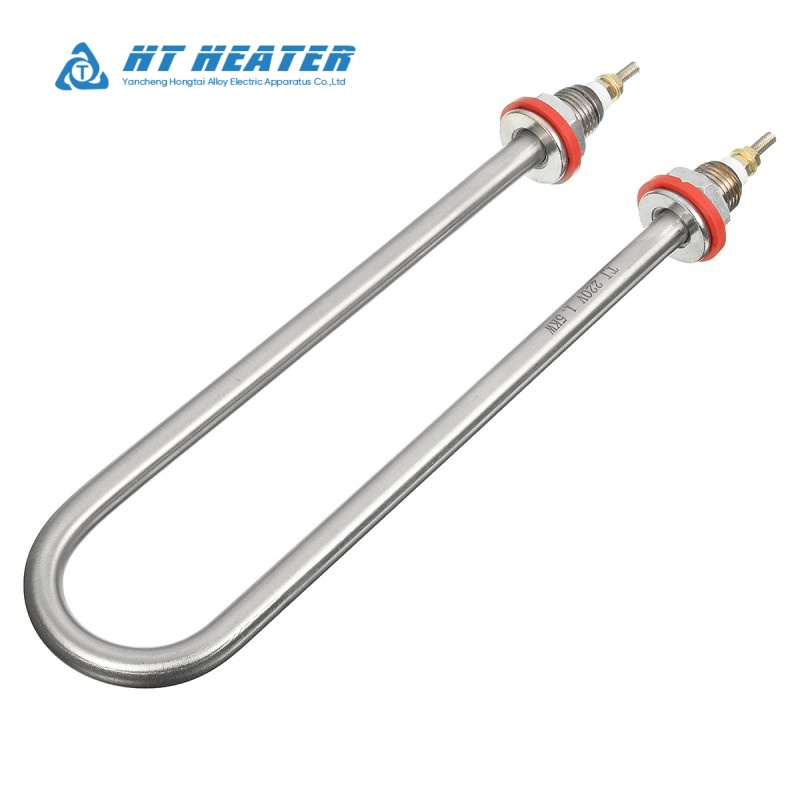
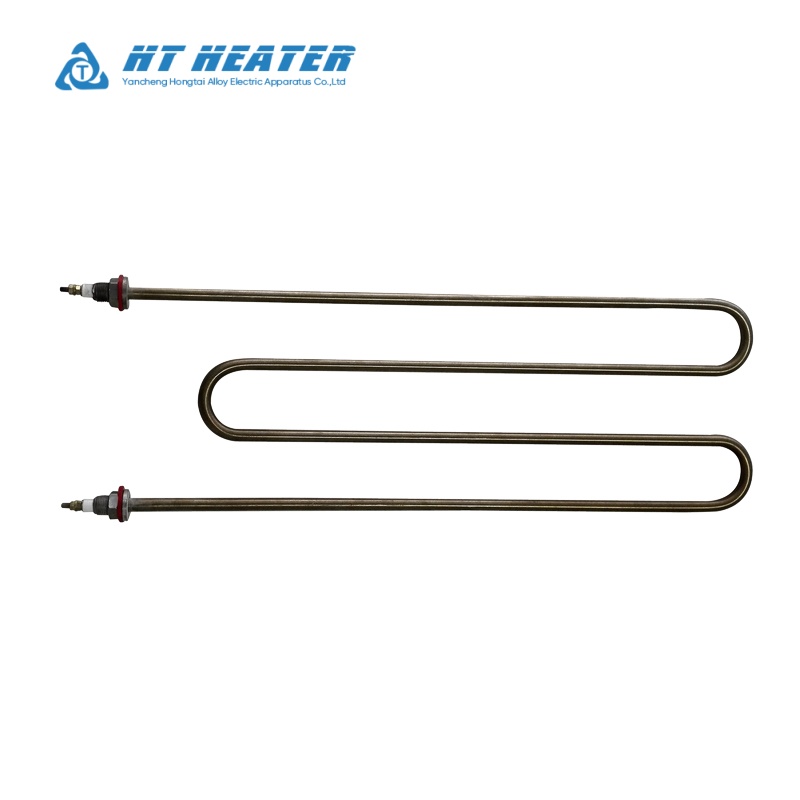
Yes, tubular heaters can be bent into almost any configuration, including U-shapes, W-shapes, and multi-axis 3D spirals.
The purpose of controlling the bend radius is not only to prevent sheath deformation. It is also to preserve the internal position and compaction of the Magnesium Oxide (MgO) insulation so that the finished element maintains adequate dielectric strength and heat transfer. At Hongtai heater factory, we utilize precision CNC bending to ensure this internal compaction remains intact. Maintaining MgO density is vital, as it directly impacts the allowable tubular heater watt density calculation and overall heat dissipation.
If bent improperly, the internal resistance wire can shift off-center. In severe cases, the resistance wire may contact the sheath and create a short-to-ground condition when power is applied, or cause a drop in insulation resistance that leads to premature failure.
2. Minimum Bend Radius for Tubular Heaters
When specifying a tubular heater bend radius on a manufacturing drawing, engineers must clearly define the measurement point to avoid catastrophic assembly errors.
Inside Radius vs. Centerline Radius
For a round tubular heater, radii are defined as follows:
- Inside Radius (Ri): Measured to the inner curve of the tube.
- Centerline Radius (Rc): Measured through the absolute center axis of the tube.
- Outside Radius (Ro): Measured to the outer surface curve.
The approximate relationship is:
- Centerline Radius = Inside Radius + (Tube OD / 2)
- Outside Radius = Inside Radius + Tube OD
The “2.5 to 3D” Rule and Actual Reference Data
A 2.5–3.0 × tube diameter rule can be used as an initial layout estimate during early CAD modeling, but it should not replace the manufacturer’s approved bend-radius data. Factory bending and field bending have entirely different limits.
The following table provides typical reference data compiled from published tubular-heater forming guides. Always verify exact limits with the Hongtai engineering team based on your specific sheath material and element construction.
| Tube OD | Typical Factory Bend (Ri) | Typical Field Bend (Ri) | Design Note |
| 6.6 mm | 9.5 mm | 19.1 mm | Confirm sheath and construction |
| 8.0 mm | 12.7 mm | 25.4 mm | Common industrial size |
| 9.5 mm | 14.3 mm | 50.8 mm | Field bending may require a larger radius |
| 10.9 mm | 19.1 mm | 63.5 mm | Verify before equipment assembly |
| 12.0 mm | 22.2 mm | 63.5 mm | Special forming may be required |
3. Factory Bending vs. Field Bending
Industrial designers frequently ask if they can perform field bending tubular heaters during final equipment assembly. While possible with specifically annealed elements, factory bent tubular heaters are always recommended for complex geometries or tight tolerances.
| Factor | Factory Bending | Field Bending |
| Tooling | Dedicated CNC forming dies (Standard at Hongtai heater factory) | General-purpose tools may be used only when approved |
| Bend radius | Can be much tighter with validated processes | Usually requires a significantly larger radius |
| Annealing | Controlled manufacturing process | Must be specified at the time of order before bending |
| Dimensional accuracy | Higher and strictly repeatable | Depends heavily on operator skill and tooling |
| Cold section | Protection controlled during CAD design | Easy to damage internally if not clearly marked |
| Recommendation | Preferred for custom and OEM shapes | Only for approved, field-bendable constructions |
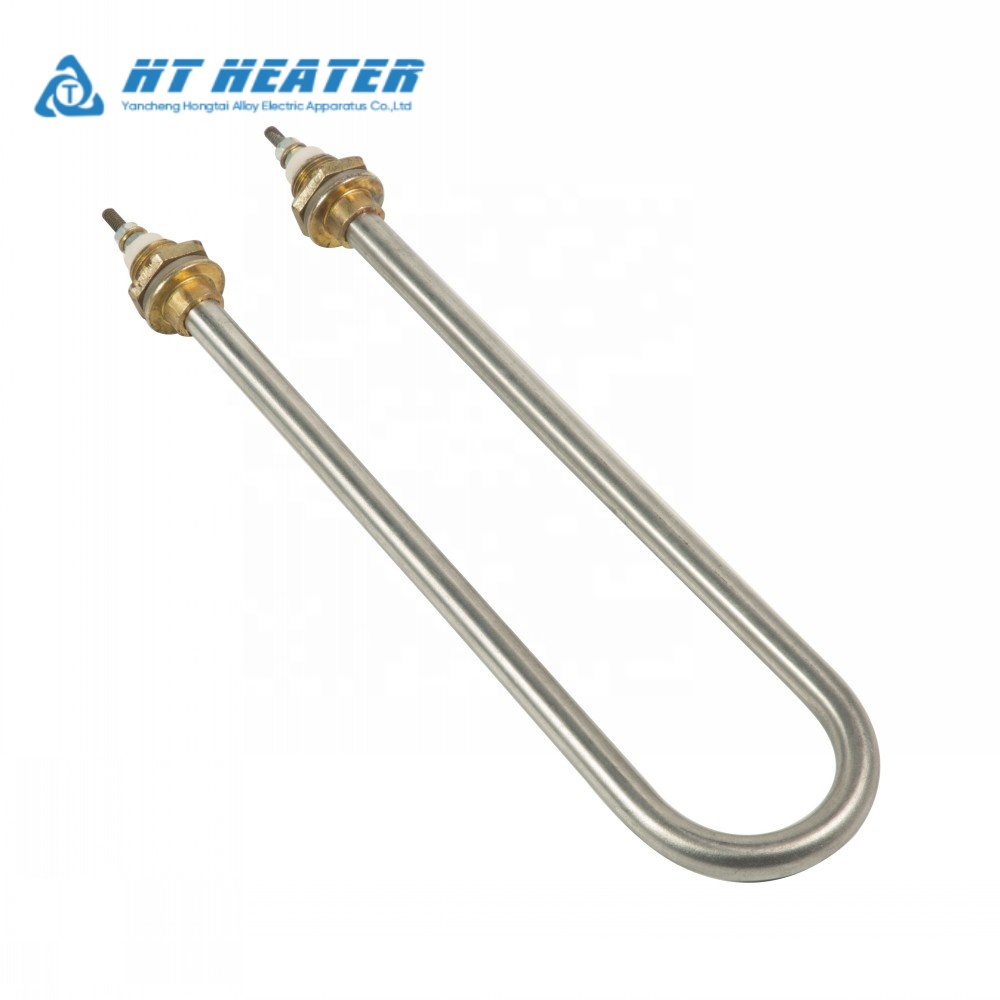
4. How to Calculate U-Shape Heater Dimensions
When designing a U-shape heating element to drop into a tank or slide into a machined groove, the minimum bend radius dictates the absolute minimum width of the heater.
For a conventional U-bend, the approximate leg center-to-center distance is calculated as:
C = 2Ri + D
Where:
- C = Center-to-Center distance of the parallel legs
- Ri= Inside bend radius
- D = Tube outside diameter
Example Calculation:
If using an 8.0 mm tube (D) with an inside bend radius (Ri) of 12.7 mm:
C = 2(12.7) + 8.0 = 33.4mm (Minimum Center-to-Center spacing).
If the calculated center-to-center distance is too large for the equipment footprint, the design may require a smaller tube diameter, a different bend layout, or a manufacturer-approved special forming process. Any local flattening or re-pressing to force a tighter fit must be validated by the factory for dimensional accuracy and internal insulation integrity.
5. W-Shape and Multi-Bend Tubular Heater Design
For W-shapes or heating elements requiring multiple, consecutive three-dimensional bends (common in air ducts), engineers must account for stress accumulation.
- Straight Sections: You cannot immediately transition from one bend into another. A minimum straight unbent section (typically 1.5 to 2.0 × Tube OD) must be maintained between consecutive bends to prevent sheath tearing.
- Thermal Expansion: Multi-bend heaters expand significantly when hot. Ensure the mounting brackets or flange supports allow for linear expansion without bowing the element. If you are unsure about the thermal expansion limits for your application, refer to a comprehensive tubular heater sizing guide to balance heated length and power output.
6. Cold Section and Terminal Clearance
Many tubular heaters include an unheated or reduced-temperature section near each terminal. The exact cold section unheated length and internal construction depend on the terminal design and heater configuration.
The most critical rule in bending tubular heaters is protecting the internal junction where the solid terminal pin connects to the coiled resistance wire. The terminal pin and its internal connection are not intended to absorb the same bending deformation as the active tubular section.
When you collaborate with Hongtai heater factory on a custom tubular heater specification, our engineers calculate these exact cold section clearances for you before manufacturing begins. Published manufacturer guides commonly specify a straight clearance of 1/2 inch (approx. 12.7 mm) between the terminal-pin junction and the start of any bend. Bending directly over this internal junction will snap the resistance wire or pierce the sheath.
7. Does Bending Require Annealing or Recompaction?
Tight bends severely disturb the internal MgO insulation. Depending on the bend radius, heater construction, and forming process, the bent area may require a controlled tubular heater recompaction or re-pressing operation.
This factory process may be considered when:
- The bend radius is relatively tight (near the absolute minimum).
- The heater operates at a high watt density.
- The element is used at elevated temperatures.
- The bend layout includes multiple complex forming operations.
Recompaction should not be presented as a universal repair method for field bending. It is a highly controlled manufacturing operation that must be validated for the specific tubular heater design.
8. Inspection and Testing After Bending
How do you know a bent heater is still acceptable for operation? A visual check is insufficient. Rigorous post-bending inspection ensures the dielectric integrity remains intact.
Dimensional & Visual Inspection:
- Inside or centerline bend radius verification.
- Leg spacing (C-to-C) and parallelism of U-shape legs.
- Look for flattened or buckled sheaths at the inside curve.
- Check for micro-cracks or excessive ovality on the outside curve.
Electrical Inspection:
- Resistance measurement (Ohms) to ensure the internal wire did not stretch or snap.
- Insulation resistance test (Megger) to verify MgO density.
- Dielectric withstand test (Hi-Pot) to guarantee safety.
9. How to Specify a Custom Bent Tubular Heater
To prevent manufacturing delays and ensure accurate fabrication, your 2D CAD drawings or RFQ (Request for Quote) documents should explicitly list:
- Tube diameter and sheath material.
- Voltage and total wattage.
- Overall developed (unbent) length.
- Inside bend radius ($R_i$) or Centerline radius ($R_c$).
- Heated length and Cold section length.
- Clearance distance from cold pin junction to the first bend.
Custom Tubular Heater Design Support
Hongtai heater factory can review custom tubular heater drawings and help confirm bend radius, tube diameter, cold section placement, terminal orientation, and finished dimensions before production. Whether you need a standard OEM replacement or a complex custom tubular heater specification from scratch, we ensure exact mechanical fit and thermal performance.
For a quotation, send:
- Tube diameter & Sheath material
- Voltage and wattage
- Overall dimensions & Bend radius
- Heated length & Cold section length
- Terminal arrangement
- Installation drawing or sample
Company: Hongtai heater factory
Technical Sales Consultation: Contact Hongtai Engineering Team
Contact Us Tubular Heater Experts: www.hongtai-heater.com