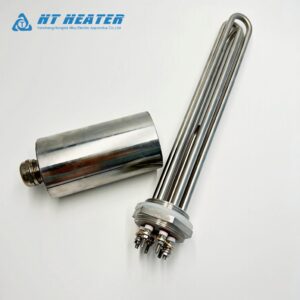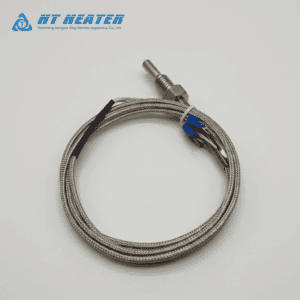
The leading cause of premature thermal failure in OEM equipment is an inaccurate tubular heater watt density calculation. Whether you are finalizing tubular heater sizing for a liquid tank or determining the appropriate air heater watt density, calculating the correct watt density W/cm2 (or watt density W/in2) is critical. However, the allowable heater watt density is never a universal static number; it is a highly dynamic variable dictated by fluid type, flow velocity, operating temperature, and sheath material.
At Hongtai heater factory, our thermal engineers resolve premature failures by treating tubular heater watt density as an application-dependent specification rather than applying a generic rule of thumb. By meticulously defining the active heated length and matching the sheath material to your system’s exact fluid dynamics, we engineer industrial heating elements that resist fluid coking, reduce premature failure, and guarantee reliable operation over a long service life.
1. The Core Formula: Tubular Heater Watt Density Calculation & Heated Length
Watt density measures the electrical power concentrated on the active heating surface area of the tubular sheath.
The most common error in a watt density calculation is using the overall tube length instead of the active heated length. You must explicitly subtract the unheated cold zones (cold pins) at the terminal ends. If the heated zone overlaps with mounting flanges, tank walls, or insulation, localized overheating will destroy the element.
The Calculation Formula:
Watt Density (W/cm²) = Total Wattage (W) / Active Surface Area (cm²)
Step-by-Step Breakdown:
- Find Active Heated Length: Total Tube Length — (Cold Zone A + Cold Zone B)
- Calculate Surface Area: π × Tube Diameter × Active Heated Length
- Divide Power by Area: Total Wattage (W) / Surface Area
The Impact of Heated Length on the Calculation:
Consider a 2000W heater with a 10mm diameter and a 1000mm overall tube length.
- Incorrect Calculation (using total length): 2000W / (3.1416 × 1 cm × 100 cm) = 6.36 W/cm²
- Correct Calculation (subtracting 50mm cold zones per side):
- Heated Length = 1000mm – 100mm = 900mm (90 cm)
- Active Surface Area = 3.1416 × 1 cm × 90 cm = 282.74 cm²
- Actual Watt Density = 2000W / 282.74 cm² = 7.07 W/cm²
By properly accounting for the cold zones, the actual surface load is more than 11% higher than a basic estimate, which can be the difference between reliable operation and rapid burnout in sensitive fluids.
2. Typical Watt Density Guidelines (Application-Dependent)
There is no single “maximum safe” number that applies to all working conditions. The maximum watt density a tubular heater can safely sustain is heavily dependent on fluid velocity, contamination levels, element spacing, and the thermal conductivity of the medium.
The following are typical guidelines for immersion heater watt density, not absolute limits.
Water & Aqueous Solutions
Water transfers heat exceptionally well, allowing for highly concentrated power.
- Static or Hard Water: Typically restricted to 4.5 – 6.0 W/cm² (approx. 30–40 W/in²). Lower density minimizes the rapid accumulation of calcium and mineral scaling, which acts as a thermal insulator.
- Clean Wash Water / Municipal Water: Generally specified around 6.0 – 9.0 W/cm².
- Highly Engineered & Rapid Circulation Systems: With optimal fluid velocity, correct element spacing, and clean water, specific immersion heater designs can operate reliably at 15.5 W/cm² (100 W/in²), with some manufacturers rating specialized elements up to 18.6 W/cm² (120 W/in²).
Oils & Viscous Fluids
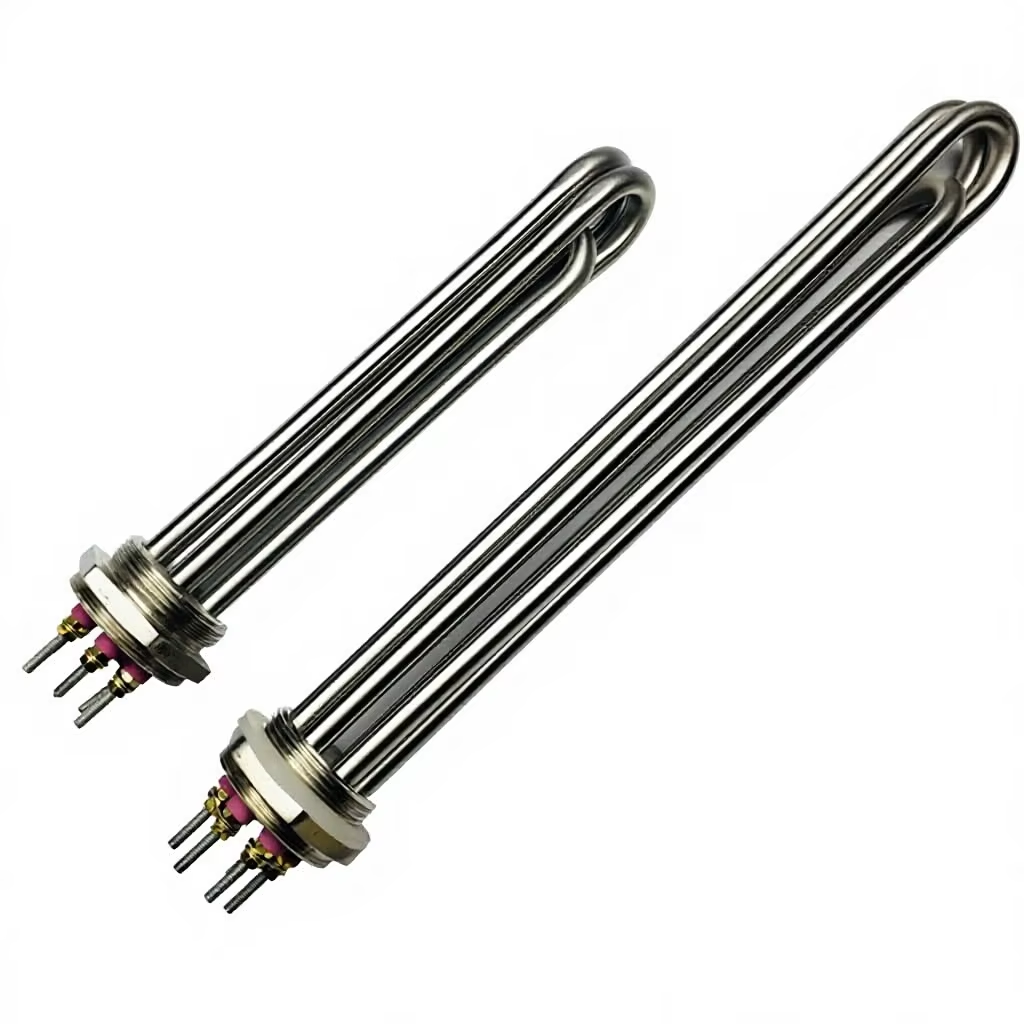
Oil has significantly lower thermal conductivity than water. If the watt density exceeds the oil’s ability to absorb the heat, localized boiling occurs at the sheath surface. This degrades the fluid and creates a hard carbon crust (coking) that insulates the heater and causes immediate internal wire failure.
- Heavy Fuel Oils (Bunker C): 1.0 to 1.5 W/cm² (approx. 6–10 W/in²).
- Vegetable Oils (Deep Frying): 2.5 to 4.5 W/cm². This requires careful element spacing to prevent oil degradation.
- Light Heating Oils / Thermal Fluids: 3.0 to 4.5 W/cm², dependent on the pump’s flow rate.
Air & Gases
Air is an exceptional insulator. Consequently, the allowable air heater watt density is the lowest among industrial applications.
- Still / Static Air (Ovens, Incubators): 0.5 to 2.0 W/cm² (Highly dependent on target ambient temperature and sheath material).
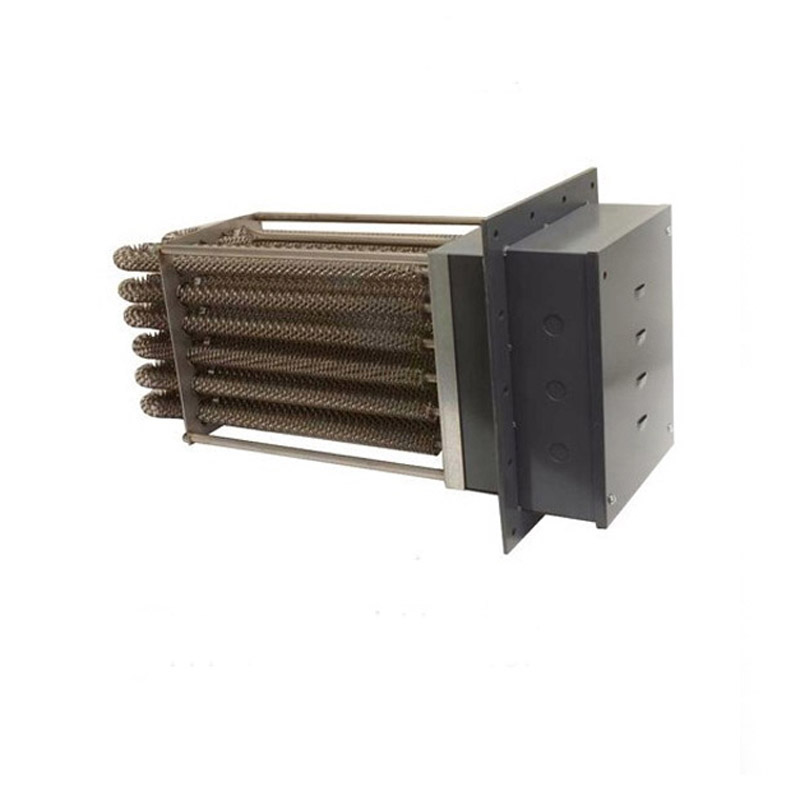
- Forced Air (Duct Heaters): 2.0 to 4.5 W/cm² (Requires strict minimum air velocities, typically 2–5 meters per second).
3. Key Variables Impacting the Allowable Watt Density
When finalizing your tubular heater sizing, Hongtai heater factory evaluates the following variables to determine your specific safe surface load:
- Fluid Velocity (Flow Rate): Rapidly moving fluids constantly strip heat away from the sheath, allowing for a much higher maximum watt density compared to stagnant tanks.
- Scaling and Coking Potential: Contaminated water (scale) or static oil (coke) builds physical barriers on the sheath. The dirtier the fluid, the lower the watt density must be to extend service life.
- Sheath Material: High-grade alloys (like Incoloy 800 or 840) withstand higher internal core temperatures than standard 304 stainless steel, providing a wider safety margin if fluid levels drop or flow rates fluctuate.
4. Tubular Heater Sizing Strategies to Lower Surface Load
If your required total wattage (kW) generates a surface load that exceeds safe operational limits for your fluid, the physical geometry of the heater must be altered to increase the active surface area:
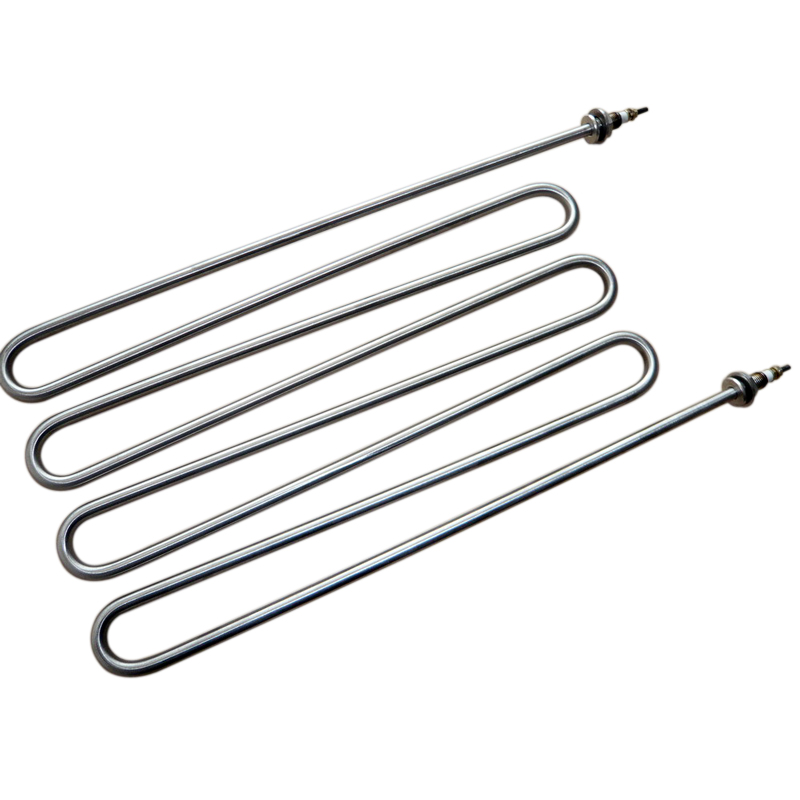
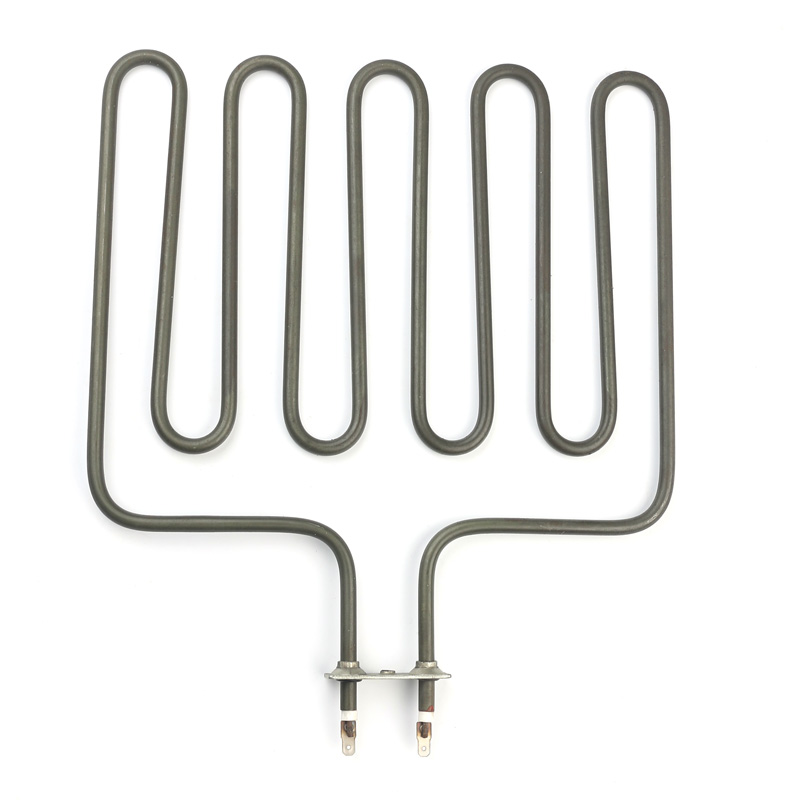
- Increase the Heated Length: Utilize CNC bending to form U-shapes, W-shapes, or multi-hairpin configurations. This packs more active heating surface into the same spatial footprint.
- Expand the Tube Diameter: Upgrading from an 8mm to a 12mm or 16mm diameter proportionally increases the radial surface area, instantly lowering the watt density.
- Add Heat Sinks (Fins): For air applications, continuously swaged corrugated fins dramatically increase the heat dissipation area without changing the baseline tube length.
Optimize Your Process Heating with Hongtai Heater Factory
Frequent heater failures due to sheath corrosion, mineral scaling, or high-temperature oxidation cause unacceptable downtime in industrial process heating. Hongtai heater factory custom-engineers tubular heating elements using high-grade Incoloy 800, 316L/304 stainless steel, and titanium sheaths to guarantee robust performance in the harshest chemical and high-temperature environments.
Do You Want to Specify the Ideal Sheath Material for Your System?
Hongtai heater factoryoesn’t just supply heaters; we act as your dedicated thermal engineering partner.
By deeply analyzing your heating medium, flow rates, and operating temperatures, we design and manufacture tubular heaters with the exact watt density, precision cold zones, and premium materials required to guarantee a zero-fail rate in your industrial applications.
Company: Hongtai heater factory
Technical Sales Consultation: Contact Hongtai Engineering Team
Contact Us Tubular Heater Experts: www.hongtai-heater.com