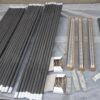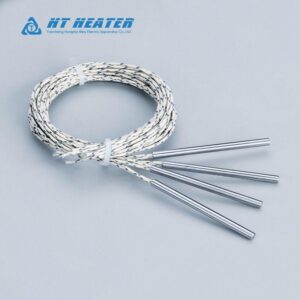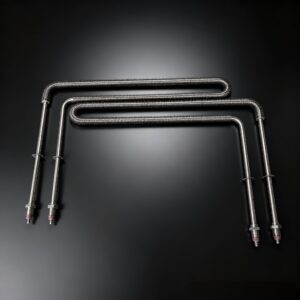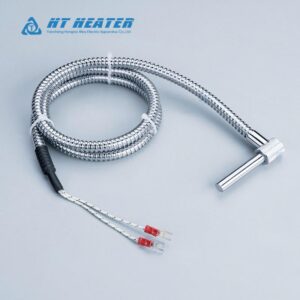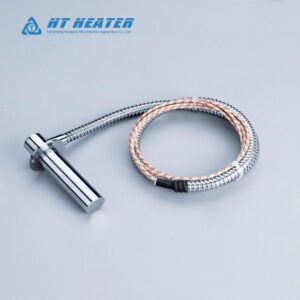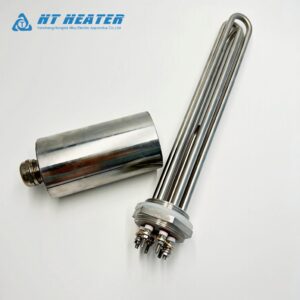
Electric tubular heaters provide versatile process heating across industrial liquid, air, and solid applications. However,Selecting the wrong tubular heater sheath material is one of the most common causes of premature heating element failure in industrial process heating.When an electric immersion or air-heating element is exposed to corrosive liquids, high-chloride water, or extreme temperatures, chemical attack and thermal oxidation can cause sheath perforation in a matter of days.
For process control engineers and industrial procurement managers, matching the sheath alloy to the specific fluid or gas medium is critical to optimizing service life, preventing fluid contamination, and eliminating unscheduled downtime. Hongtai heater factory manufactures custom industrial tubular elements using a range of high-performance metallic sheaths engineered for aggressive chemical baths, high-temperature air ducts, and deionized water heating.
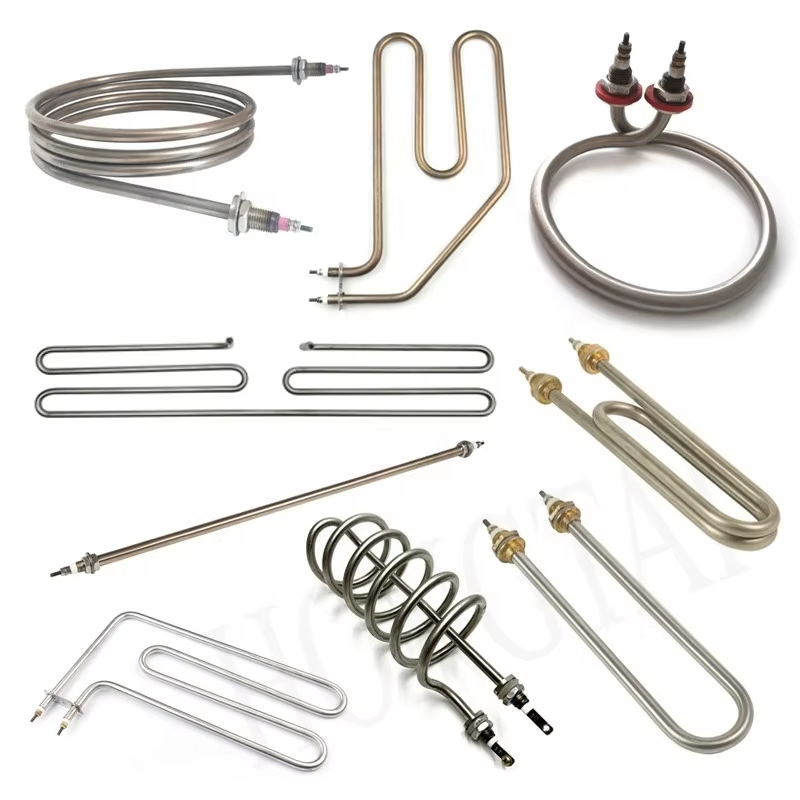
1. Stainless Steel Sheaths: The Industrial Workhorse (304, 316L, 321)
Stainless steel is the most versatile metallic sheath material due to its mechanical strength, formability, and baseline corrosion resistance. However, choosing the correct grade is crucial when evaluating chemical compatibility.
304 Stainless Steel (SS304)
SS304 is the standard benchmark material for non-corrosive industrial applications.
- Best Suited For: Clean water, edible oils, paraffin, and low-temperature air heating.
- Temperature Limit: Sheath temperatures up to 650°C (1200°F).
- Application Note: For commercial deep frying and oil processing, pair SS304 with optimized watt density as detailed in our guide on The Science of Frying: Extending Oil Life by 40% with Flat Tubular Heater Geometry & Low Watt Density Design.
- Limitations: Highly susceptible to pitting corrosion and stress corrosion cracking (SCC) in water with high chlorine or salt content.
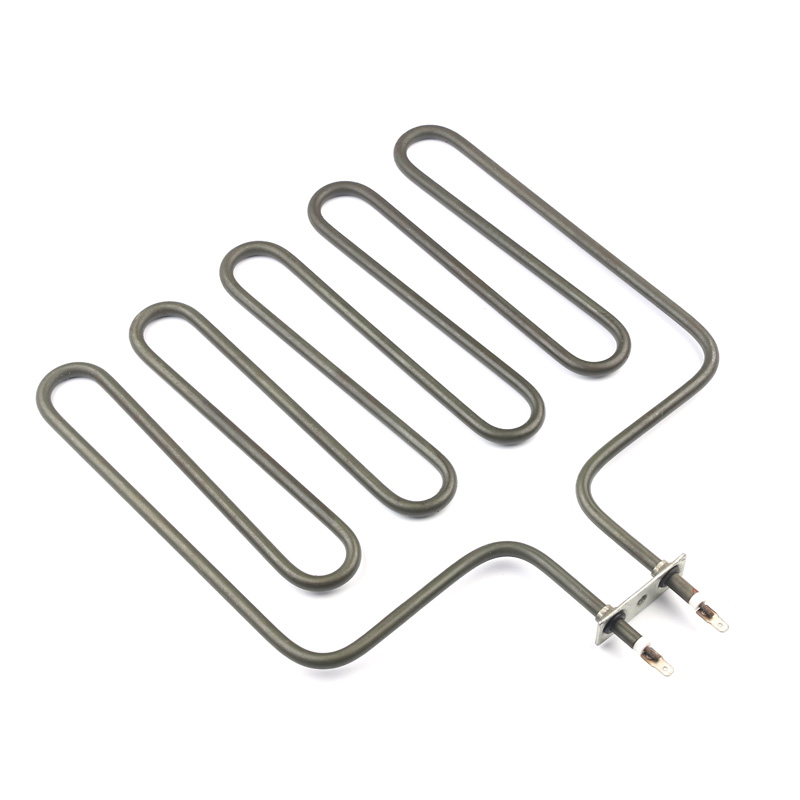
316L Stainless Steel (SS316L)
When evaluating a 316L vs 304 tubular heater, the key difference lies in the addition of 2% to 3% Molybdenum in SS316L.
- Best Suited For: Demineralized water, mild chemical solutions, food processing liquids, and brackish water.
- Temperature Limit: Sheath temperatures up to 650°C (1200°F).
- Corrosion Advantage: The Molybdenum content drastically improves resistance to chloride pitting, making SS316L the superior choice for municipal water heating and food-grade equipment.
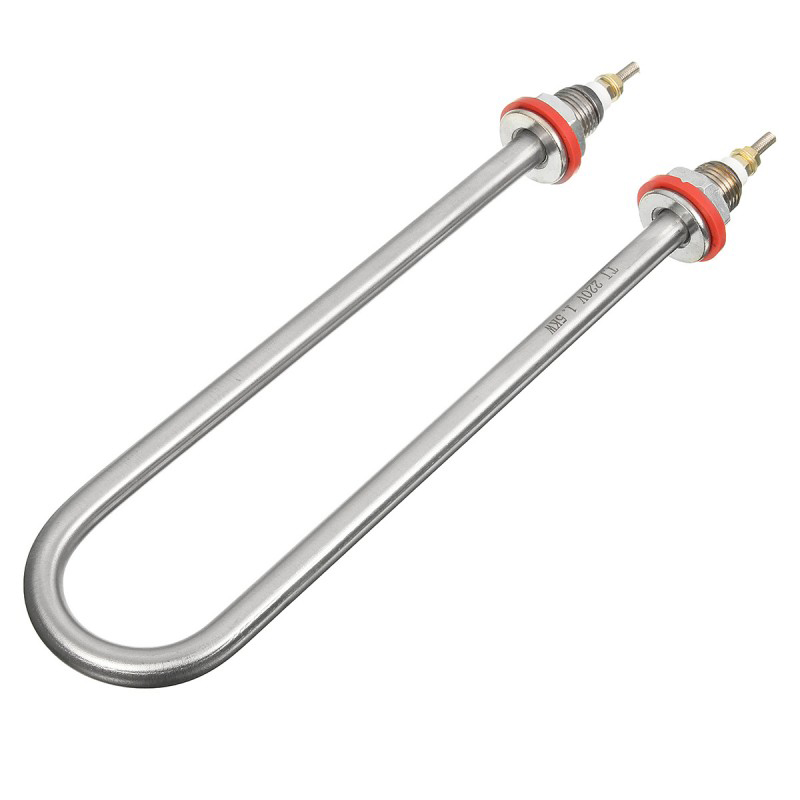
321 Stainless Steel (SS321)
SS321 is stabilized with Titanium to prevent chromium carbide precipitation during high-temperature exposure.
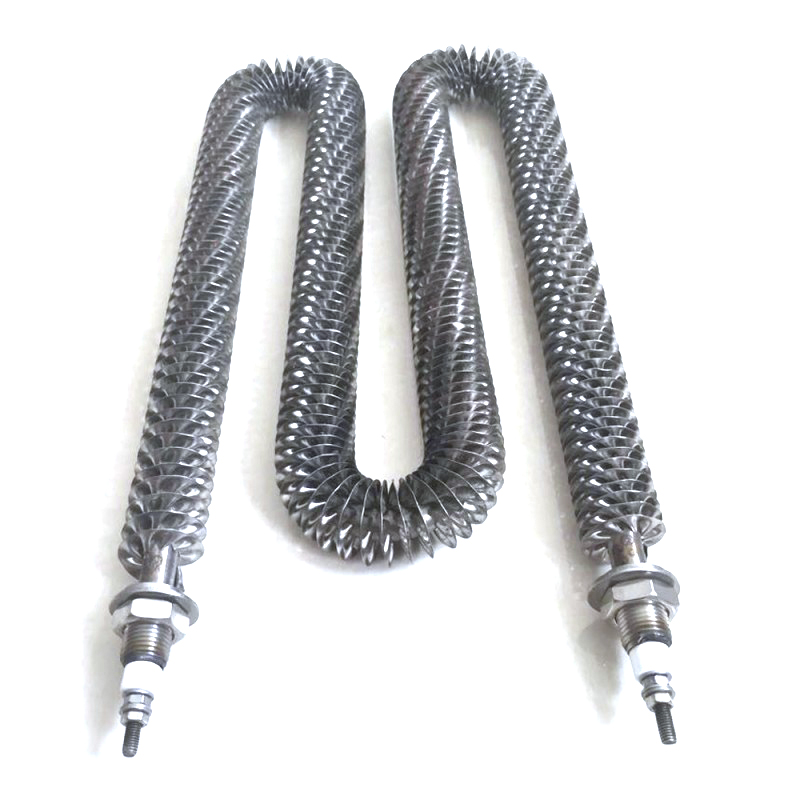
- Best Suited For: Forced air duct heaters, radiant heating panels, and high-temperature gas drying.
- Temperature Limit: Continuous sheath operating temperatures up to 760°C (1400°F).
- Application Note: When engineering convection air systems, learn more about sheath selection and airflow in Designing Finned Tubular Heaters for Forced Air: Balancing Heat Transfer, Pressure Drop & Velocity.
2. Incoloy Nickel Alloys: Extreme Heat & Stress Corrosion Resistance
When operating temperatures exceed the limits of stainless steel, or when water conditions cause severe scaling and corrosion, high-nickel alloys provide the ultimate solution.
Incoloy 800 (UNS N08800)
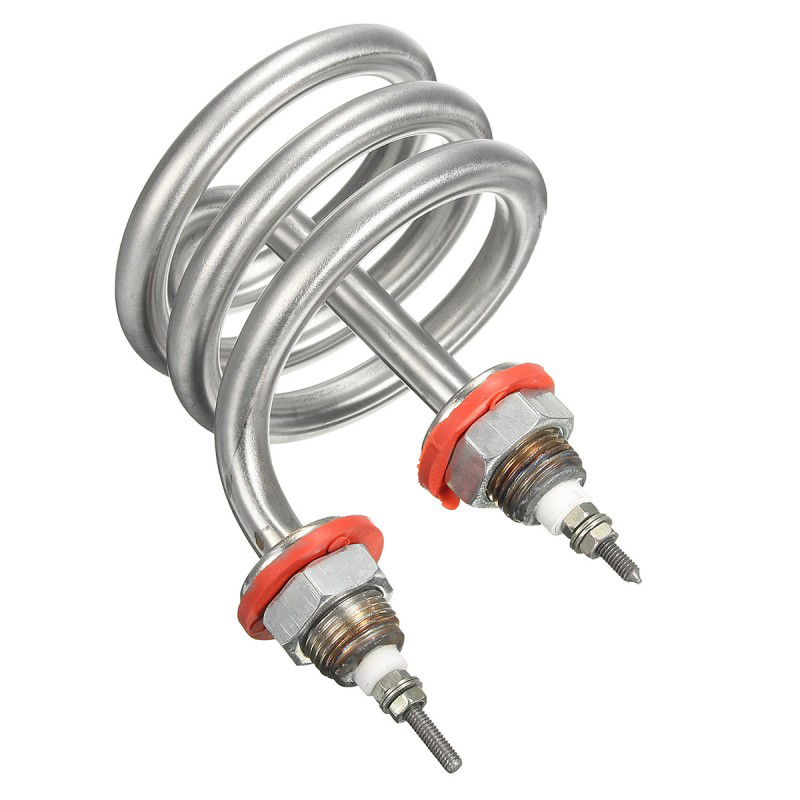
An Incoloy 800 heating element contains 30–35% Nickel and 19–23% Chromium, making it exceptionally resilient under severe thermal and mechanical stress.
- Best Suited For: Hard water immersion heating, high-temperature forced air convection, and high-wattage process heaters.
- Temperature Limit: Sheath temperatures up to 815°C (1500°F).
- Key Advantage: Incoloy 800 resists both oxidation and carburization at elevated temperatures. More importantly, Its high nickel and chromium content provides improved resistance to oxidation, scaling, and certain corrosive environments compared with many conventional stainless steel sheaths. However, alloy selection should still be based on the actual medium, temperature, and operating conditions.
Incoloy 840 (UNS S33400)
An alloy specifically formulated with high chromium and nickel content to balance cost and performance.
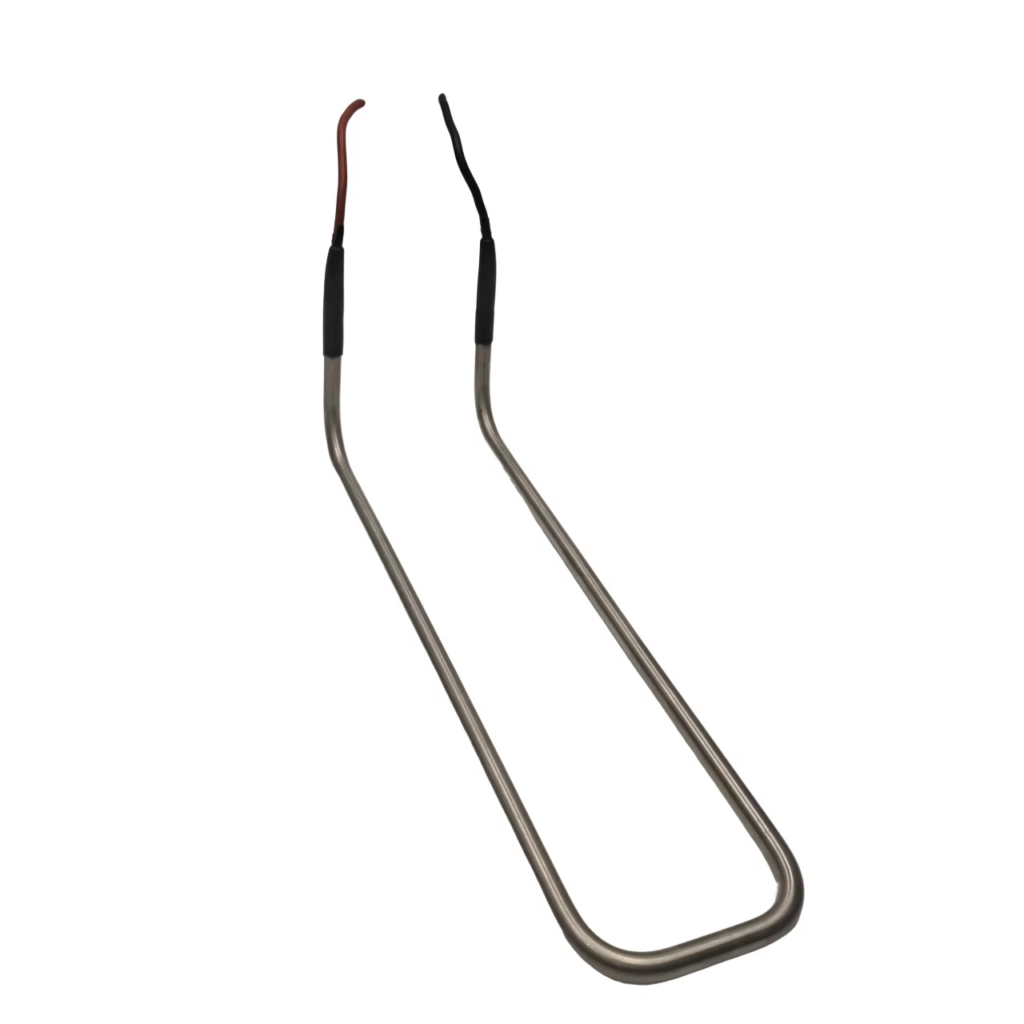
- Best Suited For: Commercial appliance heating elements, defrost heaters, and air heating units requiring high scale resistance at temperatures up to 700°C (1300°F).
3. Titanium Sheaths: Immunity to Harsh Acids and Seawater
For electroplating tanks, chemical processing, and marine applications, traditional steel and nickel alloys degrade rapidly. A titanium immersion heater offers excellent corrosion resistance in many chloride-containing and marine environments, making it a strong candidate for selected chemical processing and immersion heating applications. Compatibility should be verified against the actual chemical concentration, temperature, and operating conditions.
- Best Suited For: Anodizing baths, chromic acid, nitric acid, pickling solutions, seawater, and marine aquaculture.
- Temperature Limit: Sheath temperatures up to 315°C (600°F) in liquid immersion.
- Corrosion Advantage: Titanium spontaneously forms a passive, self-healing oxide film when exposed to oxygen. This layer renders the element virtually impervious to pitting, crevice corrosion, and organic acids.
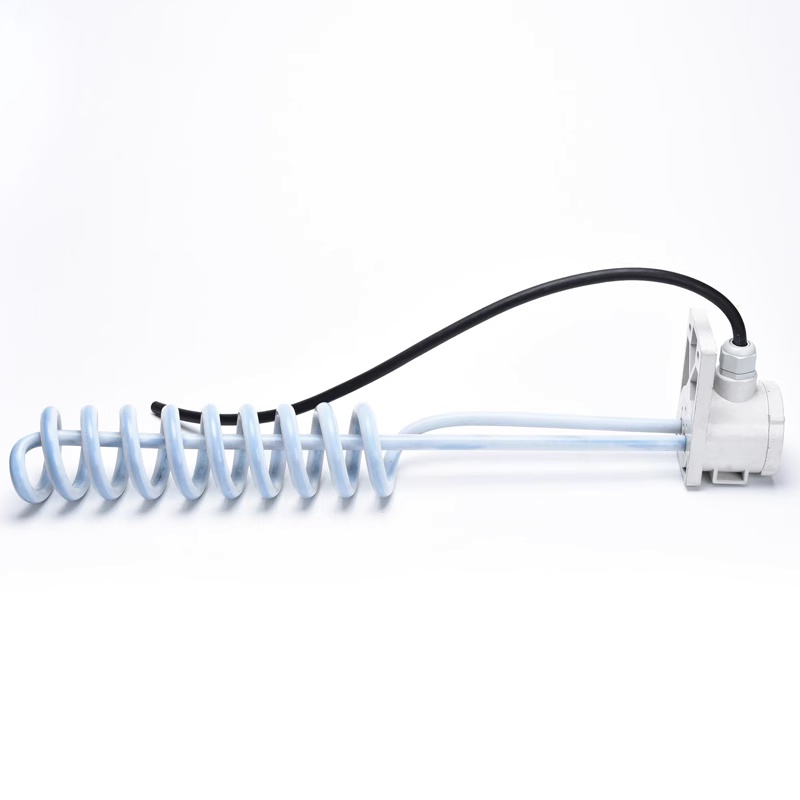
4. Sheath Material Selection Matrix
| Sheath Material | Maximum Sheath Temperature | Corrosion Resistance | Recommended Heating Media | Relative Cost |
| Copper | 180°C (350°F) | Low (Freshwater only) | Clean drinking water, water jacketed kettles | $ (Economy) |
| 304 Stainless Steel | 650°C (1200°F) | Moderate | Clean water, light oils, indirect radiant heating | $$ (Standard) |
| 316L Stainless Steel | 650°C (1200°F) | High (Chloride Resistant) | Deionized water, food products, mild acids | $$$ (Intermediate) |
| Incoloy 800 | 815°C (1500°F) | Very High (Anti-Scaling) | Hard tap water, high-temp air ducts, corrosive fluids | $$$$ (Premium) |
| Titanium | 315°C (600°F) | Maximum (Acid/Marine) | Electroplating baths, seawater, harsh chemical acids | $$$$$ (Specialized) |
Actual allowable sheath temperature depends on the heating medium, watt density, airflow, mounting conditions, and heater design.
5. Integrating Sheath Selection with Thermal Sizing & System Design
Selecting the optimal tubular heater sheath material is only half the equation. Even the highest-grade Incoloy 800 element will fail if the thermal surface load exceeds the thermal conductivity of the liquid or gas.
Watt Density Calculations: To avoid sheath burnout, calculate surface loads using the guidelines in Calculating Watt Density for Tubular Heaters: Formulas, Max Thresholds & Tolerance Correction.
Failure Prevention: If you are diagnosing an existing element failure, perform a root-cause breakdown using our Forensic Analysis of Tubular Heater Failure: 5 Common Root Causes & Prevention Strategies.
Temperature Control: To prevent dry-firing and sheath overheating in fluid systems, consult Tubular Heaters with Integrated Thermocouples: Solving Thermal Lag & Preventing Dry-Fire.
Installation Standards: Ensure proper mechanical mounting and electrical protection by reviewing the Tubular Heater Installation & Wiring Guide: Torque Specs, Cold Pin Alignment & Terminal Protection.
Tooling & Mold Selection: For tooling engineers choosing between element types, see Tubular Heaters vs. Cartridge Heaters: Which Element Fits Your Mold & Platen Application?.
Upgrade Your Process Heating Sheaths with Hongtai Heater Factory
Frequent heater failures due to sheath corrosion, mineral scaling, or high-temperature oxidation cause unacceptable downtime in industrial process heating. Hongtai heater factory custom-engineers tubular heating elements using high-grade Incoloy 800, 316L/304 stainless steel, and titanium sheaths to guarantee robust performance in the harshest chemical and high-temperature environments.
Do You Want to Specify the Ideal Sheath Material for Your System?
Hongtai heater factory provides comprehensive custom engineering to ensure your industrial heaters are perfectly matched to your specific heating media and operating temperatures. By integrating corrosion-resistant alloys, precision swaging, and customized bending, we help global process engineers and OEM buyers eliminate sheath perforation, prevent fluid contamination, and minimize costly maintenance downtime.