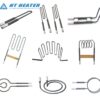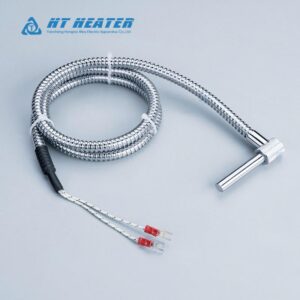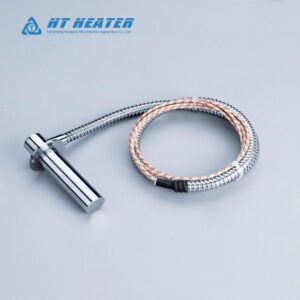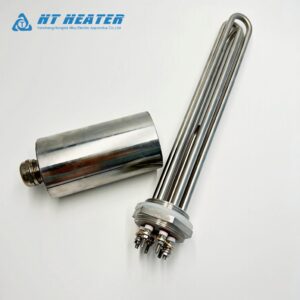
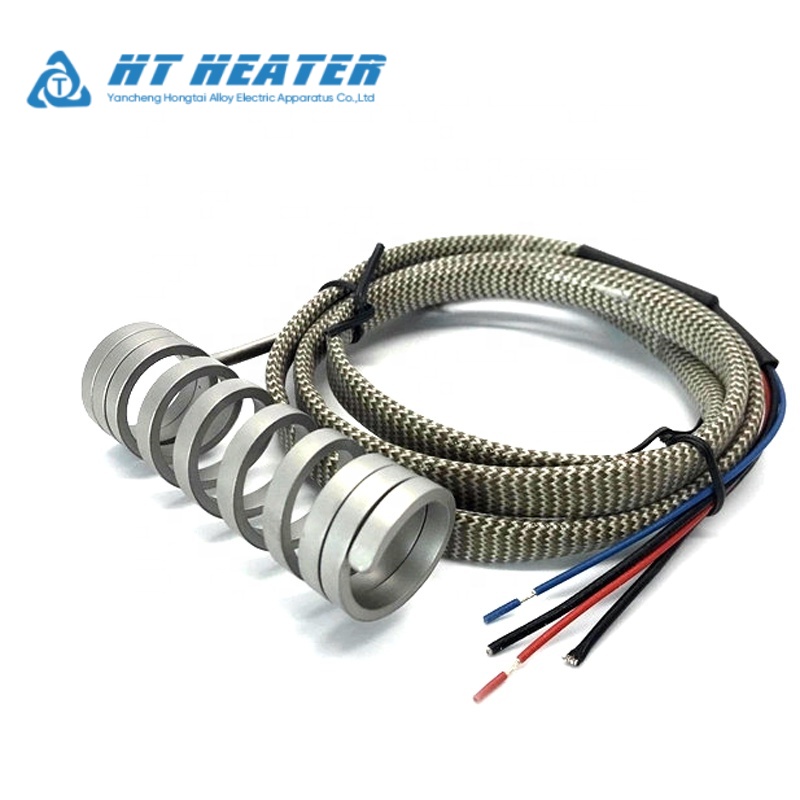
Getting your coil heater ID tolerance right is the difference between smooth mold setup and a premature burnout nightmare. Engineered with micron-level cold clearance, the Hongtai HT-CR Series slips on easily by hand when cold, then expands to form a rock-solid, zero-gap clamp at operating temperatures. The result? Maximum thermal transfer, eliminated air gaps, and long-lasting performance on your hot runner nozzles.
1. How Thermal Expansion Clamping Works in Real Mold Shop Operations
A properly engineered cold fit gives you the best of both worlds: effortless manual installation on the bench and a tight thermal grip during production runs.
- Cold Assembly State (20°C / 68°F): Microscopic clearance allows smooth manual mounting without galling, scraping, or forcing the heater onto expensive nozzle bodies.
- Hot Operating State (200°C – 350°C): As the nozzle ramps up to temperature, the higher thermal expansion rate of Hongtai’s outer sheath closes the micro-gap. This locks the heater tight against the H13 tool steel nozzle, creating a direct heat conduit with zero thermal lag.
2. Why Micro-Gap Cold Clearance Calculations Prevent Core Wire Burnout
Hongtai engineers calculate the exact expansion differential (ΔD) between the high-expansion Incoloy sheath and lower-expansion nozzle steel.
ΔD = D0 × (αheater × ΔTheater − αnozzle × ΔTnozzle)
Where:
- ΔD = Diametral clearance shift between heater ID and nozzle OD (mm)
- D₀= Nominal cold inner diameter (mm)
- αheater = Expansion rate of sheath alloy (Incoloy 800 ~ 14.4 × 10⁻⁶/°C)
- αnozzle = Expansion rate of nozzle steel (H13 Steel ~ 12.0 × 10⁻⁶/°C)
- ΔT = Temperature rise above ambient (°C)
Leaving an oversized cold ID creates a persistent insulating air gap at production temps. Heat gets trapped inside the coil, oxidation spikes, and internal resistance wires burn out in a fraction of their intended lifespan.
3. The Hidden Costs of Mismatched Fit Tolerances
Slapping the wrong fit tolerance onto your nozzle leads straight to costly downtime and ruined elements.
- Oversized ID Tolerance (Loose Fit): Trapped air acts like a thermal blanket, blocking heat dissipation into the nozzle. Internal core temperatures shoot past 800°C, causing localized hot spots, insulation degradation, and sudden coil failure.
- Undersized ID Tolerance (Forced Interference): Forcing an overly tight coil onto a nozzle scratches the tool body, distorts the heater sheath, and fractures the internal Magnesium Oxide (MgO) powder. The moment you turn on power, it shorts out.
4. How Hongtai HT-CR Series Outperforms Standard Loose or Interference Coils
Hongtai’s precision CNC coil winding delivers predictable cold clearance, easy sliding, and dependable zero-gap thermal clamping every time.
| Performance Feature | Standard Loose-Fit Coils | Forced Interference Coils | Hongtai HT-CR Precision Series |
| Cold Clearance Precision | Loose / Uncontrolled (> +0.20 mm) | Negative Clearance (Interference) | Precision Micro-Gap (+0.02 to +0.08 mm) |
| Bench Mounting | Very Easy (Air gaps remain) | Hard (Requires force / hammering) | Smooth, Tool-Free Manual Slide |
| Insulation Short Risk | Low | Extremely High (Cracks MgO powder) | Zero Risk (No mechanical force required) |
| Thermal Air Gap Risk | Severe (Leads to dry burning) | None | Completely Closed at Running Temps |
| Element Service Life | Short (Frequent burnouts) | Compromised (Insulation shorts) | Extended Heavy-Duty Duty Cycles |
| Max Operating Temp | 250°C – 300°C | Unstable / Unpredictable | 350°C Continuous (750°C Sheath Rated) |
5. Recommended Cold ID Tolerances for Hot Runner Nozzles
Hongtai maintains strict micron-level tolerances across standard nozzle diameters to guarantee perfect expansion clamping.
| Nominal Nozzle OD (D0) | Recommended Cold Heater ID | Cold Clearance Range | Running Clamping State |
| Ø 19.00 mm | Ø 19.05 mm (± 0.03 mm) | +0.02 mm to +0.08 mm | Zero-Gap Thermal Contact |
| Ø 25.00 mm | Ø 25.08 mm (± 0.04 mm) | +0.04 mm to +0.12 mm | Zero-Gap Thermal Contact |
| Ø 32.00 mm | Ø 32.10 mm (± 0.04 mm) | +0.06 mm to +0.14 mm | Zero-Gap Thermal Contact |
| Ø 38.00 mm | Ø 38.12 mm (± 0.05 mm) | +0.07 mm to +0.17 mm | Zero-Gap Thermal Contact |
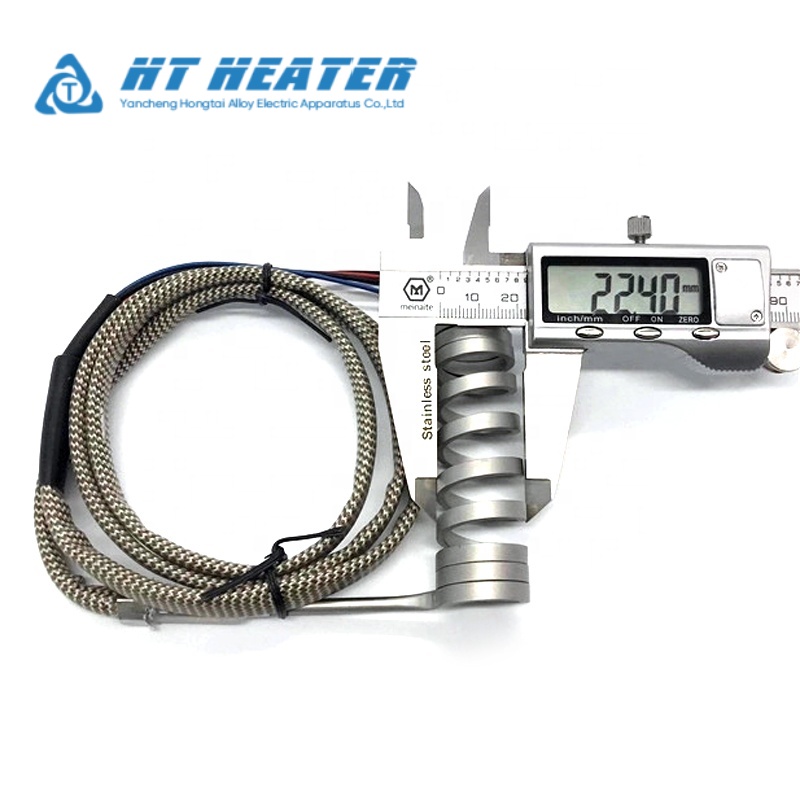
6. Flexible Cross-Sections, Sheaths, and Lead Exit Options
Hongtai tailors cable profile geometry, protective casing, and lead routing to match your exact mold plates.
- Cable Cross-Section Profiles:
- Round (Ø 1.8 mm, Ø 3.0 mm, Ø 4.0 mm): Standard versatile choice for uniform heating and tight radius winding.
- Square (3.0 × 3.0 mm, 3.2 × 3.2 mm): Increases flat contact surface area against the nozzle for faster conductive heat transfer.
- Rectangular (2.2 × 4.2 mm, 2.5 × 4.0 mm): Packs high wattage into tight axial width constraints along nozzle grooves.
- Casing & Sheath Options:
- Bare Coil: Minimal footprint for precision-machined nozzle slots.
- Pressed-In Brass Sheath: High-conductivity brass sleeve jacket encasing the coil for maximum thermal uniformity and physical protection.
- Outer Reflection Sleeve: Stainless steel outer tube reflects radiant heat back into the nozzle while protecting surrounding wiring.
- Lead Wire Exit Styles:
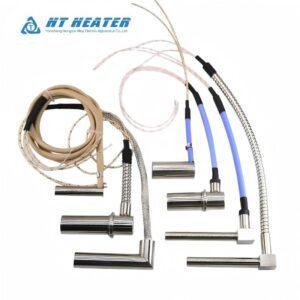
- Radial Exit (90°): Standard perpendicular wire exit for compact mold cavities.
- Axial Exit (180°): Runs straight back parallel to the nozzle axis for easy manifold wire channel access.
- Tangential Exit: Off-center exit route that relieves cable stress in tight tool setups.
7. Heavy-Duty Electrical & Operating Specs
Hongtai elements are engineered to handle aggressive duty cycles without breaking a sweat.
| Specification Parameter | Standard Range / Limit Value | Engineering & Practical Advantage |
| Maximum Watt Density | Up to 9 W/cm² (58 W/in²) | High power density without localized hot-spot damage |
| Maximum Sheath Temp | 750°C (1382°F) Continuous | Heavy-duty Incoloy 800 resists oxidation and scaling |
| Voltage Options | 12V, 24V, 110V, 220V, 240V, 480V | Drop-in compatible with standard global temperature controllers |
| Cold Tail (Unheated Zone) | 65 mm (Lead End), 35 mm (Tip End) | Keeps power terminals cool and prevents insulation breakdown |
| Axial Length Tolerance | ± 2.0% | Ensures exact alignment across targeted nozzle heat zones |
| Wattage Tolerance | ± 10% (Strict ± 5% available) | Guarantees balanced thermal output across multi-cavity manifolds |
8. Step-by-Step Installation Checklist for Zero Downtime
Follow Hongtai’s 6-step bench procedure to ensure long element life and trouble-free startups.
- Clean Nozzle Surface: Wipe down the nozzle body with an approved solvent to remove residue, metal burrs, or grease.
- Verify Cold Dimensions: Measure the nozzle OD and coil heater ID with a micrometer to verify proper cold clearance alignment.
- Slide On Manually: Gently slide the Hongtai HT-CR heater onto the nozzle by hand. Never use a hammer or force the coil!
- Lock Sleeve & Route Cables: Secure the outer reflection tube or lock band, keeping lead wire junctions stress-free.
- Run Insulation Check: Check megohm resistance between terminal leads and sheath ground with a 500V DC megohmmeter (must exceed 5 MΩ).
- Execute Soft-Start Warm-Up: Run a 10–15 minute soft-start cycle at 50% power to drive out trapped moisture before ramping up to full operational setpoints.
9. Frequently Asked Questions (FAQ)
- What causes premature coil heater burnout on hot runner nozzles?An oversized ID tolerance creates an insulating air pocket. Heat cannot escape into the nozzle, causing internal resistance wires to overheat and melt.
- Can I tap a tight coil heater onto a nozzle with a mallet?No! Forcing or tapping the coil fractures the internal Magnesium Oxide (MgO) powder insulation, creating direct electrical shorts the moment you power up.
- Why does Hongtai use Incoloy 800 outer sheaths for HT-CR series coils?Incoloy 800 offers a high expansion coefficient that closes the micro-gap during warm-up, clamping tightly against H13 steel nozzles for maximum thermal transfer.
10. What Related B2B Technical Resources Are Available?
- Sensor Integration: HT Coil Heater with Built-in Thermocouple: Type J vs. K & Lead Exit Selection Guide
- Thermal Distribution Design: Distributed Wattage Coil Heater Design & Temperature Profiles
- Sheath Metallurgy Selection:Sheath Materials for Hot Runner Coil Heaters: Stainless Steel vs. Nickel
- Cross-Section Selection:Hot Runner Coil Heater Cross Section: Round vs. Square vs. Rectangular
Partner with Hongtai for Precision Hot Runner Heating
Stop suffering from loose-fit burnouts and hard-to-mount heaters. Hongtai utilizes high-precision CNC coil winding and sizing technology to build custom HT-CR Series coil heaters engineered to tight micron-level ID tolerances.
Contact Hongtai Thermal Engineering Team today to request technical consultation, custom sizing quotes, or CAD model verification for your tooling project.