When designing or upgrading thermal systems, selecting the correct tubular heater terminations is just as critical as choosing the right sheath material or watt density. For electrical engineering supervisors and equipment wiring technicians, the terminal connection is the bridge between the facility’s power supply and the heating element. A poor connection can lead to localized overheating, voltage drops, and ultimately, premature heater failure.
At Hongtai Heater Factory, we understand that complex internal wiring environments—whether subjected to high vibration, tight spaces, or extreme temperatures—require specific termination strategies. Below, we break down the pros, cons, and ideal applications for the three most common termination types: threaded studs, spade terminals, and high-temperature lead wires.
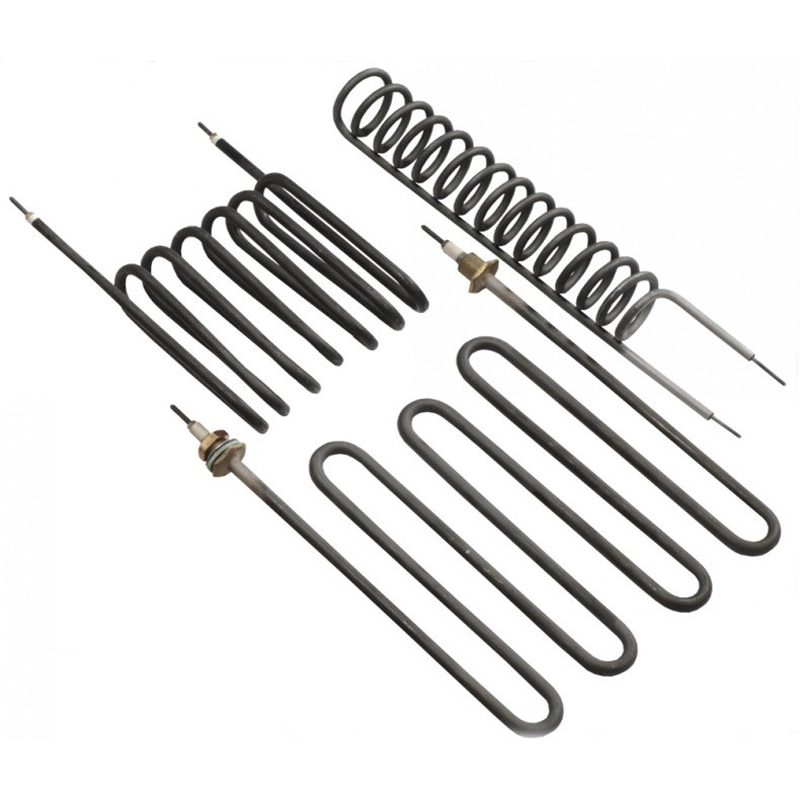
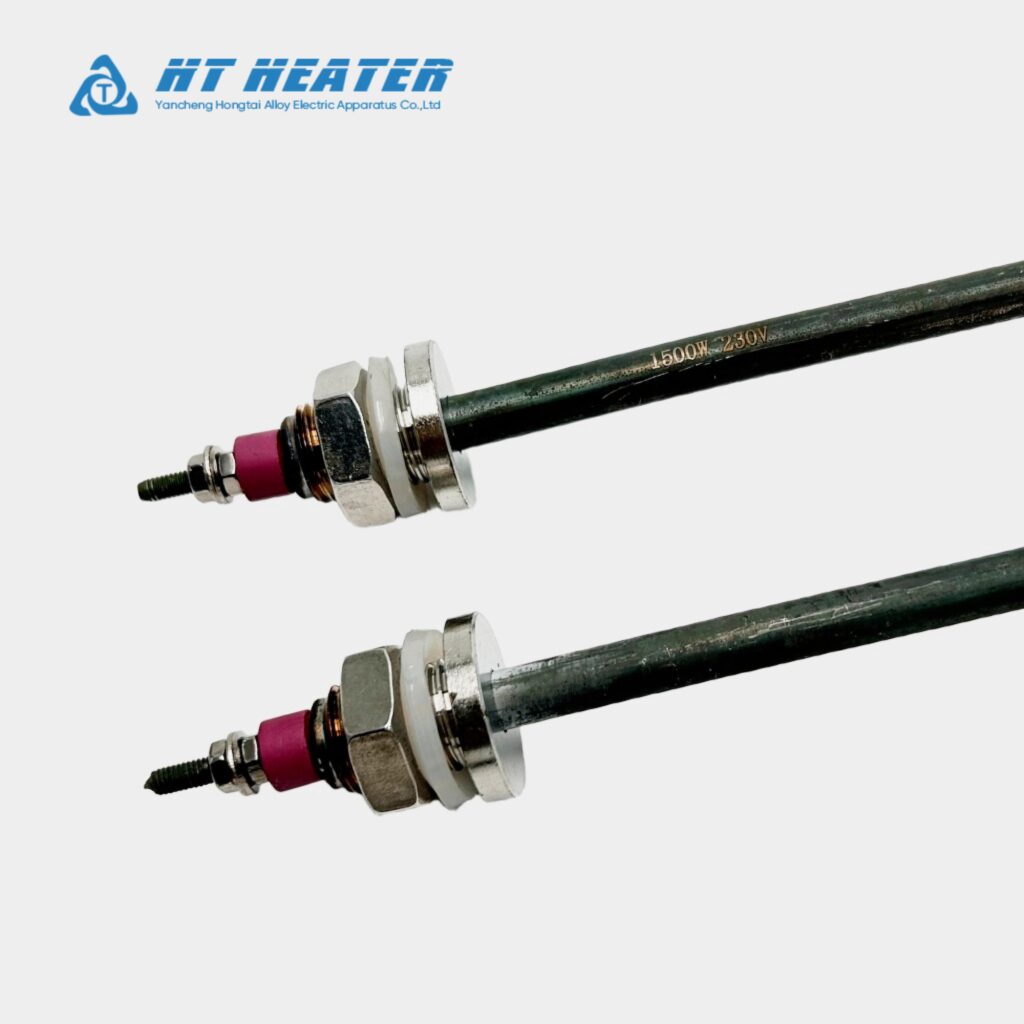
1. Threaded Stud Heater Terminals
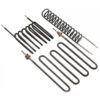
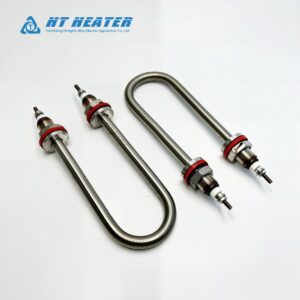
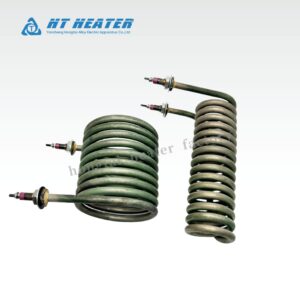
Threaded stud heater terminals are the robust industry standard for industrial tubular heaters. In this design, a solid pin is cold-forged or welded to the internal Nichrome resistance wire, protruding from the end of the heater, and threaded to accept nuts and washers.
- Design & Mechanics: Typically available in standard thread sizes (such as 10-32, 8-32, or M4/M5). Technicians use ring terminals on their power wires, securing them tightly with mechanical nuts.
- Advantages: They provide a highly secure, high-amperage electrical connection that resists loosening under thermal cycling. They are excellent for rigid wiring setups and pair perfectly with a ceramic block terminal for added electrical insulation and phase separation.
- Best For: Heavy-duty industrial ovens, flanged immersion heaters, and large-scale duct heaters where reliable, high-current draw is present and space is not severely restricted.
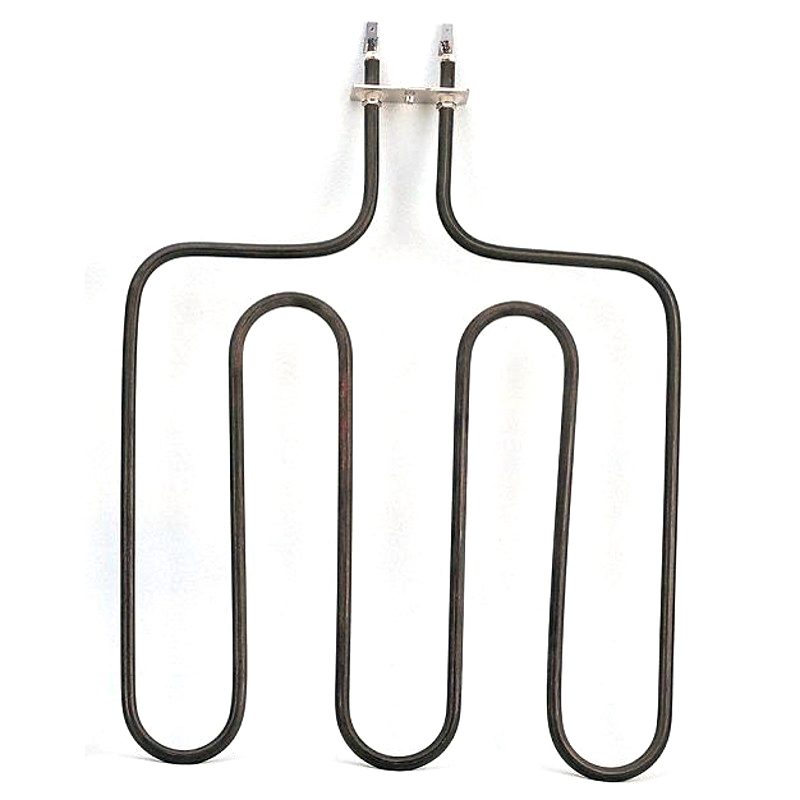
2. Spade Terminals
Spade terminals are flat metal tabs (typically 1/4″ or 0.250″ wide) welded or crimped to the cold pin of the tubular heater. They are designed to mate with female push-on connectors.
- Design & Mechanics: Provide a rapid plug-and-play interface.
- Advantages: The primary benefit is speed. For assembly lines and OEM equipment manufacturing, spade terminals drastically reduce wiring labor time. They allow for quick disconnects during routine maintenance or component swapping.
- Best For: Commercial food service equipment, packaging machinery, and light industrial applications. Note: They are not recommended for high-vibration environments unless specialized locking connectors are used, as standard friction fits can vibrate loose.
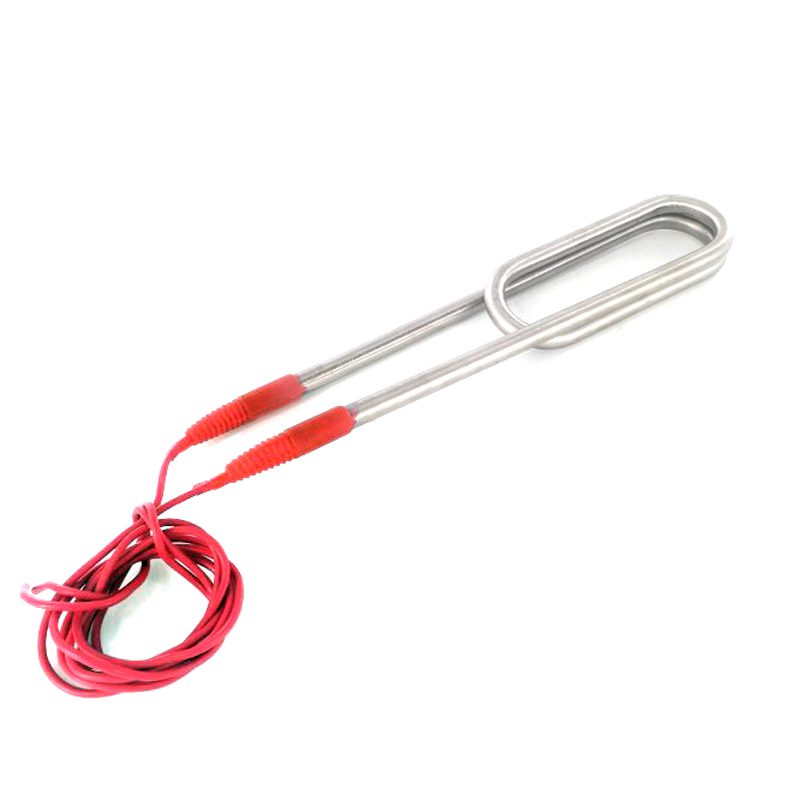
3. High Temperature Lead Wires
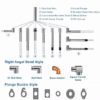
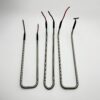
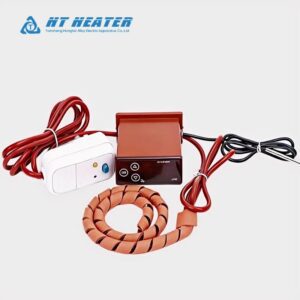
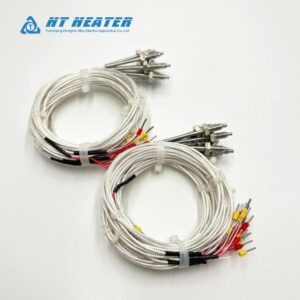
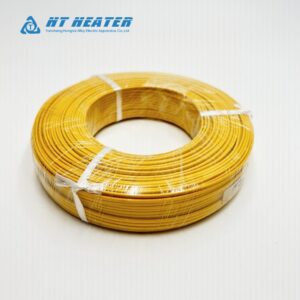
For tight clearances, moving parts, or extreme ambient temperatures, integrating a continuous high temperature lead wire directly into the heater is the optimal solution. Instead of requiring the technician to make a mechanical connection at the heater’s end, the flexible wire is internally crimped and sealed during manufacturing.
Hongtai Heater Factory offers several protective sleeving options for direct lead wires depending on the mechanical stress of the routing path:
- Fiberglass Silicone Sleeving: Provides excellent standard thermal protection and electrical insulation for stationary internal equipment wiring.
- Stainless Steel Braided Mesh : When wires must be routed over sharp metal edges or are subjected to constant friction (such as in moving platen presses), the stainless steel overbraid prevents abrasive wear and short circuits.
To protect the internal connection point from moisture or chemical ingress, direct lead wires are often paired with specialized tubular heater terminal seals such as RTV silicone or high-temperature epoxy potting.
4. Tubular Heater Terminations Wiring Best Practices for Complex Equipment
For equipment wiring technicians dealing with complex layouts, the choice of termination dictates the routing strategy:
- Vibration Mitigation: If the equipment generates heavy vibration, avoid standard spade terminals. Opt for tightly torqued threaded studs with lock washers, or flexible stainless steel braided lead wires that can absorb the motion.
- Clearance Constraints: Threaded studs require vertical clearance for wrenches and socket tools. If the heater is installed in a shallow channel, direct lead wires exiting at a 90-degree angle are much easier to route.
- Heat Zones: Ensure that the termination point is kept well outside the active heated zone. Ambient temperature near the terminals should dictate the insulation rating of the wire used.
Need Application Engineering Support?
Selecting the right terminal ensures safety, longevity, and easy maintenance. Hongtai Heater Factory custom-manufactures tubular heating elements with any terminal configuration to match your exact electrical and spatial requirements.
- Consult our Engineers: Send your wiring schematics to the Hongtai Heater Factory technical team for a free design review.
- Visit Us:: www.hongtai-heater.com