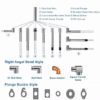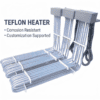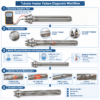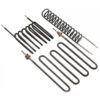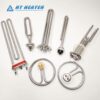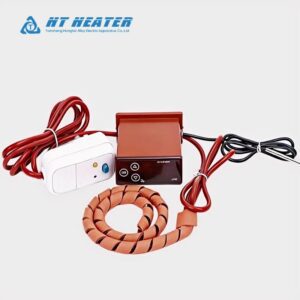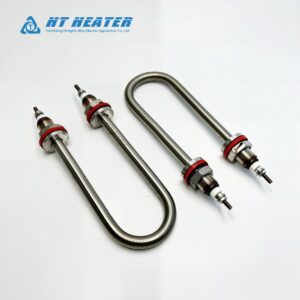
When evaluating PTFE vs. Electropolished Tubular Heaters for industrial chemical heating, specifying the correct wetted-surface technology is critical for process safety and long-term equipment reliability. A misapplied heating element will rapidly succumb to chemical attack, deposit accumulation, or thermal degradation.
When heating aggressive chemicals or hard water, standard stainless steel elements are often insufficient. This engineering guide compares two primary surface protection strategies—electropolishing and PTFE (fluoropolymer) coatings—detailing their corrosion resistance, scaling control, and thermal design limits.
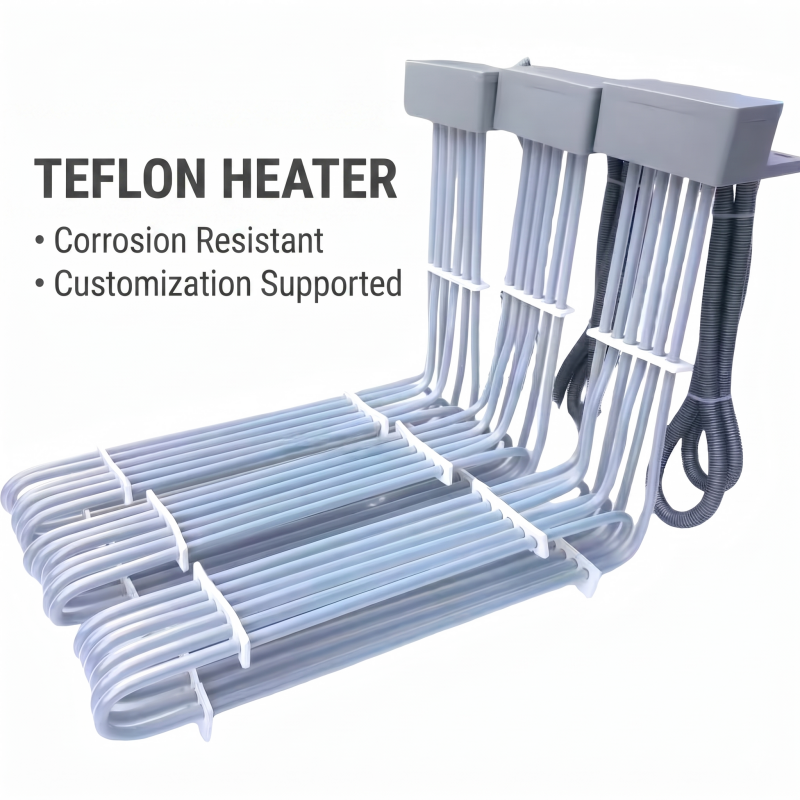
1.Why Surface Selection Matters in Chemical Heating
Industrial immersion heaters typically fail due to three surface-related mechanisms:
- Chemical Attack: Incompatible process chemistry leads to pitting, crevice corrosion, and sheath penetration.
- Mineral Scaling: Scale acts as a thermal insulator, trapping heat inside the element.
- Surface Contamination: Rough surfaces allow viscous residues to adhere, making cleaning difficult.
A fundamental engineering principle to remember: Process temperature is not the same as heater sheath temperature. Deposit buildup forces the internal element to run hundreds of degrees hotter than the liquid. For failure diagnostic procedures, see our tubular heater troubleshooting guide.
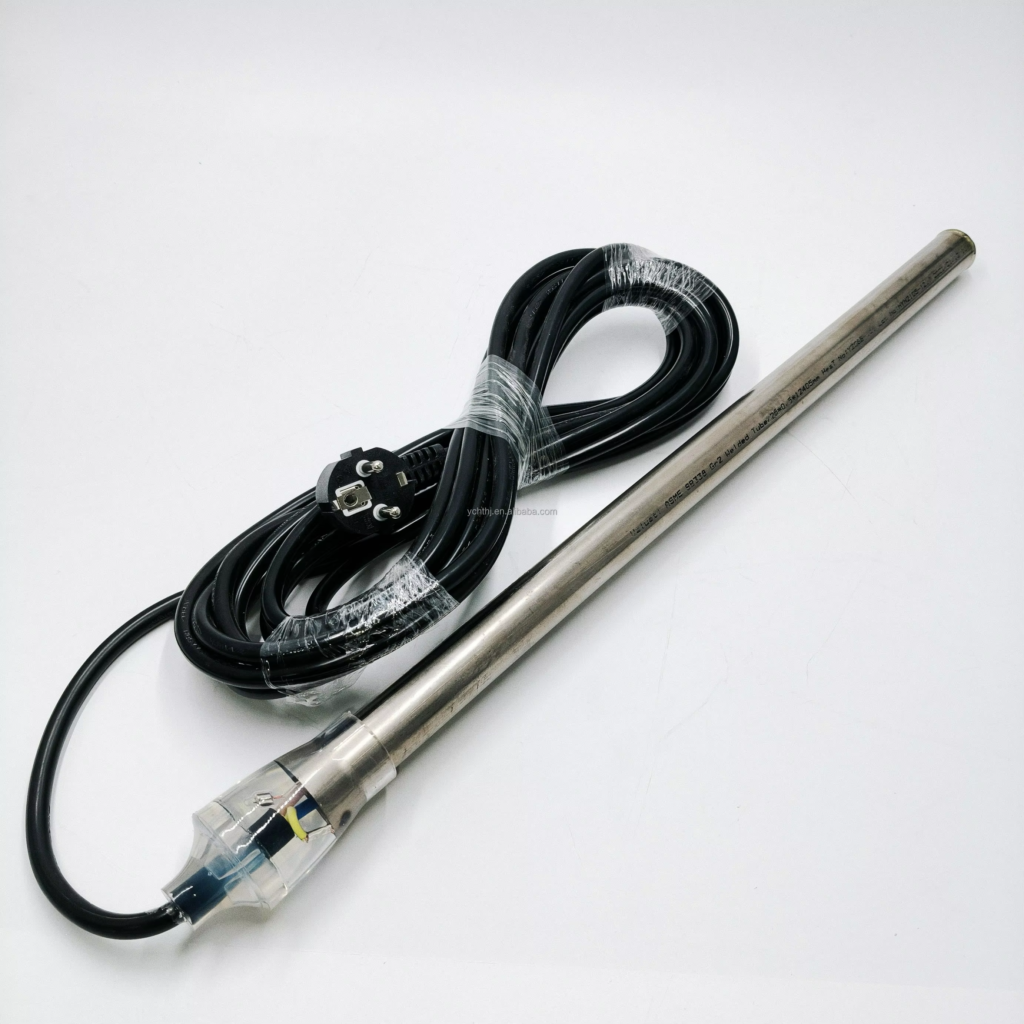
2. Electropolished Stainless Steel Heaters
Electropolishing uses anodic dissolution to strip microscopic peaks from the metal surface, reducing surface roughness and forming a smooth, chromium-rich passive layer.
- Engineering Advantages: Provides a ultra-smooth surface that reduces contaminant adhesion, improves cleanability, and enhances corrosion resistance without adding thermal resistance. Ideal for sanitary, medical, and high-purity water applications.
- Design Limitations: Electropolishing does not make stainless steel chemically inert, nor does it eliminate mineral scaling when water chemistry, temperature, and heat flux favor precipitation.
3. PTFE & Fluoropolymer Coated Heaters
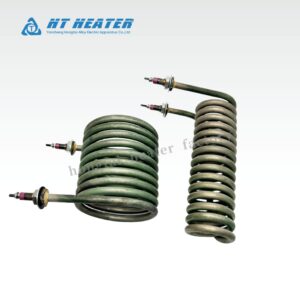
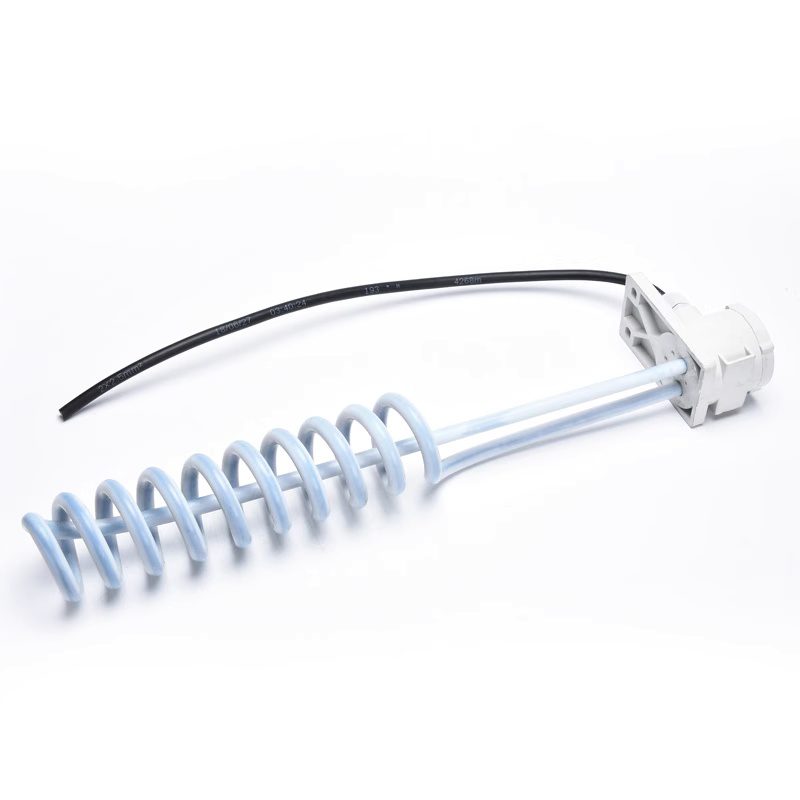
A PTFE immersion heater encapsulates a metal heating core within a fluoropolymer barrier (such as PTFE, FEP, or PFA), isolating the metal from aggressive chemicals.
- Engineering Advantages: Offers broad chemical compatibility with strong acids, alkalis, and electroplating solutions (e.g., anodizing, pickling). The low surface energy also minimizes deposit adhesion.
- Design Limitations: Fluoropolymers are thermal insulators. Heat cannot dissipate as rapidly as through bare metal, requiring strict surface load controls to prevent coating meltdown.
4. PTFE vs. Electropolished: Engineering Comparison
| Engineering Factor | Electropolished Stainless Steel | PTFE / Fluoropolymer Heater |
| Main Protection | Smooth, passivated metal surface | Chemical-resistant polymer barrier |
| Chemical Resistance | Depends on the base stainless alloy | High for many aggressive acids/alkalis |
| Deposit Adhesion | Reduced compared to brushed metal | Very low adhesion (non-stick) |
| Max Operating Temp | High (limited by sheath alloy) | Typically restricted (~80–100°C fluid temp) |
| Watt Density Limits | Medium to high designs allowed | Must use low-watt-density designs |
| Mechanical Durability | Robust metal surface | Subject to mechanical impact/scratching |
| Primary Selection Driver | Cleanability + Alloy compatibility | Aggressive chemistry + Coating integrity |
5. Thermal Design & Watt Density Requirements
Because fluoropolymers restrict heat transfer, PTFE heaters must be designed with a low watt density. Surface load is calculated as:
For many fluoropolymer-sleeved immersion heaters, 1.5 W/cm² (10 W/in²) serves as a standard low-watt-density design reference. Delivering the same total kW at a lower watt density requires a larger surface area, which is why PTFE heaters are physically larger than metal heaters.
Note: Low watt density does not prevent dry-fire failure. Chemical heating tanks must include independent liquid-level switches, high-limit thermal sensors, and proper tubular heater terminations.
6. Selection Checklist for OEM Engineers
Use the following decision matrix and checklist when specifying an immersion heater with Hongtai Heater Factory:
- Choose Electropolished Stainless Steel when: Chemical compatibility with the alloy is proven, sanitary/cleanability standards are required, operating temperatures exceed 100°C, or tank space limits element size.
- Choose PTFE / Fluoropolymer when: Process chemistry attacks stainless steel (e.g., electroplating baths), low surface adhesion is required, fluid temperatures remain under 100°C, and tank space accommodates a low-watt-density geometry.
Specification Checklist:
- Chemical identity & concentration (wt%)
- Operating temperature & tank volume
- Required heating power (kW) & target watt density (W/cm²)
- Mounting style (e.g., flanged vs. screw plug)
- Mechanical protective guard requirements
Need Expert Failure Analysis?
Stop treating symptoms and start engineering solutions. If your facility is experiencing repeated element burnouts, ground faults, or premature sheath ruptures, Hongtai Heater Factory provides comprehensive failure analysis. We re-engineer custom tubular heaters with upgraded alloys, optimized watt densities, and specialized terminal seals to withstand your exact process environment.
- Consult our Engineers: Send your wiring schematics to the Hongtai Heater Factory technical team for a free design review.
- Visit Us:: www.hongtai-heater.com