When evaluating flanged vs. screw plug immersion heaters, sizing the right thermal system requires far more than calculating total kilowatt demand. For piping engineers, vessel designers, and plant operations teams, the mounting interface—whether a threaded screw plug or a bolted pipe flange—serves as the primary pressure boundary and the first line of defense against process fluid leaks.
A persistent myth in industrial fluid heating is that screw plugs are strictly for low-pressure tanks, while flanged heaters are universally required for high-pressure systems. In reality, allowable working pressure is governed by the complete pressure boundary assembly: temperature derating, thread or flange specifications, gasket resilience, metallurgy, and joint welding.
Selecting between a threaded screw plug and a flanged tubular bundle impacts non-destructive testing requirements, thermal dissipation, seal longevity, and routine maintenance access. Below is an engineering evaluation of the design parameters that dictate mounting selection.
1.Physical Configurations: Screw Plug vs. Flanged Heaters
The structural attachment method determines the element bundle layout, electrical connection enclosure options, and maximum surface area available for thermal transfer.
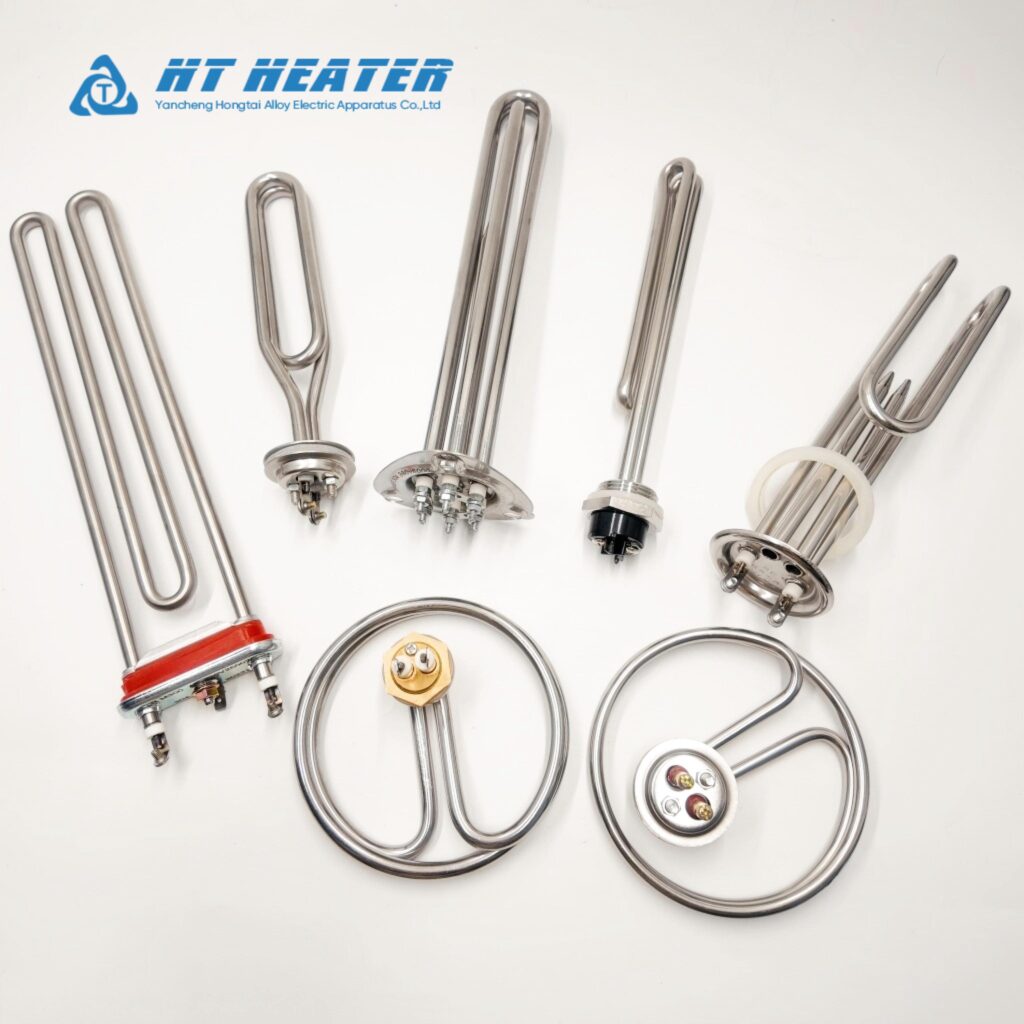
1.1 Screw Plug Immersion Heaters (Threaded Mounting)
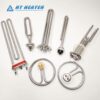
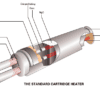
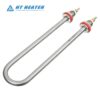
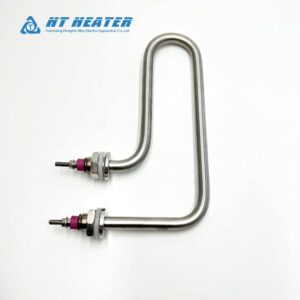
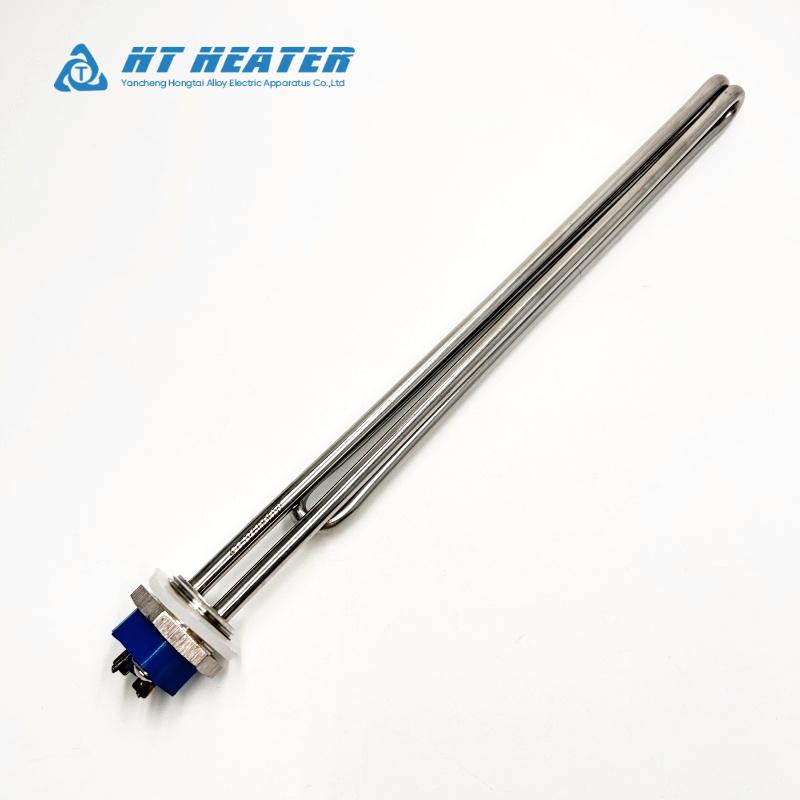
Hairpin tubular heating elements are precision TIG-welded or silver-brazed into a heavy-duty hex plug. The assembly threads directly into a female half-coupling or full coupling welded to the vessel wall.
Standard Sizes: 1″, 1-1/4″, 1-1/2″, 2″, and 2-1/2″ NPT (tapered) or BSP (parallel) threads.
Application Fit: OEM equipment, hydraulic oil reservoirs, side-arm circulation loops, and compact rinse tanks. While commonly used for smaller capacity requirements, custom-engineered screw plug units can deliver up to 100 kW depending on immersion length and sheath limits.
2.2 Flanged Immersion Heaters (Bolted Mounting)
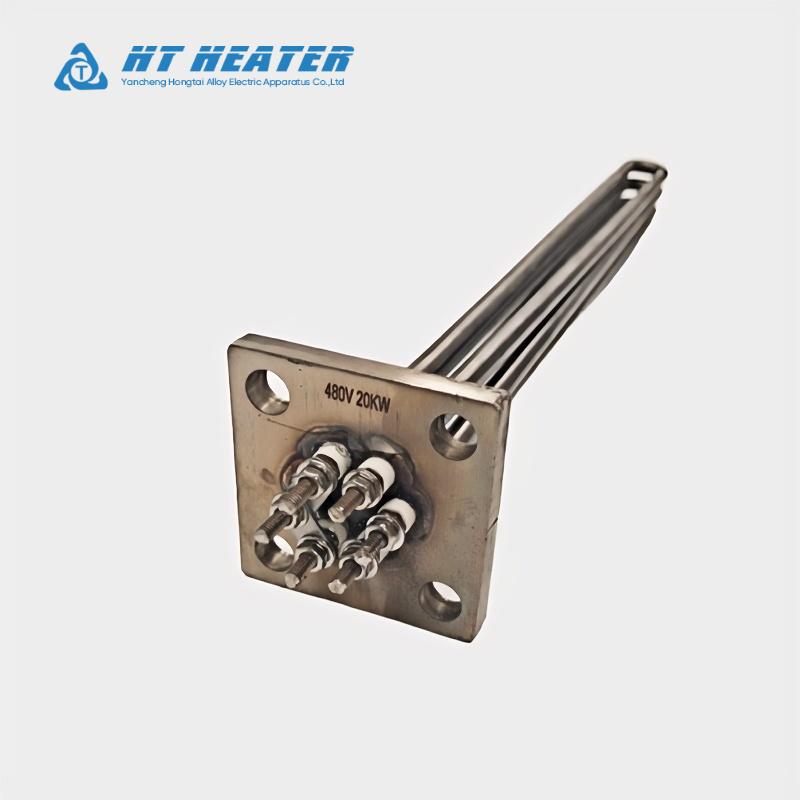
Multiple hairpin tubular elements are TIG-welded into a standard ASME/ANSI or DIN pipe flange. The assembly bolts directly to a matching companion pipe flange (welded nozzle) on the pressure vessel.
Standard Sizes: 3″ to 14″+ nominal pipe size (NPS) flanges.
Application Fit: Large fluid storage tanks, pressurized chemical reactors, superheated steam generation, and heavy circulation systems. At Hongtai Heater Factory, we frequently engineer these heavy-duty flanged bundles with specialized alloy sheaths to handle corrosive media and power ratings exceeding 500 kW per unit.
2.Defining the Pressure Boundary: Beyond Mounting Styles
A flanged heater does not automatically make a system safe for high pressure. System pressure capability is determined by the weakest point along the entire pressure-retaining envelope.
When evaluating design pressure, engineers must analyze three core factors:
- Pressure-Temperature (P-T) Ratings: Flange pressure classes (e.g., 150#, 300#, 600# ANSI) do not represent static pressure thresholds. Allowable working pressure drops significantly as operating fluid temperatures increase. Furthermore, carbon steel flanges degrade along a different P-T curve than 316L stainless steel or Incoloy alloys.
- Joint Integrity: Thread engagement and TIG weld penetration at the element-to-fitting interface must match vessel design pressure requirements. The mechanical strength here relies heavily on robust internal element fabrication and proper MgO compaction.
- Code Compliance: High-pressure installations often fall under the ASME Boiler and Pressure Vessel Code (Section VIII, Div 1). The entire heater assembly must comply with designated design codes.
While flanged heaters are preferred for high-pressure vessels due to standard ANSI/ASME flange pressure tables, a properly sized NPT screw plug with sufficient thread engagement can reliably seal moderate-to-high pressure lines when correctly specified.
3.Sealing Strategies: Thread Sealants vs. Flanged Gaskets
The mounting method dictates the mechanical sealing force and fluid containment strategy.
| Mounting Configuration | Thread / Joint Mechanics | Recommended Sealing Method |
| NPT Screw Plug | Tapered pipe thread (Interference fit) | Relies on thread deformation. Requires high-temperature anaerobic thread sealants (e.g., Loctite 567) or nickel-filled PTFE tape. |
| BSPP Screw Plug | Parallel thread (Flat face compression) | Relies on axial compression. Requires a high-temp elastomeric O-ring (Viton/EPDM) or bonded metallic seal against a machined face. |
| ANSI / DIN Flange | Bolted raised face / flat face | Relies on bolt torque to yield and compress the gasket material into flange serrations. |
Flange Gasket Material Selection Matrix
- EPDM / Compressed Fiber: Water, low-pressure steam, and mild aqueous solutions at temperatures below 150°C.
- Virgin PTFE / Expanded PTFE (ePTFE): Aggressive chemical acids and high-purity fluids. Offers broad chemical inertness; verify cold-flow/creep properties under thermal cycling.
- Spiral-Wound 316L with Flexible Graphite Filler: The standard for high-temperature, high-pressure thermal oil and steam applications. Provides superior elastic recovery against thermal shock and pressure surges.
4.Thermal Management: Watt Density & Cold Zone Design
Physical space dictates element surface area, which directly governs thermal transfer limits. The defining parameter for immersion element longevity is Watt Density.
Pushing 50 kW through a compact 2-inch screw plug creates an extremely high watt density. In viscous thermal fluids or lubricating oils, this excessive heat flux causes fluid carbonization (coking), element sheath blistering, and early failure. Flanged heaters provide the physical footprint to spread the heating load across dozens of long hairpin elements, lowering watt density to safe levels for thermal-sensitive media.
The Unheated “Cold Zone”
Immersion elements must feature a non-heated length—the Cold Zone—extending past the mounting plug/flange into the fluid. This prevents overheating inside the vessel mounting nozzle where fluid circulation is restricted. Keeping the cold zone properly immersed beneath the minimum liquid level also prevents excessive conductive heat from traveling back to the enclosure, which protects the epoxy or silicone potting from thermal degradation.
5.Manufacturing Assurance & Pressure Testing
To ensure pressure-boundary integrity and eliminate field leaks, Hongtai Heater Factory subjects custom immersion heating units to rigorous quality verification protocols. From precision tube forming and bending to final assembly, process control is critical:
- Hydrostatic & Pressure Testing: Hydrostatic pressure testing is conducted at prescribed design margins (e.g., 1.5x design working pressure) in accordance with project specifications and pressure vessel codes.
- Non-Destructive Weld Inspection: Critical element-to-flange welds undergo liquid penetrant testing (PT) and helium leak detection where specified.
- Dielectric Safety Testing: 100% of manufactured units pass cold insulation resistance testing (1000MΩ @ 500V DC) and High-Voltage Dielectric Withstand (Hi-Pot) testing prior to shipment.
Need Application Engineering Support?
Hongtai Heater Factory engineers custom flanged and screw plug immersion heaters tailored to your process pressure, fluid metallurgy, and thermal envelope. By meticulously analyzing your piping constraints, we deliver robust thermal systems that ensure precise temperature control and leak-free operation.
Direct Technical Support: Contact Hongtai Heater Factory Engineering Team
Sizing & Quotations: www.hongtai-heater.com