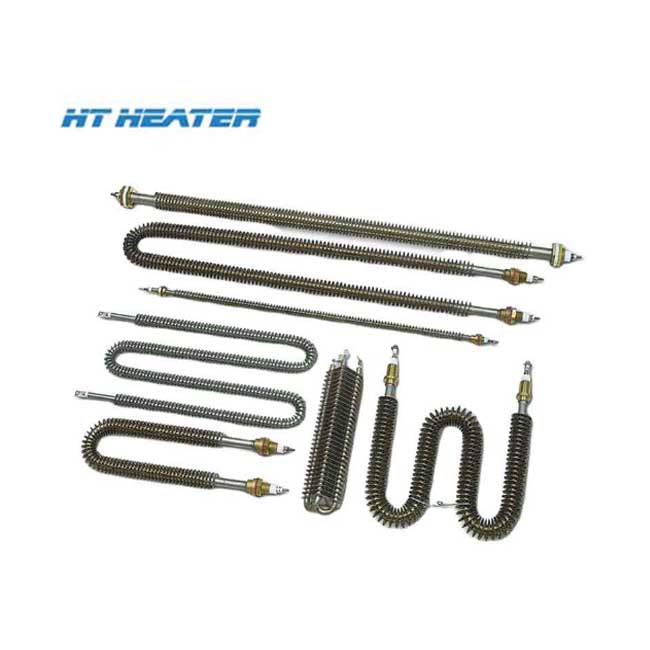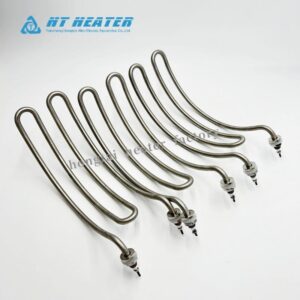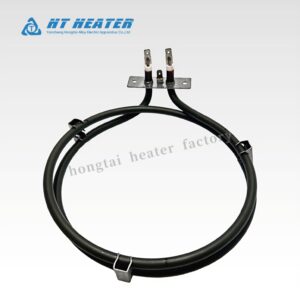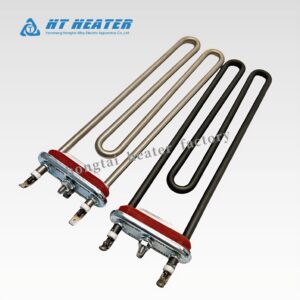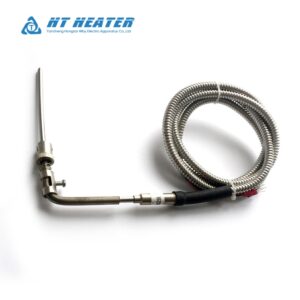
For quality control engineers and OEM equipment designers, evaluating an industrial heating element requires looking far beyond its outer metal sheath. The operational lifespan, thermal efficiency, and dielectric strength of a heater are governed entirely by its internal tubular heater construction and the precision of the manufacturing process.
A heater that burns out prematurely or trips safety circuits often suffers from internal voids, eccentric coil placement, or poor insulation density. At Hongtai heater factory, we believe transparency in our manufacturing process is the best way to guarantee reliability. Whether you are designing heavy-duty liquid immersion systems or evaluating finned tubular heaters for forced-air HVAC ducts, understanding internal metallurgy is essential.
Here is an engineering guide to how Hongtai utilizes premium materials, high-pressure swaging, and stringent QC testing to deliver maximum heating performance.
1. What Is Inside an Industrial Tubular Heater?
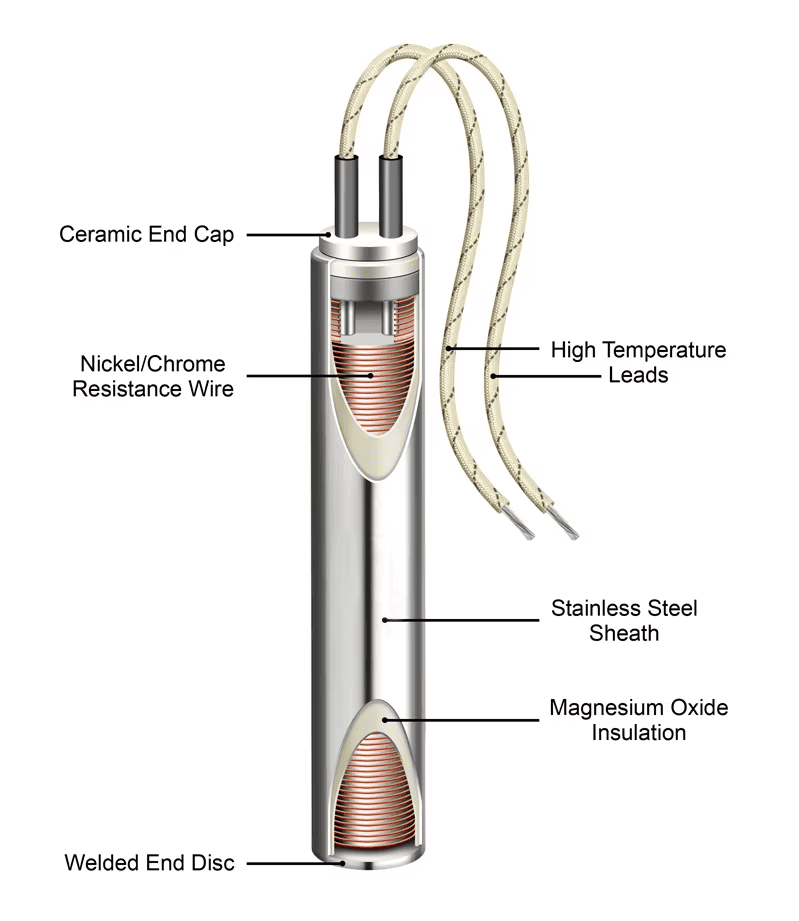
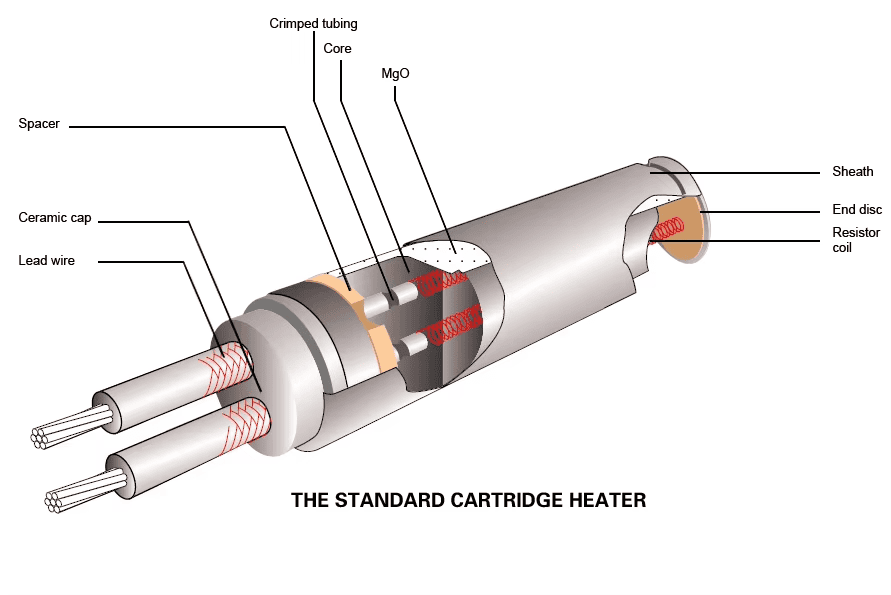
The cross-section of a high-performance industrial tubular heating element relies on three critical components engineered to work in thermal harmony:
- Resistance Wire (The Heat Source): Typically coiled NiCr 80/20 (80% Nickel, 20% Chromium). While other alloys exist, NiCr 80/20 is widely used due to its superior high-temperature tensile strength and its ability to form a protective chromium oxide layer against long-term degradation.
- MgO Insulation (Electrical Isolation + Thermal Conduction): High-purity fused Magnesium Oxide (MgO) powder. MgO is unique because it electrically isolates the live resistance coil from the grounded metal sheath while simultaneously providing a highly efficient thermal path to transfer the generated heat outward.
- Protective Sheath (The Armor): A drawn metal tube that protects the internal components from mechanical impact, fluid corrosion, and operational pressure.
2. How Tubular Heating Elements Are Manufactured
Understanding the sequence of manufacturing reveals why certain heaters outlast others. A reliable tubular heater is not merely assembled; it is meticulously processed to lock the internal components in place.
The Manufacturing Flow:
- Precision Coil Winding: NiCr wire is wound to a specific pitch to achieve the target resistance and uniform watt distribution.
- Terminal Connection: The resistance coil is welded or crimped to robust terminal pins, creating the unheated “cold section” to protect outer wiring.
- Coil Centering & MgO Filling: The coil assembly is suspended centrally inside the empty metal sheath while granular MgO powder is vibration-filled around it.
- Rotary Swaging (Diameter Reduction): The heater passes through a swaging machine, compressing the metal sheath and crushing the MgO powder into a dense state.
- Annealing & Forming: The hardened, swaged tube is annealed to restore ductility, allowing it to be bent into custom geometries (see our tubular heater bending guide).
- Terminal Sealing: Appropriate moisture barriers are applied to the ends to prevent hygroscopic MgO from absorbing ambient humidity (see our tubular heater terminal seals selection guide).
- Electrical Testing: 100% final QC inspection.
3. The Engineering Behind Swaging: Compacting MgO
Simply pouring MgO powder into a tube leaves microscopic air gaps between the granules. Because air is a thermal insulator, these voids trap heat around the internal wire, leading to localized coil overheating and rapid element failure.
The most crucial step in tubular heater construction is rotary swaging. Swaging applies uniform radial compressive force, mechanically reducing the outer diameter of the metal sheath.
- Reduces Internal Voids: The granular MgO is crushed into a highly compacted, dense matrix, drastically reducing porosity.
- Improves Thermal Conductivity: With internal voids substantially reduced, the thermal path from the glowing NiCr coil to the outer sheath becomes continuous, preventing internal heat buildup.
- Mechanically Locks the Structure: The extreme compaction locks the resistance coil rigidly in place, protecting it against industrial vibration, flow turbulence, and thermal shock.
4. Coil Centering and Insulation Thickness Margin
During the filling and swaging process, maintaining the position of the NiCr resistance coil is paramount.
If the manufacturing process lacks tight controls, the coil may drift off-center (eccentricity). Maintaining a consistent MgO insulation thickness around the resistance coil is critical to reducing localized electrical stress. Excessive eccentricity reduces the dielectric insulation margin, significantly increasing the risk of hot spots, high-voltage arcing, and catastrophic short circuits under heavy loads.
Precision automated filling and controlled diameter reduction help maintain consistent insulation thickness along the entire active heated length.
5. OEM Engineering Checklist: Specifying Your Heater
When sourcing swaged heating elements, defining both internal construction and external parameters ensures the final product matches your thermal load.
A. Sheath Material Selection
Final sheath selection must be based on actual operating temperature, chemical compatibility, and mechanical requirements:
| Sheath Material | Typical Engineering Considerations |
| SS 304 | General air heating, water immersion, non-corrosive mediums. |
| SS 316L | Corrosive liquids, medical equipment, improved pitting resistance. |
| SS 321 | Higher-temperature applications, aerospace components. |
| Incoloy 800 / 840 | High-temperature forced air, extreme industrial environments. |
| Titanium | Highly corrosive aqueous environments, aggressive plating baths. |
B. Watt Density Formulation
Watt density determines how much heat is emitted per square unit of the heater’s active surface. Exceeding the allowable watt density for a specific medium (like heavy oil or stagnant air) will scorch the fluid and destroy the heater.
$\text{Watt Density} = \frac{\text{Heater Wattage}}{\text{Heated Surface Area}}$
6. Quality Control (QC) Standards at Hongtai Heater Factory
To verify that the internal construction is flawless, Hongtai heater factory subjects our swaged elements to rigorous factory testing before shipment. While custom OEM tolerances are available, our standard internal QC baseline includes:
- DC Resistance / Wattage Verification: Ensures the actual resistance matches the specified wattage rating ($P = \frac{V^2}{R}$).
- Cold Insulation Resistance (IR): Tested at 500 VDC. High-quality, dry elements typically show extremely high resistance, verifying the integrity of the compacted MgO.
- Dielectric Withstand (Hi-Pot): Testing is performed according to the applicable rated voltage (e.g., 1500 VAC + 2 × rated voltage for 60 seconds) to verify dielectric withstand without flashover.
- Dimensional & Visual Inspection: Outer diameter (OD), length, and roundness are strictly calibrated to ensure a perfect slip fit into machined mold platens or fluid tanks.
Need reliable tubular heater construction?
Hongtai heater factory specializes in engineering high-density swaged heating elements tailored to your exact thermal load and sheath requirements. By meticulously controlling every phase of the tubular heater construction process—from high-purity MgO compaction to precision NiCr coil centering—we deliver robust thermal solutions that maximize your equipment’s uptime and safety.
Company: Hongtai heater factory
Technical Sales Consultation: Contact Hongtai Engineering Team
Contact US for having a Reliable Moisture-Proof Seal: www.hongtai-heater.com