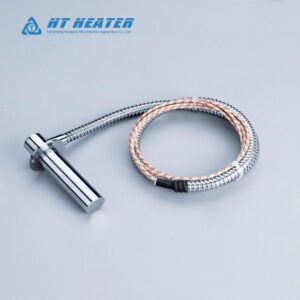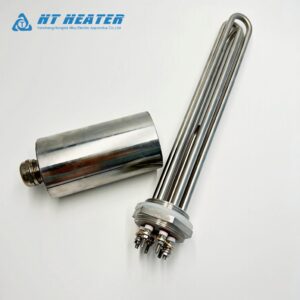
For electrical maintenance managers and industrial oven designers, one of the most frustrating field failures is a heating element that trips the GFCI or RCD immediately upon startup. The root cause is rarely a broken internal resistance wire; instead, it is often related to moisture ingress through the tubular heater terminal seals.
At Hongtai heater factory, we routinely help OEMs and maintenance teams troubleshoot these exact issues. Selecting the proper seal—whether silicone, epoxy, or a hermetic glass-to-metal bond—is the single most critical factor in preventing moisture absorption, maintaining high insulation resistance, and ensuring a long service life in humid or harsh environments.
1. Why Does a Tubular Heater Have Low Insulation Resistance (IR)?
A low insulation resistance reading (low Megohm) does not inherently mean the heating element has failed. Understanding the physical properties of the internal insulation is the first step in accurate fault diagnosis.
The Hygroscopic Nature of MgO
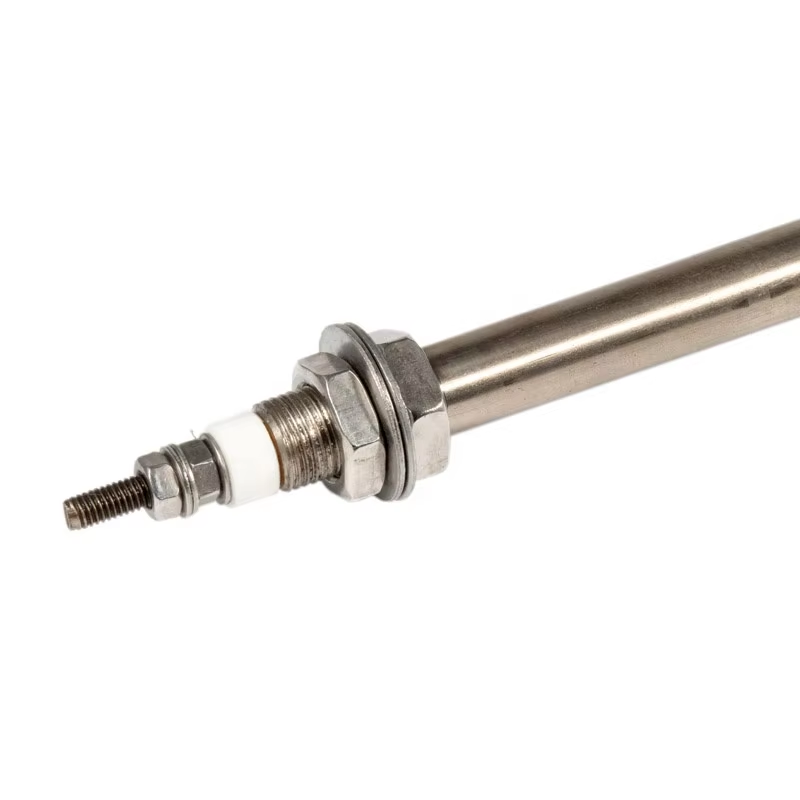
Industrial heating elements utilize highly compacted Magnesium Oxide (MgO) powder as the primary dielectric insulation. While MgO provides excellent thermal conductivity and electrical isolation, it is highly hygroscopic. When a heater is turned off, the internal air contracts, creating a slight vacuum. If the terminal ends are not properly sealed, atmospheric humidity is actively drawn into the tube, where it bonds with the MgO powder.
Other Common Causes of Low IR
While MgO moisture absorption is the primary culprit, field technicians should also investigate:
- Damaged or cracked terminal seals due to mechanical stress.
- Condensation pooling inside the terminal enclosure or conduit connections.
- Corrosion or micro-cracks on the outer metal sheath.
- Chemical or oil contamination bridging the terminal pins.
Symptoms: GFCI/RCD Tripping on Startup
When moisture saturates the MgO, it creates a conductive path between the central resistance wire and the grounded outer metal sheath. The moment power is applied, this leakage current instantly trips ground-fault circuit interrupters (GFCI/RCD). If bypassed, the rapid expansion of trapped steam can cause the sheath to rupture catastrophically.
2. Field Troubleshooting: How to Test and Bake-Out Moisture
If a heater has been stored in a damp warehouse and exhibits low IR, do not discard it immediately. Proper diagnostic and recovery procedures can safely restore the element to factory condition.
Proper Megger Testing Procedures
Before installation, use a 500V DC Megger to measure the resistance between the terminal pin and the grounded sheath.
- Always refer to the manufacturer’s specified acceptable IR range for your specific heater type and application.
- If the reading falls below the specified threshold, do not apply full operating voltage.
Safe Bake-Out & Recovery Methods
If moisture ingress is confirmed, the absorbed water must be driven out slowly:
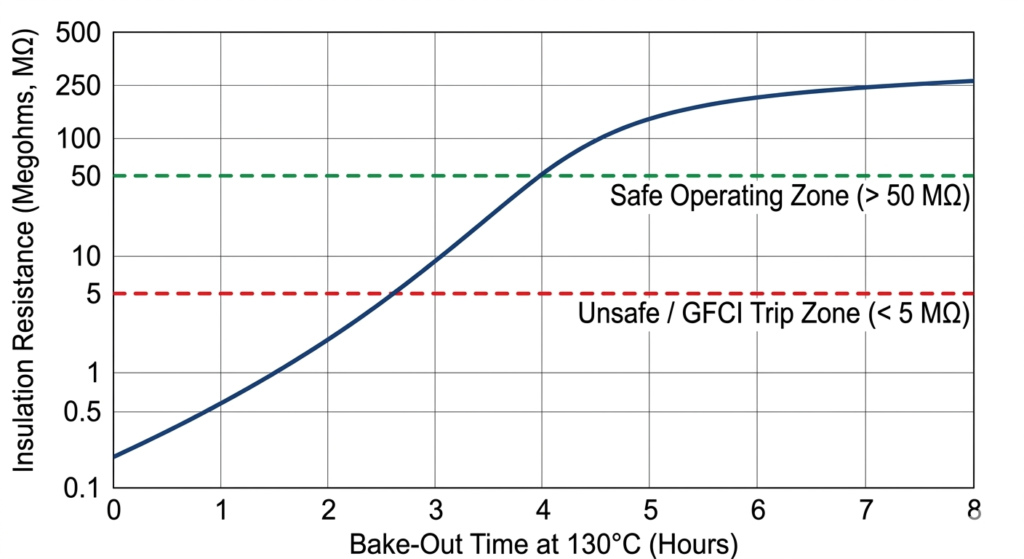
- Oven Bake-Out: Place the unenergized heater into an industrial drying oven set to 120°C – 150°C (250°F – 300°F) for 4 to 8 hours.
- Low-Voltage Heating: If an oven is unavailable, apply 20% to 30% of the heater’s rated voltage using a variable transformer (Variac). This heats the element from the inside out without generating enough leakage current to trip safety interlocks.
Best Practices for Heater Storage
Prevention is more cost-effective than recovery. Store spare heaters in a dry, climate-controlled environment. Ensure terminal ends are wrapped or protected, and prevent water from accumulating in conduit connections during long-term equipment storage.
3. Tubular Heater Terminal Seals: Material Comparison & Selection
If moisture ingress is a recurring issue, the OEM equipment likely requires an upgraded terminal seal. Industrial manufacturers utilize three primary sealing technologies:
| Seal Material | Typical Temp Limit | Moisture Barrier Level | Key Characteristics |
| RTV Silicone | 180°C – 220°C | Moderate | Elastomeric; accommodates thermal expansion well. Good for general air heating. |
| Epoxy Resin | 130°C – 160°C | High (Liquid-tight) | Hard, non-porous plug. Excellent against direct liquid, oils, and washdowns. |
| Ceramic Hermetic | 400°C – 500°C+ | True Hermetic (Zero porosity) | Fused glass-to-metal seal. Impervious to extreme vapor and high temperatures. |
Why Terminal Temperature Matters More Than Sheath Temperature
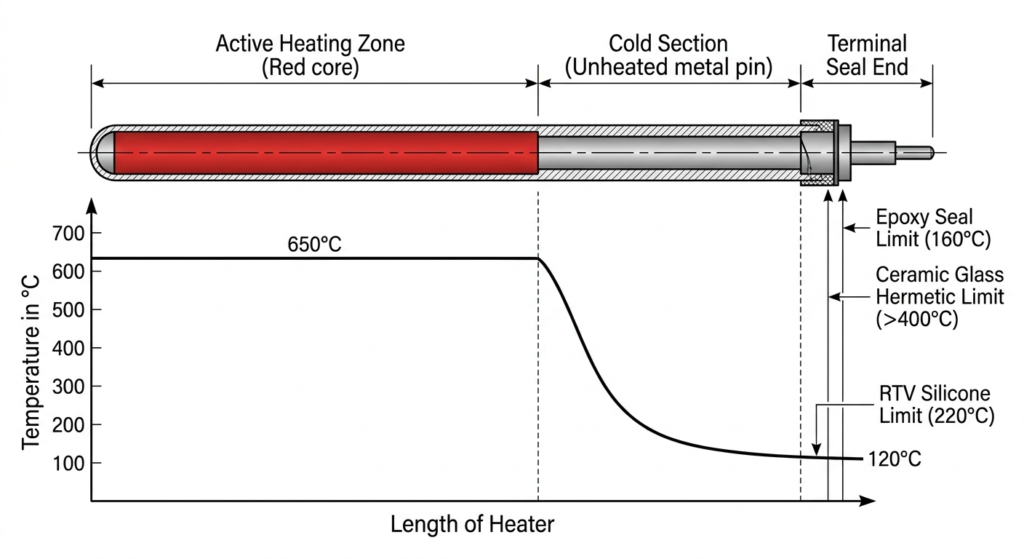
A common engineering mistake is selecting a seal based on the heater’s active zone temperature. The seal material must be matched to the local terminal area temperature.
Engineers control this by designing a precise unheated “cold section” at the ends of the tube. If the cold section is too short, the high heat from the active zone conducts down the pin and chars the epoxy or silicone seal, destroying the moisture barrier. Furthermore, any factory bending must be strictly kept away from this junction, as detailed in our guidelines for bending tubular heaters, to prevent cracking the seal.
4. Selecting the Right Terminal Seal by Application
Different industrial environments demand specific seal engineering. Here is a baseline selection guide:
- HVAC & Air Ducts: Standard silicone or epoxy is typically sufficient, provided the terminal housing is positioned outside the hot air stream. (Review our finned tubular heaters sizing guide for calculating duct heat loads).
- Refrigeration Defrost: Heaters in cooling systems face severe thermal cycling and condensation. Epoxy resins or molded vulcanized rubber boots are required to block liquid water.
- Food Processing & Washdown: Elements exposed to high-pressure cleaning (IP66/IP67) require rock-hard epoxy seals to prevent liquid and chemical penetration.
- High-Temperature Industrial Ovens: When the terminal enclosure itself operates in ambient conditions exceeding 250°C, organic polymers will fail. A ceramic glass hermetic seal is mandatory.
5. OEM Engineering Checklist: Specifying Heaters for Harsh Environments
To eliminate guesswork and ensure your heating system maintains high insulation resistance over its lifespan, please provide the following parameters when submitting a Request for Quote (RFQ):
- Maximum Terminal Zone Temperature: The expected ambient heat at the connection terminals.
- Operating Environment: (e.g., Still air, flowing liquid, chemical washdown, vacuum).
- Required Ingress Protection (IP Rating): IP54, IP65, or IP67.
- Cold Section Length: Necessary unheated length to keep the terminal seal cool.
- Electrical Specifications: Voltage, Total Wattage, Phase, and required Megohm testing standard.
Need Hongtai to Provide a Reliable Moisture-Proof Seal?
Hongtai heater factoryprovides engineered tubular heating elements with customized terminal seals designed to withstand your specific operational environment. Whether you need standard silicone RTV for commercial air heating, rugged epoxy for liquid immersion, or true glass-to-metal hermetic seals for extreme high-temperature ovens, we ensure maximum insulation resistance and long-term reliability.
Company: Hongtai heater factory
Technical Sales Consultation: Contact Hongtai Engineering Team
Contact US for having a Reliable Moisture-Proof Seal: www.hongtai-heater.com