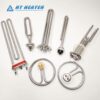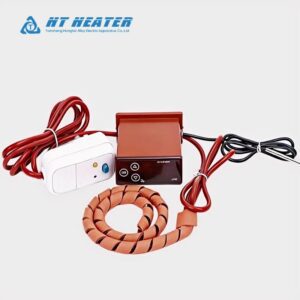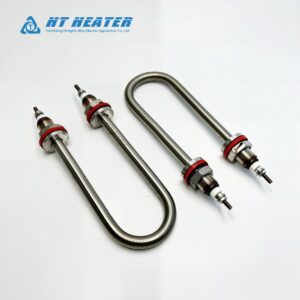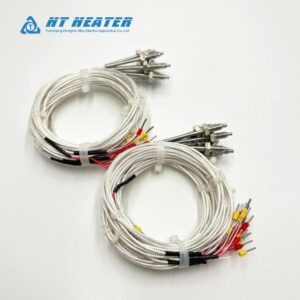
For refrigeration engineers and HVAC project managers, specifying the correct defrost tubular heaters are critical for maintaining evaporator efficiency. In commercial cold rooms and freezers, these heating elements face one of the harshest operating environments in the industry: continuous, severe thermal cycling combined with heavy condensation.
Moisture ingress is a primary reliability concern for these elements. This guide explores the mechanisms of moisture-related heater failure and details how engineered solutions—such as vulcanized sealed heaters, precise cold pin designs, and optimized surface loads—provide enhanced moisture protection for demanding refrigeration applications.
1.Why Moisture Protection Matters in Defrost Tubular Heaters
To understand why standard heating elements fail in refrigeration systems, one must look at the defrost cycle itself:
- Cooling Cycle: The evaporator operates at sub-zero temperatures, leading to frost accumulation on the coils and fins.
- Defrost Cycle: The evaporator defrosting heater is energized. Temperatures spike, melting the ice.
- Condensation: Heavy water droplets and vapor envelop the heater.
- Thermal Stress: As the cycle repeats, the constant expansion and contraction of the heater’s metal sheath and terminal connections create mechanical stress.
Over time, this wet-dry thermal cycling can degrade standard surface-applied terminal seals, creating microscopic pathways for moisture to enter the element. For a broader look at diagnosing electrical failures across different applications, refer to our tubular heater troubleshooting guide.
2.Moisture Ingress in Refrigeration Defrost Elements: MgO and Ground Faults
Like most industrial heating elements, defrost tubular heaters utilize compressed Magnesium Oxide (MgO) powder to electrically isolate the internal resistance wire from the outer metal sheath (learn more about this in our tubular heater construction overview). While MgO is an excellent thermal conductor, it is highly hygroscopic—meaning it actively absorbs moisture.
- When terminal seals degrade in a wet evaporator environment, the sequence of failure is predictable:
- Moisture vapor is drawn into the heater tube during cooling cycles.
- The MgO insulation absorbs the water, causing a drastic drop in Insulation Resistance (IR).
- Leakage current increases.
- The system experiences nuisance tripping of ground-fault protection devices.
- Continued operation in this state can lead to catastrophic dielectric breakdown and heater failure.
3.How Vulcanized Seals Protect Defrost Tubular Heaters
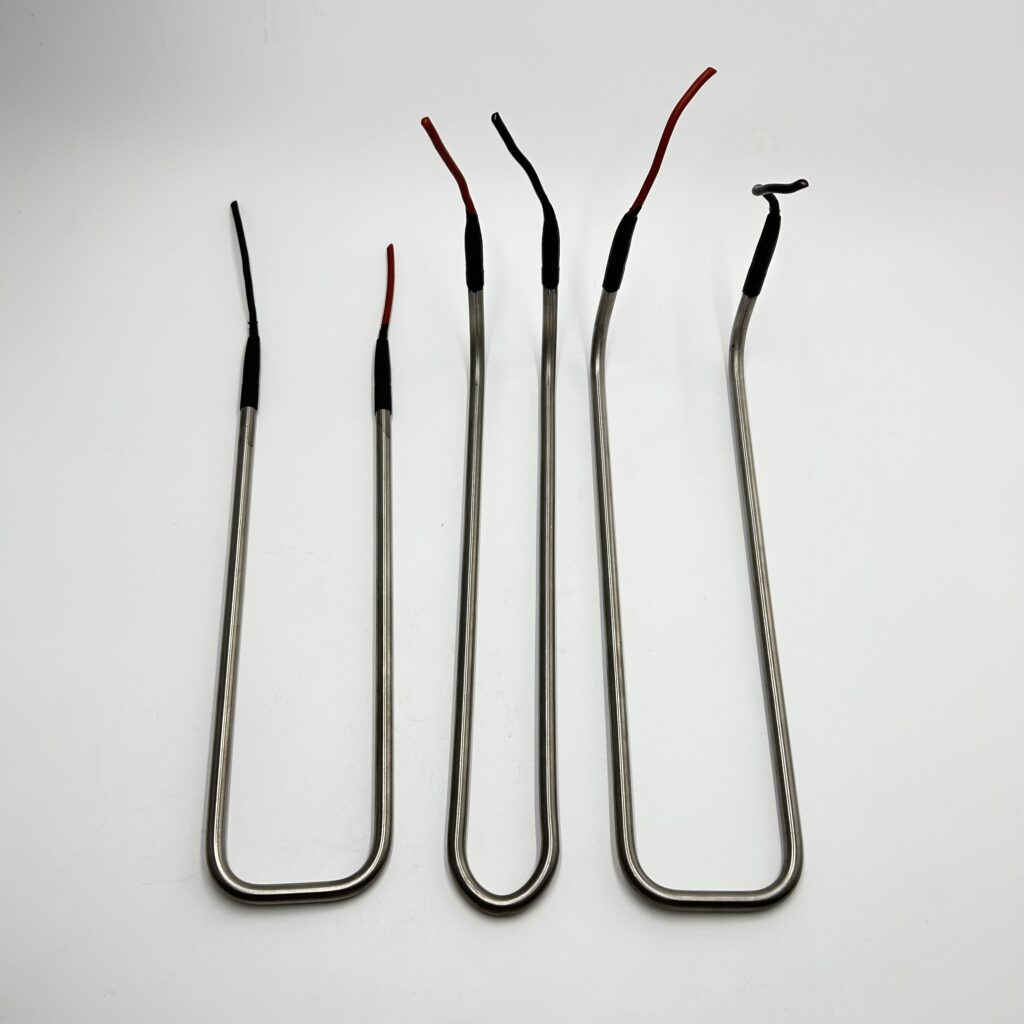
To combat moisture ingress, robust refrigeration tubular heaters employ a molded vulcanized seal.
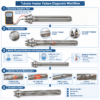
Unlike a conventional surface-applied RTV silicone barrier—which is perfectly adequate for many static, dry applications—a vulcanized seal forms a mechanically integrated transition around the heater’s metal end and the lead-wire interface. Using precise heat and pressure, specialized rubber compounds (such as Neoprene, EPDM, or vulcanized silicone) are molded directly onto the element.
This construction reduces the risk of moisture-related leakage by providing an exceptional barrier against the condensation and dripping water inherently found in defrost cycles.
4.Cold Pin Design for Evaporator Defrosting Heaters
A watertight seal is only effective if it survives the heat generated by the element. This requires meticulous Cold Pin engineering, a critical aspect of tubular heater terminations.
A tubular heater consists of a heated zone (where the resistance wire resides) and an unheated cold section (the solid internal pin connecting the wire to the external leads).
The Engineering Rule: The cold pin must be long enough to project the molded rubber seal outside of the high-heat zone. If the cold pin is too short, conductive heat will migrate to the terminal, degrading the vulcanized rubber over time and ruining its moisture resistance.
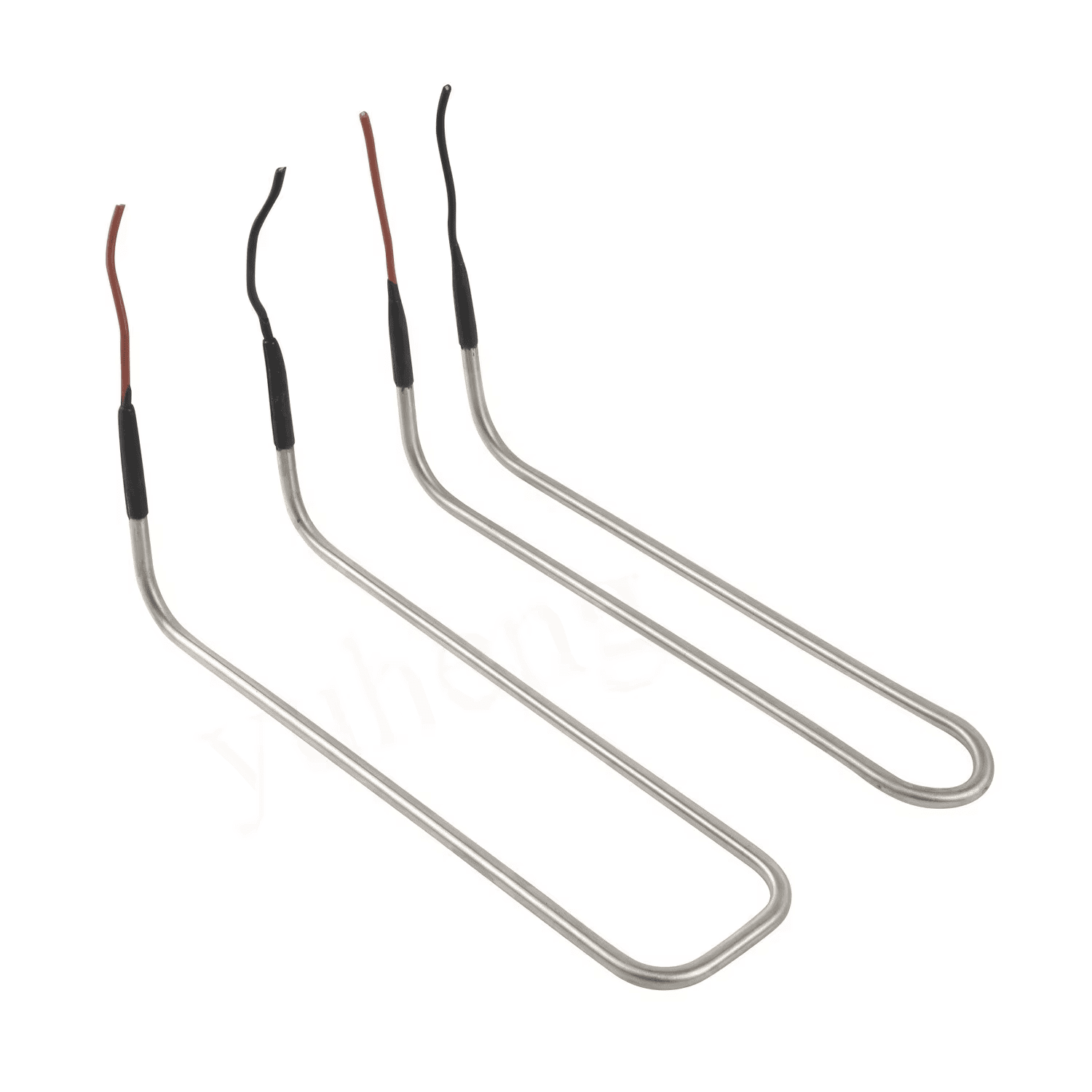
5.Defrost Heater Sheath Material and Evaporator Geometry
Evaporator defrost heaters must be customized to fit the exact footprint of the refrigeration coils.
5.1 Sheath Material Selection:
Choosing the right alloy depends on the specific condensate chemistry and operating temperatures:
- 304 Stainless Steel: The industry standard for general commercial refrigeration and standard condensation environments.
- 316L Stainless Steel: Specified for enhanced corrosion resistance, particularly if the condensate contains higher chloride levels.
- Incoloy / Titanium: Utilized in highly specialized or harsh industrial chilling applications.
5.2 Defrost Heater Geometry:
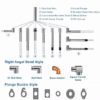
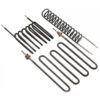
To prevent excessive local heat concentration, the heater’s geometry (Straight, U-shaped, W-shaped, or complex serpentine bends) should strictly follow the evaporator coil and fin spacing. This ensures uniform ice melting across the entire frost-prone area without damaging the surrounding cooling fins.
6.Watt Density (Surface Load) for Defrost Tubular Heaters
Watt density (surface load) dictates how hot the heater sheath will become. It is calculated as:
Watt Density = Power (W) / (pi x Diameter x Heated Length)
In defrost applications, a watt density that is too high forces the sheath temperature up too rapidly. While this melts ice quickly, it causes extreme thermal stress on the terminal seals and prematurely ages the internal resistance wire. By designing the refrigeration tubular heater with an appropriately low-to-medium watt density and spreading the wattage over a longer wetted surface within the evaporator, engineers can significantly extend the operational life of the vulcanized seal.
7.OEM Specification Checklist for Defrost Tubular Heaters
When sourcing defrost heater elements for new HVAC or refrigeration projects, project managers should verify the following parameters to ensure system reliability:
| Parameter | Typical Specification to Confirm for Refrigeration |
| Application Zone | Evaporator fins, drain pan, or freezer drain line |
| Moisture Protection | Molded vulcanized rubber or specialized silicone transition |
| Sheath Material | 304 SS, 316L SS, or application-specific alloy |
| Cold Pin Length | Must be matched to terminal temperature limits |
| Watt Density (W/cm²) | Application-dependent (typically low to medium load) |
| Heater Geometry | Custom formed to match the exact evaporator fin footprint |
| Lead Wire | Moisture-resistant insulation compatible with the molded seal |
Partner with Hongtai for Reliable Refrigeration Heating
Preventing electrical failures in harsh commercial refrigeration environments requires precision thermal engineering and robust moisture-resistant construction.Hongtai Heater Factory manufactures high-performance tubular defrost heaters tailored for OEM evaporator systems.
- Consult our Engineers: Send your wiring schematics to the Hongtai Heater Factory technical team for a free design review.
- Visit Us:: www.hongtai-heater.com