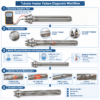
Tubular heater quality control is the definitive benchmark for QA quality managers and sourcing engineers managing global supply chains, where generic promises of “strict quality control” are never enough. In industrial thermal systems, a single dielectric breakdown or insulation failure can lead to severe equipment damage, safety hazards, and costly downtime.
Reliable quality control relies on verifiable testing data, traceable inspection processes, and strict adherence to specific safety standards. At Hongtai heater factory, the release of every tubular heater batch is governed by a systematic electrical safety protocol. This guide breaks down the core electrical tests, compliance frameworks, and inspection checklists you must demand from your supplier before approving mass production.
1.Core Electrical Safety: Dielectric Withstand (Hi-Pot) Testing
Electrical integrity is the absolute foundation of any heating element. However, testing parameters are not a “one-size-fits-all” scenario; they must align intimately with the heater’s design, rated voltage, and applicable safety standards.
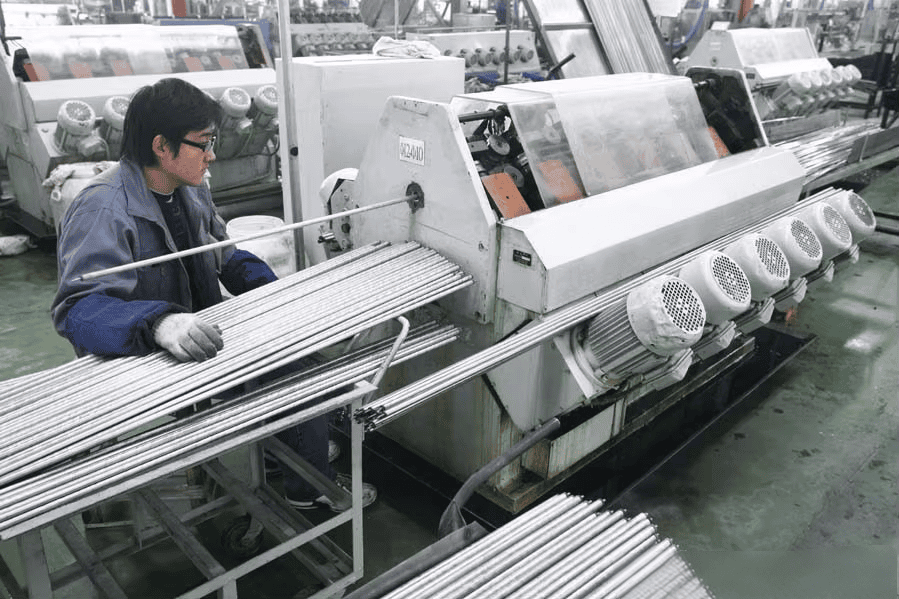
Executing a rigorous tubular heater hi-pot test during production and final inspection is the primary defense for verifying insulation integrity.
- Test Execution: A specified high-voltage alternating current (or DC equivalent) is applied between the live internal resistance wire and the outer conductive metal sheath.
- Dynamic Parameters: The test voltage is not a blanket 1500V for all products. The actual test voltage and duration must be strictly dictated by the product’s rated operating voltage and the customer-approved inspection specification.
- Acceptance Criteria: The factory must verify zero dielectric breakdown, zero flashover, and ensure that leakage current remains strictly within the allowable safety thresholds defined by the standard.
2.Insulation Resistance (IR) and Moisture Control
Moisture absorption by the magnesium oxide (MgO) powder is the leading cause of insulation failure in tubular heaters. Therefore, monitoring the cold and hot resistance values of an insulation resistance tubular element is critical.
- Cold vs. Hot IR: While Hongtai heater factory may implement a high internal factory acceptance limit of >1000 MΩ for specific high-performance elements, the exact minimum required resistance depends heavily on the operating environment and the buyer’s specifications. Furthermore, hot insulation resistance must be evaluated to ensure the dielectric material does not severely degrade at elevated operating temperatures.
- Engineering Integration: Insulation stability is deeply tied to the terminal sealing process. To understand how to prevent moisture from compromising the MgO dielectric barrier, refer to our technical guide: Tubular Heater Terminal Seals: Moisture Ingress, Low IR & Selection Guide.
3.Non-Destructive X-Ray Inspection for Internal Integrity
Conventional electrical testing only validates the final output, whereas non-destructive X-ray inspection allows QA teams to “see through” the heater and verify its internal structural integrity.
While X-ray imaging is not mandatory for standard commercial heaters, it is indispensable for critical applications involving high watt densities, severe thermal cycling, or high-vibration environments. X-rays allow engineers to verify the uniformity of the resistance coil pitch (preventing localized hot spots) and check the weld integrity of the cold-pin transitions.
- Engineering Integration: To learn more about how internal compaction and coil positioning affect performance, read: Inside a Tubular Heater Construction: MgO, NiCr & Sheath Design.
4.Demystifying International Compliance: UL 1030 and CE Directives
A common pitfall in global sourcing is misunderstanding compliance marks. Procurement teams must differentiate between “general factory testing” and “verified product certification.”
- North American Market: Engineers must understand the boundaries of the UL 1030 heating element standard. This standard specifically applies to metal-sheathed heating elements rated at 600V or less. If your application requires UL recognition, ensure the manufacturer provides the specific UL file number for the exact model, rather than accepting a vague claim of “UL compliance.”
- European Market: When sourcing a CE certification heater, it is vital to know that CE is not a single, unified certificate. It indicates that the product complies with specific EU directives—most notably the Low Voltage Directive (LVD, 2014/35/EU) which governs electrical safety, and the RoHS Directive which restricts hazardous substances.
5.Buyer’s Inspection Checklist and Troubleshooting Abnormalities
A top-tier manufacturer does not rely solely on end-of-line testing; quality is built through multi-stage structural inspections. When auditing a supplier, request the following records:
- Verified 2D engineering drawings (for complex forming verifications, consult Bending Tubular Heaters: Minimum Bend Radius, U-Shape Design & Cold Zones).
- Electrical safety test reports detailing Hi-Pot, IR, and wattage tolerances alongside their specific acceptance criteria.
- Batch traceability logs and Declarations of Conformity (DoC).
5.1 Troubleshooting Testing Failures:
Understanding how a factory responds to out-of-tolerance units is just as important as the testing itself.
- Low Insulation Resistance: Typically indicates moisture ingress, damaged terminal seals, or MgO contamination.
- Hi-Pot Breakdown: Suggests severe insulation damage, internal shorting (coil shifted too close to the sheath), or assembly defects.
- Engineering Integration: For a deeper root-cause analysis of current leakage and physical failures, explore our guide: Tubular Heater Troubleshooting: Failure Causes, Testing & Repair.
Secure Compliant Heating Elements for Your OEM Applications
Traceable quality control and verifiable test reports are essential for ensuring operational safety and hassle-free export clearance. Hongtai Heater Factory delivers engineered tubular heaters backed by comprehensive Hi-Pot, insulation resistance, and non-destructive quality records.
- Consult our Engineers: Send your wiring schematics to the Hongtai Heater Factory technical team for a free design review.
- Visit Us:: www.hongtai-heater.com