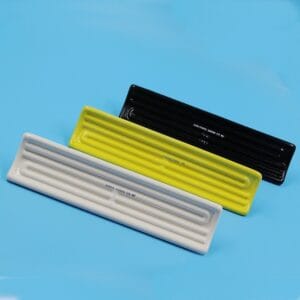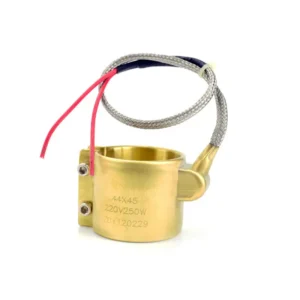
ceramic Infrared heater Panel lifespan is dictated heavily by field installation practices rather than just the inherent quality of the refractory materials. For field electricians and maintenance personnel, incorrectly mounting a modular array or neglecting proper terminal wiring inevitably leads to localized overheating, cracked ceramic bodies, and severe cold pin oxidation.
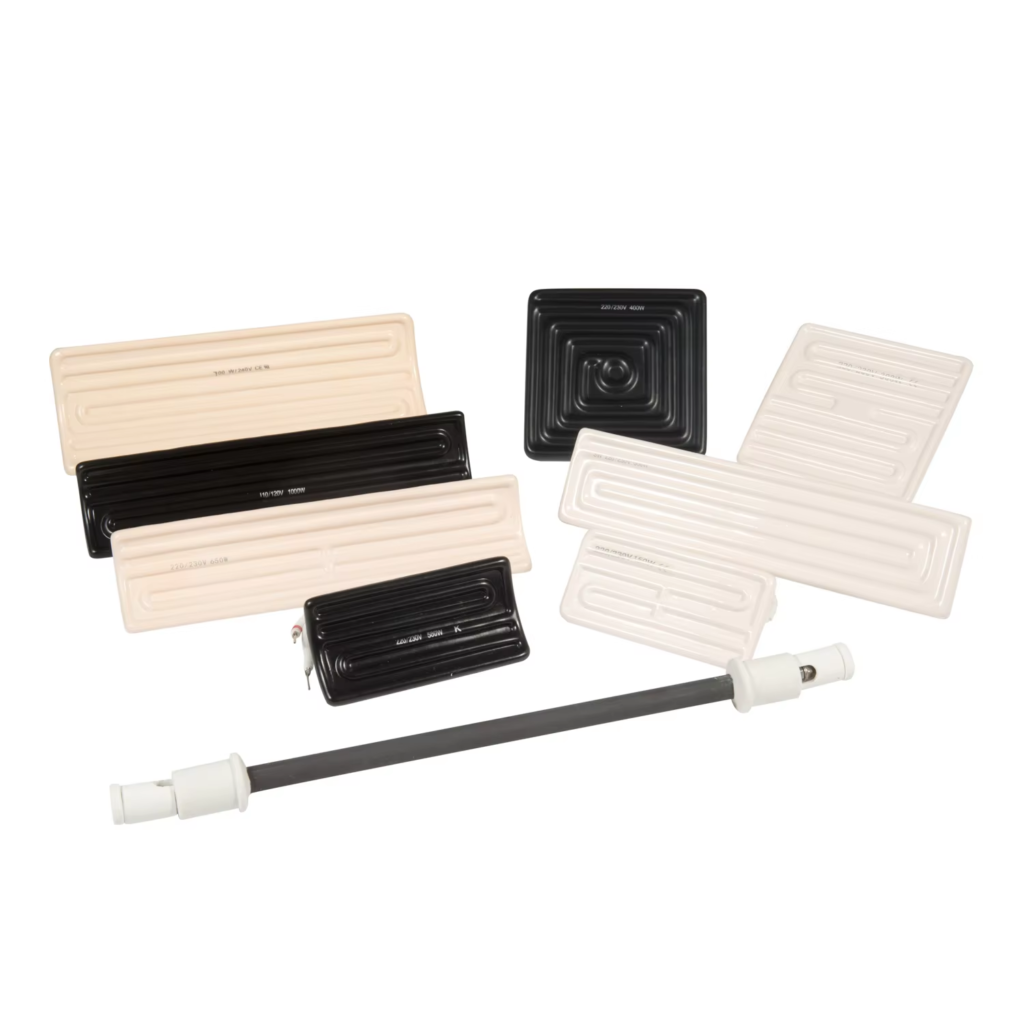
When retrofitting an industrial curing tunnel or servicing a thermoforming oven, following a strict Standard Operating Procedure (SOP) is the only way to guarantee thermal stability and maximize Mean Time Between Failures (MTBF). Below is the definitive engineering checklist and best practice guide for field installations.
1. Terminal Thermodynamics & Preventing Cold Pin Oxidation
The most critical failure point during field installation occurs at the electrical connection behind the reflector. The unheated mounting leads (cold pins) are engineered specifically to distance the electrical terminals from the extreme heat of the emitting face.
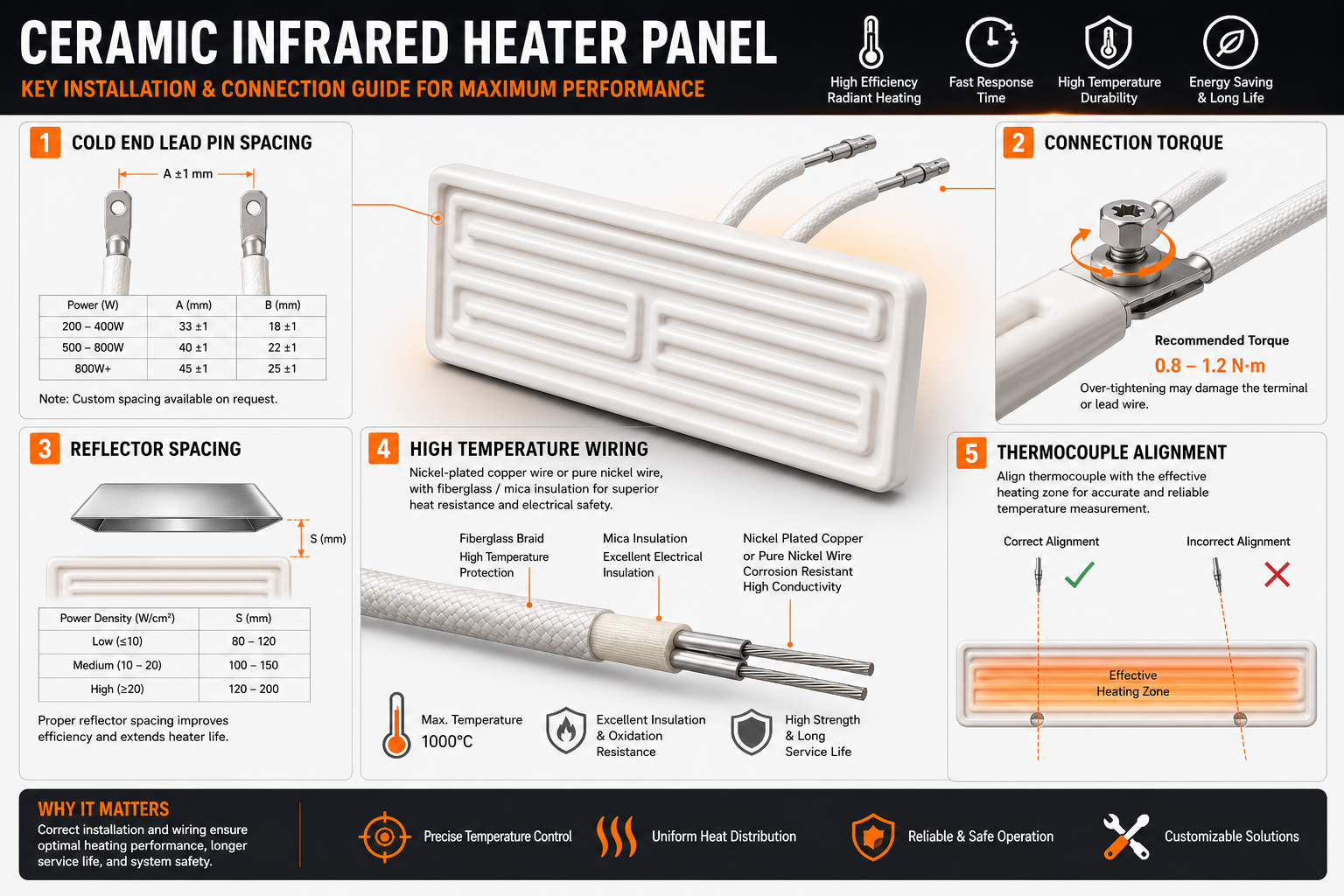
If maintenance personnel mount the ceramic Infrared heater Panel flush against the sheet metal casing, thermal energy conducts directly into the terminal block. This causes the nickel electrical terminals to rapidly oxidize, creating high electrical resistance, arcing, and ultimately melting the connection. To prevent this, always ensure a minimum 1-inch (25mm) air gap behind the heater to vent convective heat. Furthermore, you must verify that your system is not simply overpowering the element. Excessive thermal flux at the cold pin is often a symptom of over-specified power limits, a metric you should verify prior to installation by consulting How to Calculate Watt Density for Ceramic Infrared Heaters.
2. Multi-Zone Array Configuration and Spacing
When assembling a multi-zone ceramic Infrared heater Panel, the physical spacing between individual ceramic bricks dictates the uniformity of your process heat. Elements clamped too closely together will cross-radiate, generating localized hot spots along the outer edges of the ceramic matrix. This trapped thermal energy forces the internal resistance wire past its safe operating threshold, causing premature burnout.
Engineers designing and installing these layouts should reference the Flat Ceramic Heaters Engineering Specs: Uniform Heating for Industrial Ovens to determine the optimal spacing tolerances and wiring configurations (parallel vs. series) required to maintain a uniform thermal footprint without edge losses.
3. Control Loop Calibration and Startup Protocols
Wiring the ceramic Infrared heater Panel correctly is only half the job; integrating it into the thermal control loop safely is the final hurdle. Because ceramic refractory materials possess significant thermal mass, the startup control loop must be calibrated specifically to avoid thermal shock. Slamming a cold ceramic array with 100% power via a mechanical contactor will fracture the glaze.
If your maintenance team is servicing a mixed-technology oven or upgrading from older legacy systems, reviewing the Quartz vs. Ceramic Infrared Heaters: Response Time & Wavelength Comparison will provide the necessary thermodynamic data to safely recalibrate your PID controller’s ramp-up times and cycle rates.
4. The Zero-Click Field Execution Checklist
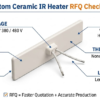
Before powering up a newly installed IR heating array, attach this inspection checklist to your maintenance clipboard:
- Torque & Hardware: Are all high-temperature ceramic wire nuts and ring terminals tightened to spec without fracturing the ceramic standoff insulators?
- Standoff Distance: Do the cold pins protrude completely through the reflector without grounding against the metal chassis?
- Wire Insulation: Are you exclusively utilizing nickel-plated copper or pure solid nickel wire clad in fiberglass or mica insulation?
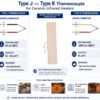
- Thermocouple Seating: Is the integrated Type K or J thermocouple correctly aligned with the control zone, with proper slack left in the lead wires to accommodate thermal expansion?
For maintenance managers looking to standardize training across all thermal processing equipment, we highly recommend integrating this SOP with the foundational knowledge found in Ceramic Infrared Heaters: The Complete Engineering & Selection Guide to ensure your entire team understands the physics behind the hardware.