Ceramic bulb infrared heaters
In commercial livestock farming, poultry incubation, and professional exotic reptile breeding, maintaining strict environmental temperatures is critical to animal health, growth rates, and reproductive success. However, providing 24/7 continuous heat often introduces a secondary problem: light pollution.
Traditional glass heat lamps emit a harsh, continuous glare that disrupts the natural circadian rhythms (sleep-wake cycles) of animals, leading to stress, weakened immune systems, and decreased production yields.
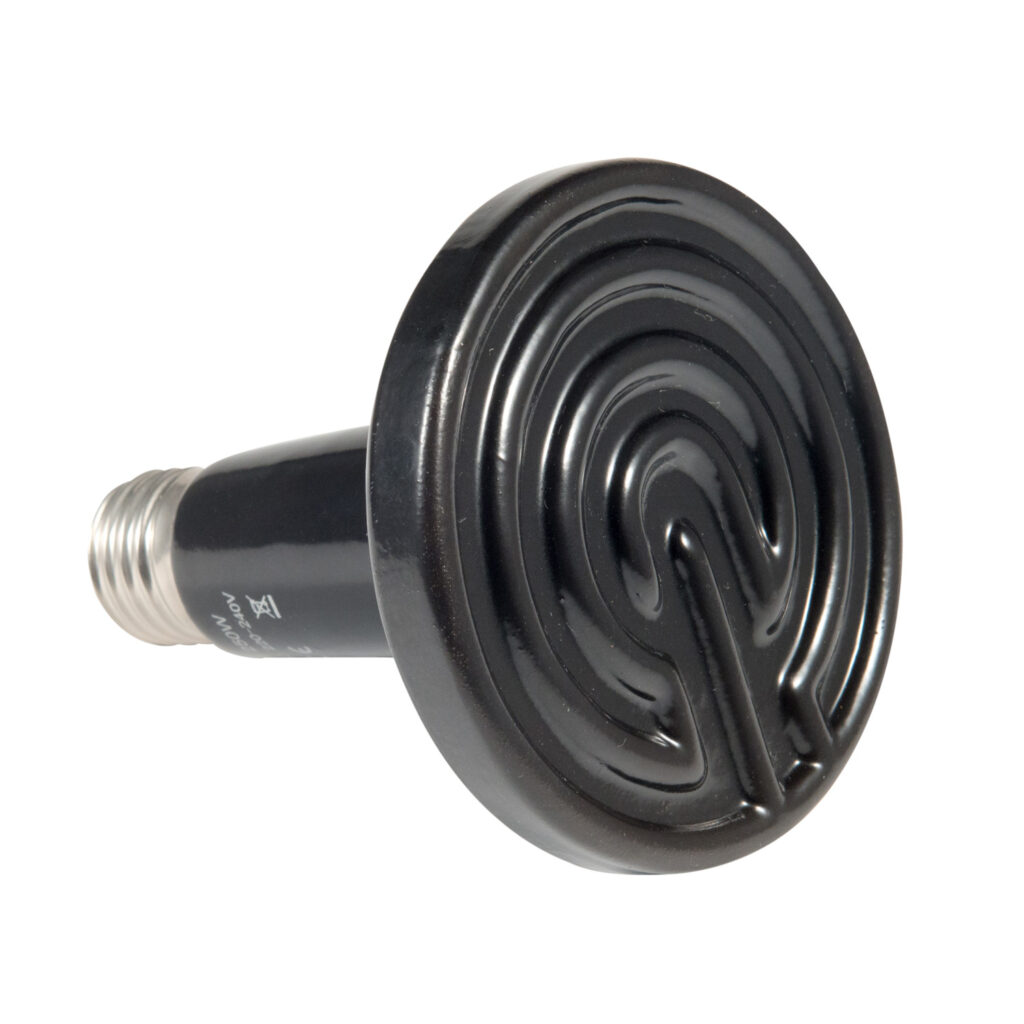
The industry standard for solving this challenge is the ceramic bulb heater. Engineered specifically for biological thermal management, these elements provide deep-penetrating infrared heat with zero visible light emission, ensuring a stress-free and highly controlled environment.
1. The “Zero-Light” Advantage: Protecting Circadian Rhythms
Animals, much like humans, require a distinct day-night cycle for proper hormonal regulation. Utilizing luminous red or white heat lamps at night severely disrupts this biological clock.
- Stress Reduction: A ceramic bulb infrared heater emits only far-infrared thermal energy (heat without light). This allows facility managers to maintain vital ambient temperatures at night without disturbing the flock or reptiles’ resting periods.
- Deep Tissue Heating: Ceramic elements generate long-wave infrared radiation. This specific wavelength penetrates the skin and scales more effectively than ambient convection, gently warming the animal’s muscle tissue and promoting healthy blood circulation.
2. Durability in Harsh, High-Humidity Environments
Livestock enclosures, incubators, and terrariums are notoriously harsh environments characterized by high moisture, misting systems, and frequent temperature shifts.
- Shatterproof Design: Standard glass bulbs are highly susceptible to thermal shock. A single splash of water on a hot glass lamp can cause it to shatter, creating a severe safety hazard for the animals and a fire risk for the facility.
- Glazed Ceramic Integrity: Manufactured from industrial-grade, thermal-shock-resistant clay, ceramic bulbs are completely sealed and finished with a moisture-resistant glass glaze. They can withstand high-humidity environments and incidental water splashes without cracking, making them ideal for amphibian terrariums and poultry brooders.
- Extended Lifespan: The internal nickel-chromium (NiCr) resistance wire is entirely embedded within the ceramic casting, protecting it from oxidation. This results in an operational lifespan of up to 10,000 to 20,000 hours—drastically reducing replacement frequency and maintenance costs compared to standard bulbs.
3. Engineering & Procurement Specifications
For equipment manufacturers and farm procurement managers, specifying the correct ceramic bulb heater involves matching the wattage to the enclosure volume and ambient temperature differential.
| Specification | Standard Offerings | Application Notes |
| Standard Wattages | 50W, 75W, 100W, 150W, 200W, 250W | Scale power based on enclosure size; 50W for small breeding racks, 250W for large livestock pens. |
| Base / Socket Type | Standard E27 or E26 Edison Screw | Designed for universal compatibility with standard light sockets. Must be used with porcelain/ceramic sockets, as plastic sockets will melt. |
| Voltage Options | 110V-120V / 220V-240V | Configurable for global agricultural markets and power grids. |
| Surface Temperature | 200°C to 400°C (392°F to 752°F) | Protective wire mesh guards are mandatory to prevent direct animal contact and severe burns. |
4. System Integration and Safety Best Practices
To maximize the efficiency and safety of a ceramic bulb heater, proper installation is non-negotiable.
- Thermostatic Control: Because ceramic bulbs do not emit light, it is visually impossible to tell if they are on or dangerously overheating the enclosure. They must always be paired with a reliable digital thermostat to regulate the output. (For advanced industrial setups requiring precision sensing, review our Type K vs Type J Thermocouple Selection Guide).
- Porcelain Fixtures Only: The base of a ceramic heater transfers intense conductive heat. Standard plastic or Bakelite light fixtures pose an immediate fire hazard. Only industrial-grade porcelain or ceramic E27 fixtures with high-temperature wiring should be utilized.
Partner with HT-Heater for Agricultural Thermal Solutions
Whether you are designing advanced terrarium enclosures or upgrading commercial poultry brooding facilities, HT-Heater provides reliable, factory-direct ceramic thermal components.
We offer bulk OEM manufacturing, custom branding, and varying wattage configurations to meet the exact specifications of your agricultural equipment line.
For more details about ceramic bulb infrared heaters, welcone contact us .
[Contact Our Team for Wholesale Pricing and OEM Customization]