htwaimaokuaiche@gmail.com

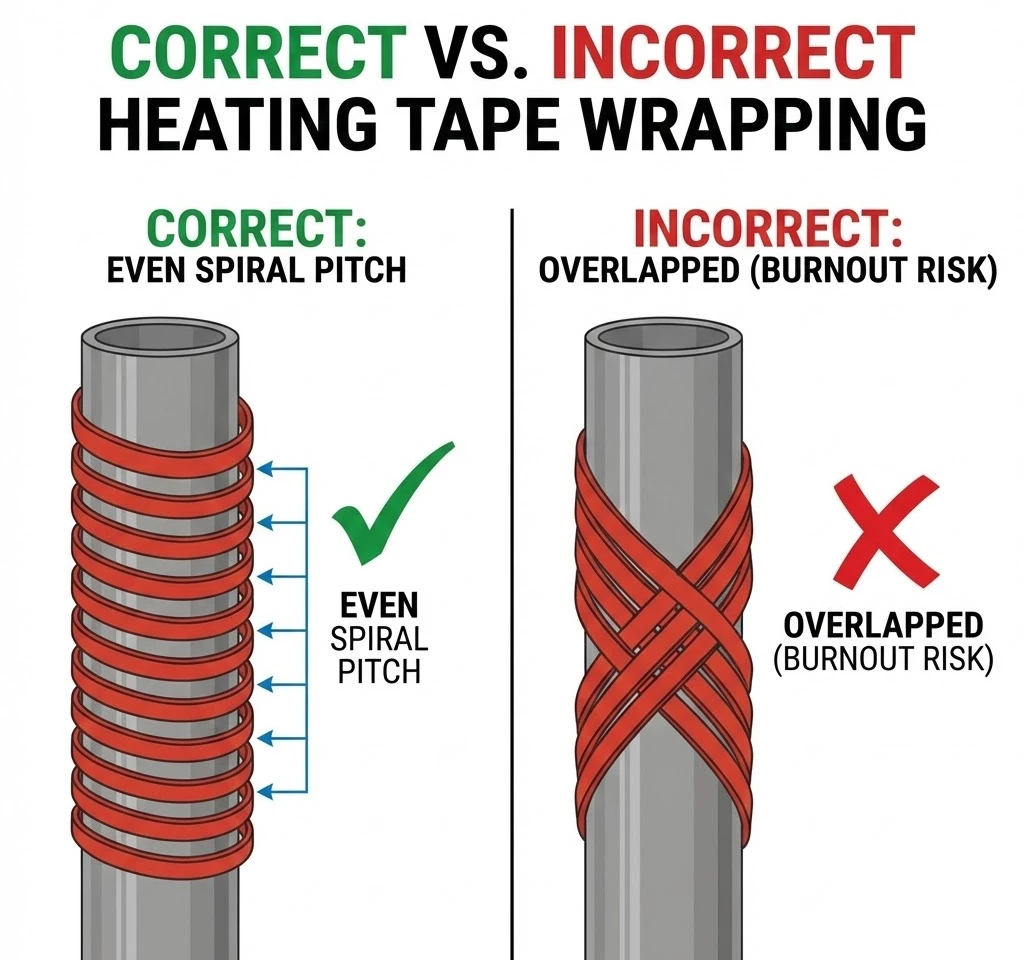
Never overlap constant-wattage heating tape. The localized heat buildup will destroy the insulation.

Silicone Heating Tape Selection Guide: Pipe Tracing, Freeze Protection & Lab Applications

Introduction In industrial maintenance and laboratory setups, the geometry is rarely flat. You are dealing with ¼-inch stainless steel tubing, complex valve bodies, curved glass beakers, or vacuum exhaust lines. Standard rectangular heating pads simply won’t stick, and rigid cartridge heaters won’t fit. Technicians need a thermal solution that handles like duct tape but performs
Silicone Heating Tape Selection Guide: Pipe Tracing, Freeze Protection & Lab Applications Read More »

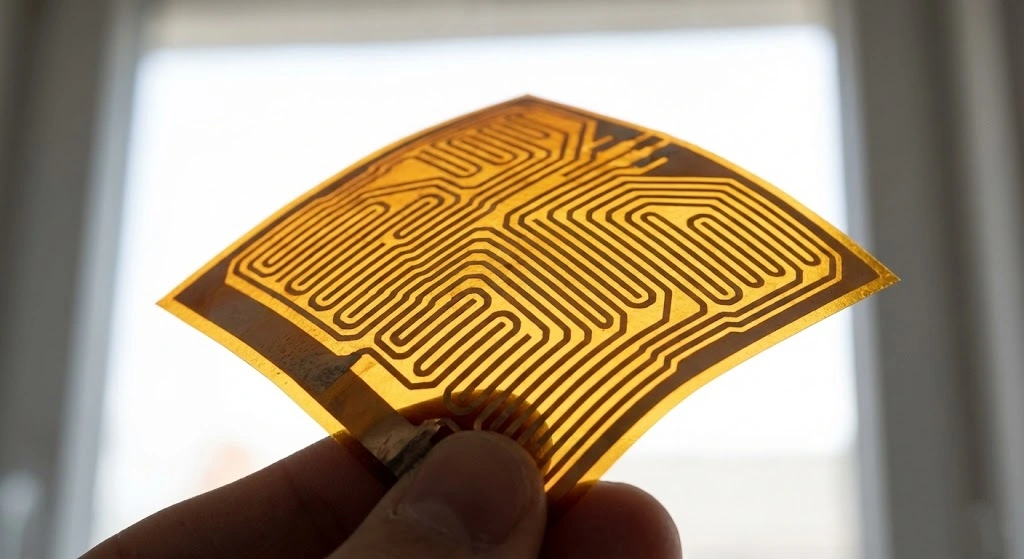
Etched foil technology allows for complex circuit paths

Polyimide (Kapton) Heater Design Guide: Ultra-Thin, Vacuum & Precision Thermal Solutions

Introduction When your mechanical design allowance is tight—say, a Z-axis clearance of less than 0.5mm—or when your operating environment is a high-vacuum chamber, traditional thermal solutions hit a wall. Silicone rubber is too thick (>1.5mm) and risks outgassing. Ceramic heaters are too brittle and bulky. For engineers in optics, aerospace, and medical diagnostics, the solution

Polyimide (Kapton) Heater Design Guide: Ultra-Thin, Vacuum & Precision Thermal Solutions Read More »

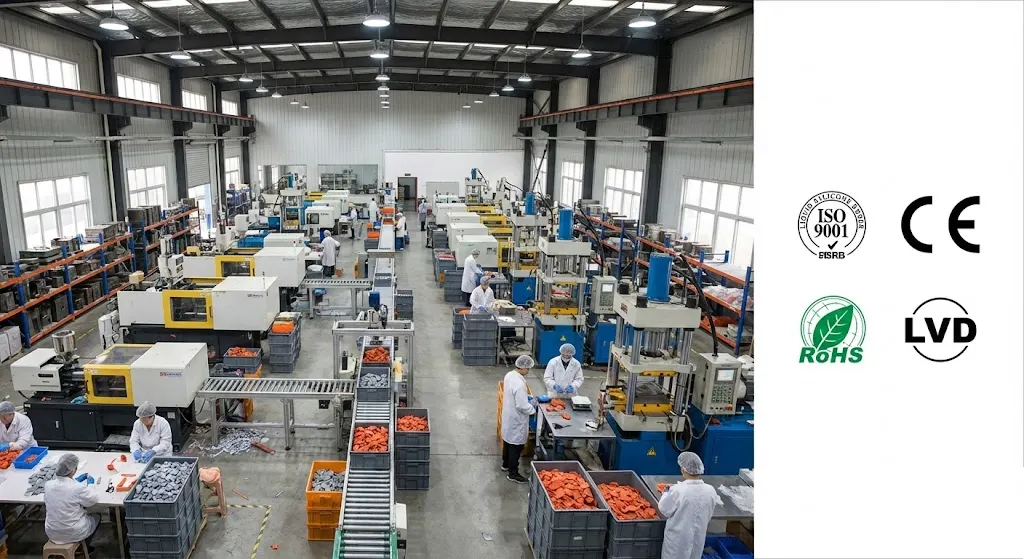
Manufacturing compliance is the foundation of food safety. HT-Heater is an ISO 9001 certified facility.

Commercial Food Service Heating Solutions: FDA-Compliant Silicone Elements

Introduction In the design of commercial kitchen equipment, the heating element faces a brutal paradox. It must survive a “sauna” environment—high heat, steam, and aggressive chemical cleaning—while strictly adhering to food safety regulations. Traditional metal tubular heaters are prone to limescale buildup and corrosion. Standard industrial heaters, on the other hand, often fail the “washdown”

Commercial Food Service Heating Solutions: FDA-Compliant Silicone Elements Read More »

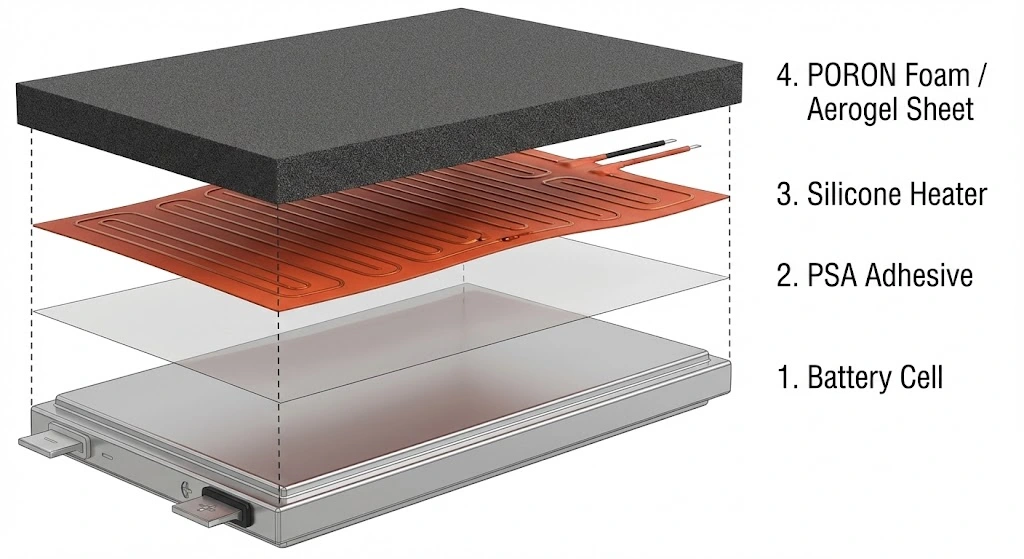
Integrated thermal assemblies combine heating, insulation, and compression padding into a single SKU.

Battery Thermal Management: LiFePO4 Heating Solutions & BMS Integration

Introduction It is a non-negotiable rule of electrochemistry: Never charge a LiFePO4 (LFP) battery below 0°C. Doing so doesn’t just reduce efficiency; it causes irreversible Lithium Plating on the anode. This leads to permanent capacity loss and, in severe cases, the formation of dendrites that can pierce the separator and cause a short circuit. For

Battery Thermal Management: LiFePO4 Heating Solutions & BMS Integration Read More »

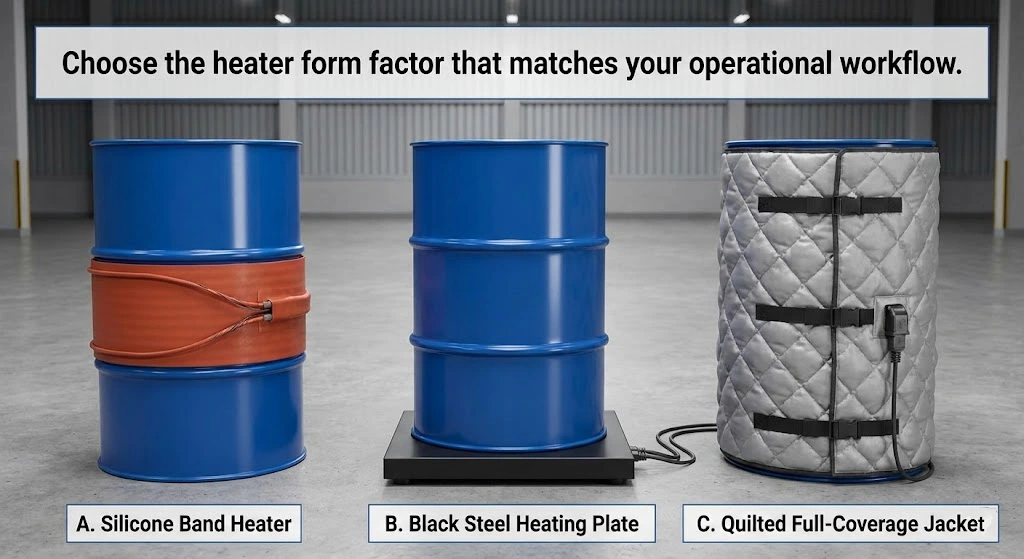
Choose the heater form factor that matches your operational workflow.

Industrial Drum Heater Selection Guide: Viscosity Control & Freeze Protection for 55-Gallon & IBC Totes

Introduction Winter in an industrial warehouse brings a predictable, expensive problem: honey crystallizes, epoxy resin becomes un-pourable, and heavy oil turns into sludge. Trying to pump these high-viscosity fluids cold is a recipe for disaster. It leads to pump cavitation, motor burnout, and production line stoppages. The old methods—open flames, hot water baths, or space

Industrial Drum Heater Selection Guide: Viscosity Control & Freeze Protection for 55-Gallon & IBC Totes Read More »

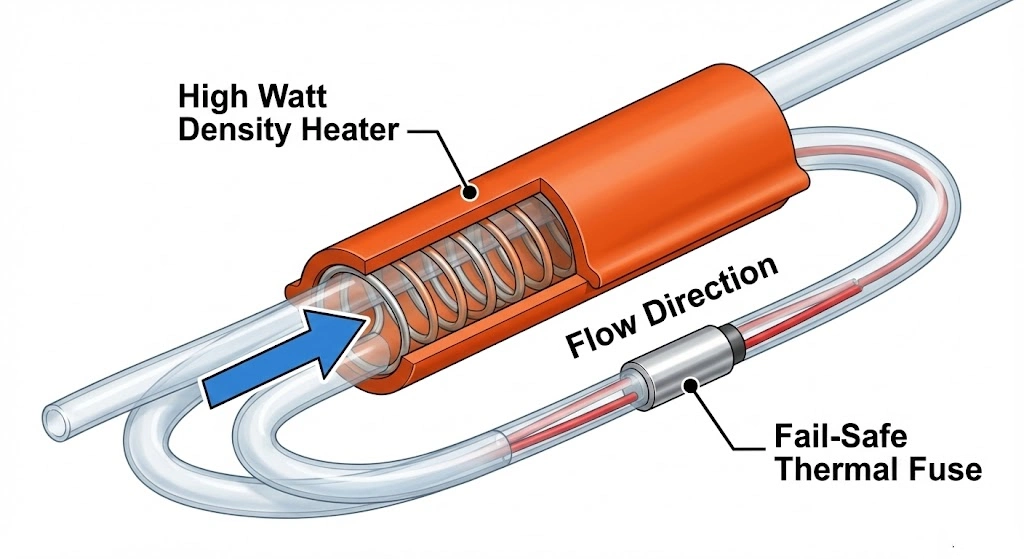
IV warming requires high power density to heat fluids instantaneously as they flow to the patient, strictly capped at 42°C for safety.

Medical-Grade Silicone Heating Solutions: From IV Warming to Blood Analyzers

Introduction In life sciences, a temperature deviation of just 1°C isn’t a minor inefficiency—it’s a failed diagnosis, a denatured reagent, or a compromised patient safety protocol. Standard industrial heaters are simply not built for the sterile, high-precision environment of a hospital or laboratory. They lack the response speed, the biocompatibility, and the fail-safe redundancy required

Medical-Grade Silicone Heating Solutions: From IV Warming to Blood Analyzers Read More »

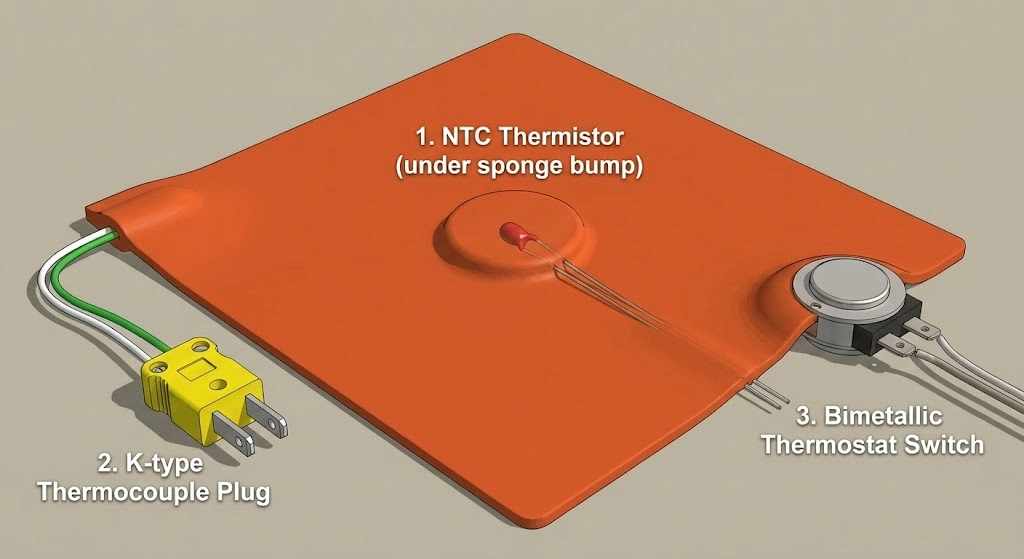
Illustration of integrated temperature sensors NTC thermistor thermocouple and thermostat on silicone heater.

Silicone Heater Design Guide: PSA Selection, Watt Density & Thermal Control (2026)

Introduction In the field of thermal engineering, the heating element itself is rarely the point of failure. When a silicone heater fails in the field, it is almost invariably due to one of two oversight categories: interface failure (the adhesive gave up) or thermal overload (the watt density exceeded the dissipation rate). Designing a robust

Silicone Heater Design Guide: PSA Selection, Watt Density & Thermal Control (2026) Read More »

The Engineer’s Guide to Flexible Heaters: Material Physics, Thermal Design & Customization (2026 Edition)

Introduction In electromechanical design, thermal management is often a battle against geometry. When you need to apply precise heat to compound curves, vacuum chambers, or tight spaces, rigid metal heaters simply fail—not due to lack of power, but due to contact resistance. Engineers don’t just need a heating element; they need a “thermal skin” that

The Engineer’s Guide to Flexible Heaters: Material Physics, Thermal Design & Customization (2026 Edition) Read More »

Custom Cartridge Heater Ultimate Manual: Metric/Imperial Conversions & The 7-Step RFQ Checklist

Introduction Here is a scenario we see weekly: A maintenance manager in Europe orders a 3/8″ cartridge heater for a 10mm mold hole. He thinks, “10mm is 0.39 inches. 3/8 is 0.375 inches. It’s close enough, and it fits.” The Reality: The gap is 0.47mm. In the world of thermal transfer, that gap is the

Custom Cartridge Heater Ultimate Manual: Metric/Imperial Conversions & The 7-Step RFQ Checklist Read More »

Cartridge Heater Temperature Control: The Ultimate Guide to Thermocouples, PID & SSRs

Introduction A high-density cartridge heater without a control system is not a tool; it is a fuse waiting to blow. In high-watt density applications, the internal temperature of a heater can rise at a rate of 50°C per second. If you rely on a manual switch or a slow-reacting external sensor, the heater core will

Cartridge Heater Temperature Control: The Ultimate Guide to Thermocouples, PID & SSRs Read More »

Scroll to Top