Industrial furnace heating elements form the thermodynamic core of heat treatment, sintering, melting, and thermal processing equipment. For industrial furnace design engineers and heat treatment equipment manufacturers, choosing the wrong heating material does not merely reduce thermal efficiency—it can trigger premature element burnout, atmosphere contamination, or costly power supply overhauls.
Effective furnace heater selection requires evaluating metallic resistance alloys (such as Nickel-Chromium, NiCr) alongside non-metallic ceramic and cermet alternatives like Silicon Carbide (SiC) and Molybdenum Disilicide (MoSi₂). This engineering guide compares these three primary furnace heating element types across operating temperature ranges, furnace atmospheres, electrical power control architectures, and lifecycle maintenance costs to help you conduct a rigorous preliminary technology screening.
1.Overview of Furnace Heating Element Types & Temperature Boundaries
When screening furnace heating element types, engineers must first distinguish between maximum element surface temperature and usable furnace chamber temperature. A minimum thermal differential of 50°C to 150°C is typically required to drive radiative and convective heat transfer from the element to the workload.
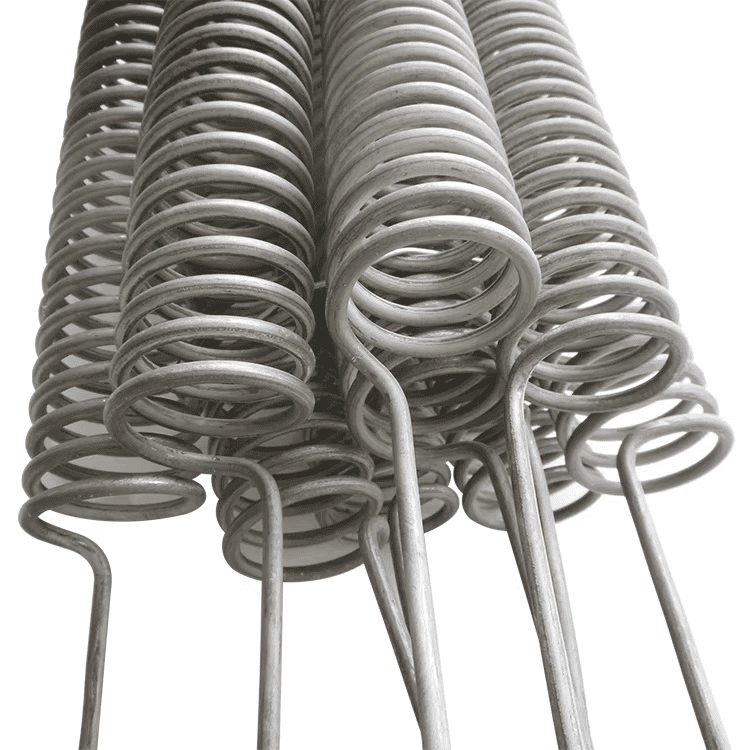
- Nickel-Chromium (NiCr 80/20, NiCr 70/30) Metallic Elements: Operating up to a maximum element surface temperature of approximately 1150°C to 1200°C in air (practical furnace chamber temperatures up to ~1050°C – 1100°C). In lower-temperature convection furnaces or sealed immersion/radiant systems, NiCr wire is also compacted into metal sheaths; for details on internal MgO compaction and wire metallurgy, see Inside a Tubular Heater: The Role of Swaged MgO and NiCr Resistance Wire.
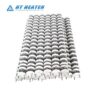
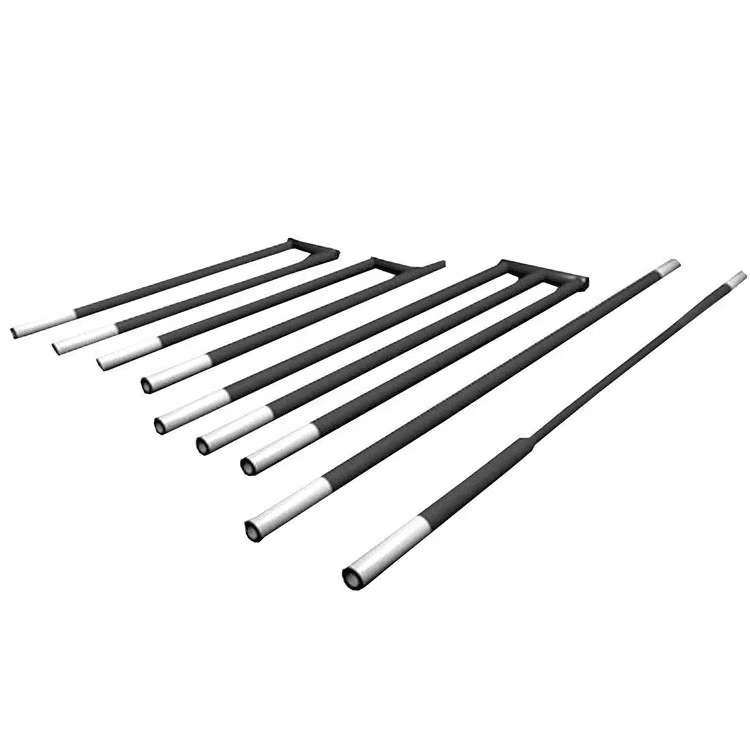
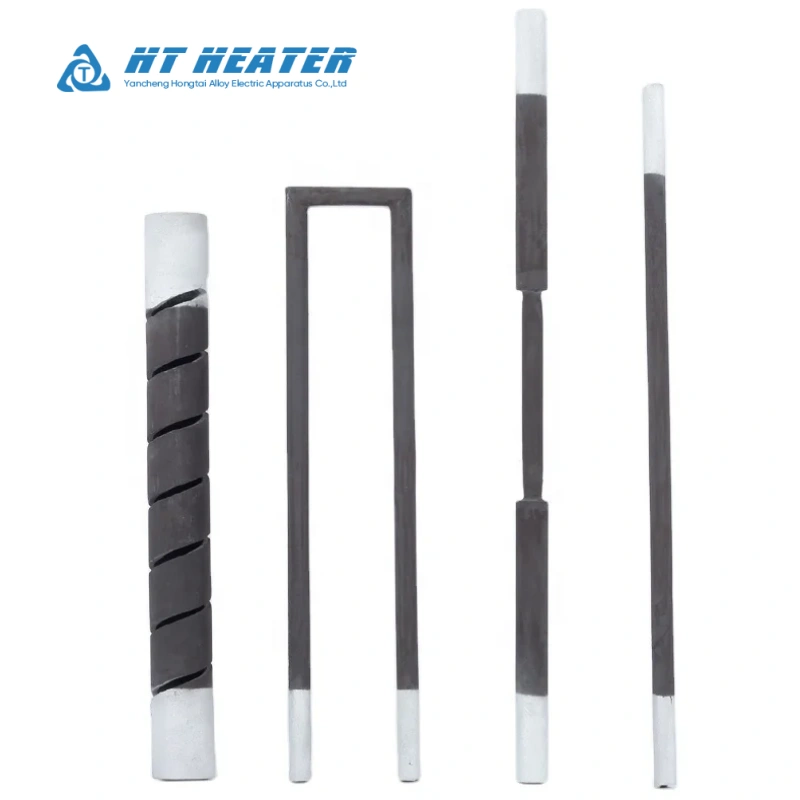
- Silicon Carbide (SiC) Elements: Recrystallized or reaction-bonded ceramic rods and spiral elements capable of element surface temperatures from 1000°C up to 1550°C – 1625°C in oxidizing air (chamber temperatures typically up to 1350°C – 1500°C).
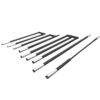
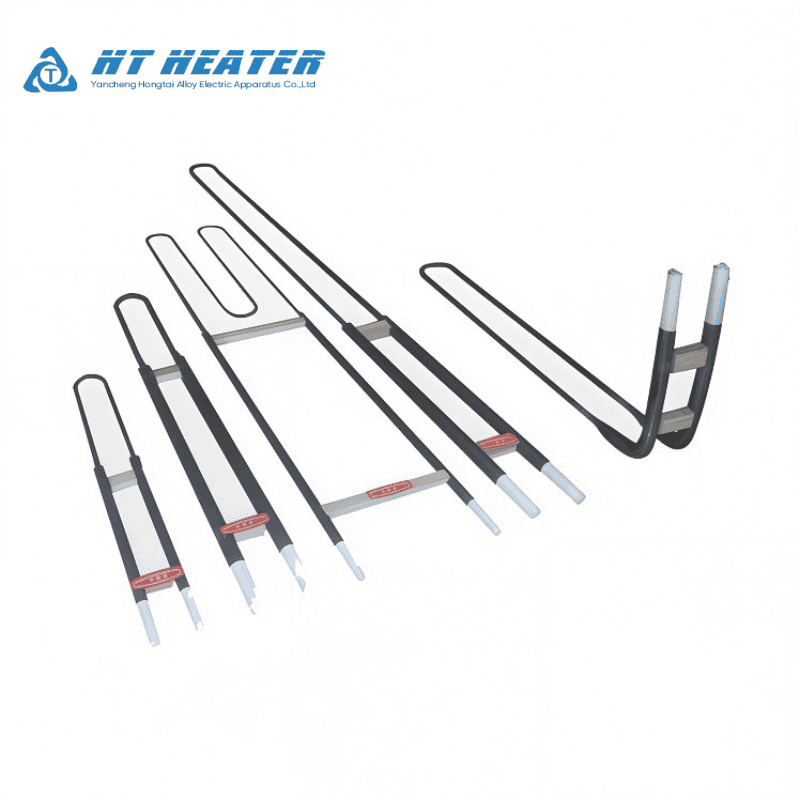
- Molybdenum Disilicide (MoSi₂) Elements: High-density cermet elements (typically U-, W-, or L-shaped) engineered for extreme high-temperature furnaces, achieving element surface temperatures up to 1700°C – 1850°C in air (chamber temperatures up to 1600°C – 1750°C).
1.1 Engineering Comparison Matrix: NiCr vs. SiC vs. MoSi₂
Note: Indicative temperature ranges below apply to clean oxidizing air. Reducing, vacuum, or corrosive atmospheres significantly alter allowable limits.
| Engineering Parameter | NiCr Metallic Wire / Strip | Silicon Carbide (SiC) | Molybdenum Disilicide (MoSi₂) |
|---|---|---|---|
| Max Element Temp (Air) | ~1150°C – 1200°C | ~1550°C – 1625°C | ~1700°C – 1850°C |
| Typical Chamber Temp | 300°C – 1050°C | 900°C – 1500°C | 1300°C – 1750°C |
| Protective Oxide Scale | Chromium Oxide (Cr₂O₃) | Silica (SiO₂) glass film | Silica (SiO₂) glass film |
| Resistance Aging | Negligible (Very stable) | High (Resistance increases with age) | Negligible (Non-aging resistance) |
| Temp Coefficient (TCR) | Slightly positive (Flat curve) | Negative (cold) → Positive (hot) | Steeply positive (R_hot ≈ 10–12 × R_cold) |
| Power Control Method | Contactors, SSR, or simple SCR | SCR + Multi-tap Transformer | Current-limiting phase-angle SCR + Transformer |
| Mechanical Ductility | High (Shock & vibration resistant) | Brittle (Sensitive to impact) | Brittle when cold; creep-prone when hot |
| Single-Element Replacement | Yes | Discouraged (Requires matched sets) | Yes (Can mix old and new in series) |
2.NiCr vs SiC: Transitioning from Metallic Wire to Ceramic Elements
In medium-to-high temperature heat treatment applications (850°C to 1200°C), engineers frequently weigh NiCr vs SiC. The decision hinges on mechanical environment, thermal cycling, and surface watt loading.
- Mechanical Robustness and Thermal Shock: NiCr metallic wire, ribbon, or rod is inherently ductile. It withstands mechanical vibration, furnace door slamming, and direct radiant or enclosed radiant-tube mounting without fracturing. SiC is a rigid ceramic; while it handles thermal cycling well, it has low tensile strength and requires careful mechanical support (such as free-floating ceramic sleeves) to prevent cracking during thermal expansion.
- Surface Watt Density and Heat Flux: Open SiC elements can operate at significantly higher surface watt densities than metallic coils at temperatures above 1000°C, allowing a more compact furnace chamber design. However, overloading any element accelerates surface oxidation. To understand how excessive watt density drives premature thermal degradation, consult our engineering guide: Tubular Heater Watt Density: Sizing Guidelines to Prevent Premature Burnout.
3.SiC vs MoSi2: High-Temperature Performance & Furnace Atmosphere
When designing kilns or sintering furnaces operating above 1300°C, the core evaluation shifts to SiC vs MoSi2. Both materials rely on forming a self-passivating silicon dioxide (SiO₂) quartz glass layer on their surface to prevent further oxidation of the base material, yet their thermodynamic behavior in different furnace atmospheres varies sharply.
- Oxidizing Atmospheres (Air): SiC slowly oxidizes over its service life, causing the element to gradually swell and increase in electrical resistance. Above 1500°C, SiC oxidation accelerates rapidly. Conversely, MoSi₂ develops a dense, self-healing SiO₂ glaze above 1000°C that remains remarkably stable up to 1700°C+, delivering much longer service life in ultra-high-temperature air furnaces.
- Reducing, Carburizing, and Endothermic Atmospheres:
- NiCr performs reliably in many nitrogen-based and endothermic atmospheres because its Cr₂O₃ layer remains stable at lower oxygen partial pressures. However, in weakly oxidizing or fluctuating carburizing atmospheres between 850°C and 1050°C, NiCr can suffer from “green rot” (simultaneous carburization and preferential chromium oxidation) unless protected inside a radiant tube.
- SiC and MoSi₂ experience reduced maximum operating temperatures in hydrogen, cracked ammonia, or low dew-point reducing gases because the protective SiO₂ film is reduced to volatile silicon monoxide (SiO).
- Low-Temperature “Pest” Oxidation in MoSi₂: If MoSi₂ elements are operated continuously between 400°C and 600°C in air without a pre-formed silica glaze, intergranular oxidation (“pesting”) can cause the element to disintegrate into powder. SiC and NiCr do not suffer from low-temperature pesting.
4.Electrical Characteristics and Power Control Architecture
A critical mistake in furnace heater selection is evaluating the heating element price in isolation from the electrical control panel. Each material imposes distinct demands on your SCR power regulators and transformers:
- NiCr (Flat Resistance Curve, Non-Aging): Because NiCr exhibits a nearly flat temperature coefficient of resistance (TCR) and negligible aging drift, it requires the simplest electrical architecture. Elements can be connected directly to line voltage via staged contactors, Solid State Relays (SSRs), or zero-cross SCR controllers (for control architecture details, see Engineering Duct Heater Banks: Calculating CFM, Wattage, and Temperature Rise).
- SiC (Progressive Resistance Aging): As SiC oxidizes during operation, its electrical resistance gradually increases—often doubling or tripling before end-of-life. To maintain constant rated furnace power (P = V² / R) as R rises, the power supply must provide a variable voltage reserve (typically 1.5× to 2× the initial nominal voltage) using a multi-tap transformer paired with an SCR power controller.
- MoSi₂ (Steep TCR, Non-Aging): MoSi₂ does not age electrically; its resistance remains constant over years of operation. However, its cold resistance at room temperature is roughly 10 to 12 times lower than its resistance at operating temperature. Applying full voltage to a cold MoSi₂ bank will cause a massive overcurrent trip or shatter the elements. It strictly requires a step-down transformer and a phase-angle fired SCR controller with active current-limiting ramp logic.
5.Maintenance, Replacement Costs, and Selection Checklist
Beyond initial capital expenditure (CAPEX), heat treatment equipment manufacturers must evaluate maintenance workflows and replacement costs (OPEX):
- NiCr Maintenance: Lowest initial cost and high mechanical durability. Failed coil sections can occasionally be welded/spliced in the field as a temporary measure, or replaced cleanly without recalibrating power transformers.
- SiC Replacement Costs: Because SiC resistance increases with operating hours, you generally cannot wire a brand-new (low-resistance) SiC element in series with aged (high-resistance) elements—the aged elements will absorb disproportionate voltage and overheat, or the new element will underperform. Operators must keep resistance-matched spares or replace entire circuit banks.
- MoSi₂ Replacement Costs: Highest initial element and power-control cost, but because MoSi₂ resistance does not age, a single broken element can be swapped out individually without replacing the rest of the bank. In top-mounted vertical furnaces, MoSi₂ elements can even be replaced while the furnace remains hot.
6.Preliminary Furnace Heater Selection Checklist
When preparing your furnace design specification, verify the following parameters:
- Thermal Profile: Continuous chamber temperature, maximum boost temperature, and ramp rate (°C/min).
- Atmosphere Composition: Air, nitrogen, hydrogen, endothermic gas, carburizing carbon potential, or vacuum level.
- Mounting Orientation: Horizontal vs. vertical hanging (critical for MoSi₂ high-temperature creep resistance).
- Power Supply Budget: Availability of step-down/multi-tap transformers and current-limiting SCR controllers.
Partner with Hongtai for Engineered Industrial Heating Solutions
Achieving dependable thermal uniformity and extended furnace campaign life requires mastering high-temperature metallurgy, watt density balance, and electrical control integration.Hongtai Heater Factory manufactures custom industrial furnace heating elements—from precision NiCr resistance coils and radiant tubular assemblies to high-temperature furnace heating solutions—engineered precisely to your temperature, atmosphere, and voltage specifications.
- Consult our Engineers: Send your wiring schematics to the Hongtai Heater Factory technical team for a free design review.
- Visit Us:: www.hongtai-heater.com