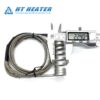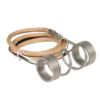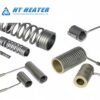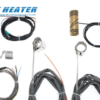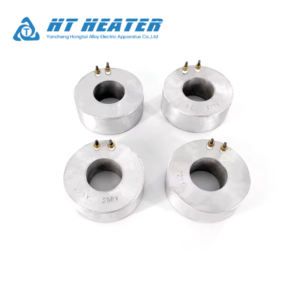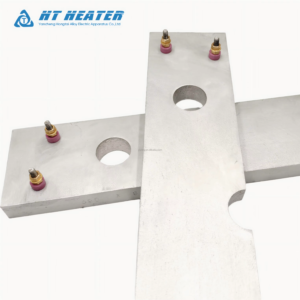
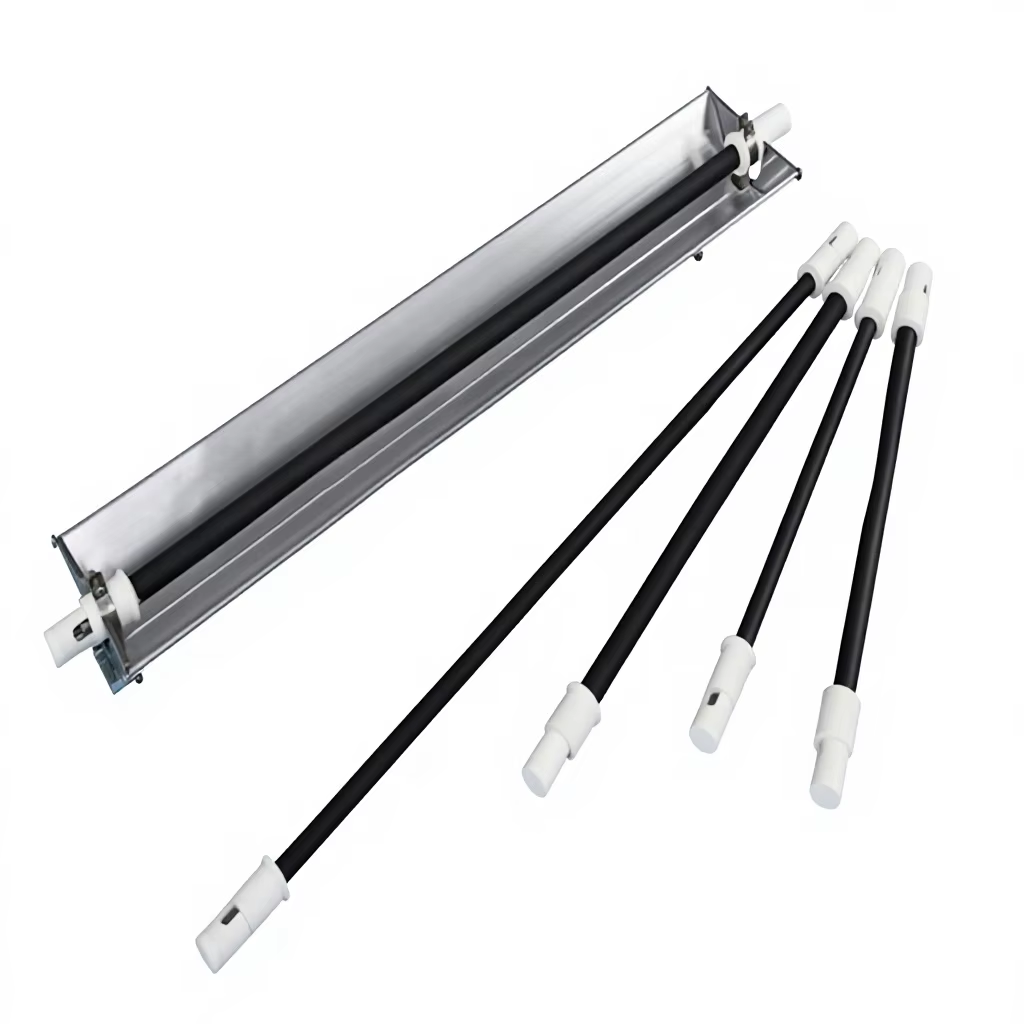
Blackbody ceramic tube heater address a critical thermal bottleneck inherent to standard heating elements in advanced heat treatment and R&D environments—namely, the marked decline in radiative efficiency under extreme temperatures. Whether applied in specialized vacuum furnaces, aerospace material testing, or semiconductor rapid thermal processing (RTP), these devices transcend the limitations of conventional resistance heating by functioning as near-ideal radiative emitters. Their engineering objective is not merely to deliver high watt density, but to approximate the spectral behavior of a theoretical perfect blackbody, thereby unlocking superior thermal transfer performance where convective mechanisms are negligible or absent.
1. The Physics of High Emissivity Heating
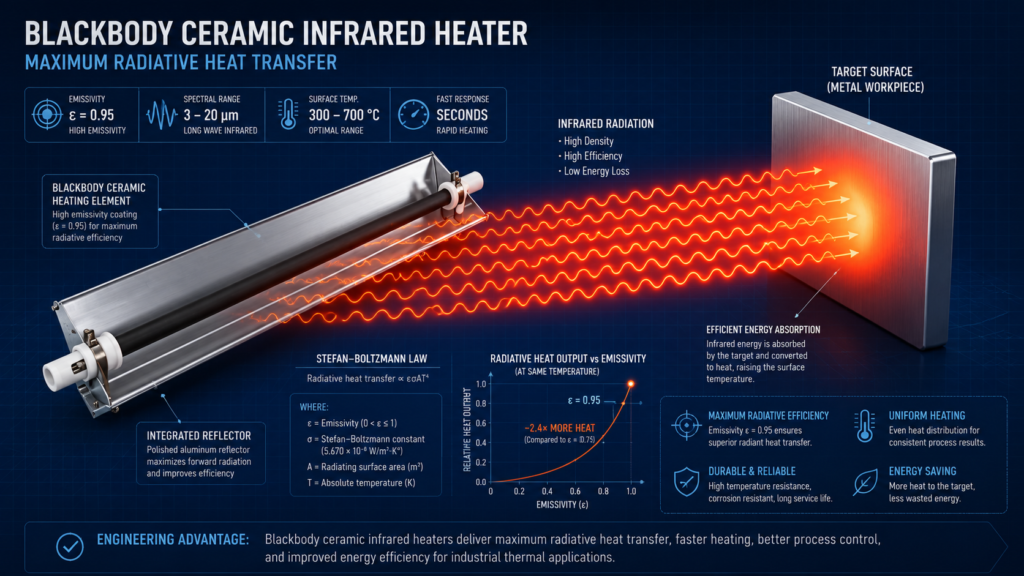
To understand the value of this technology, we must look at the thermodynamics of thermal radiation. A “blackbody” is an idealized physical body that absorbs all incident electromagnetic radiation and radiates energy with 100% efficiency, meaning its emissivity ($\epsilon$) equals 1.0.
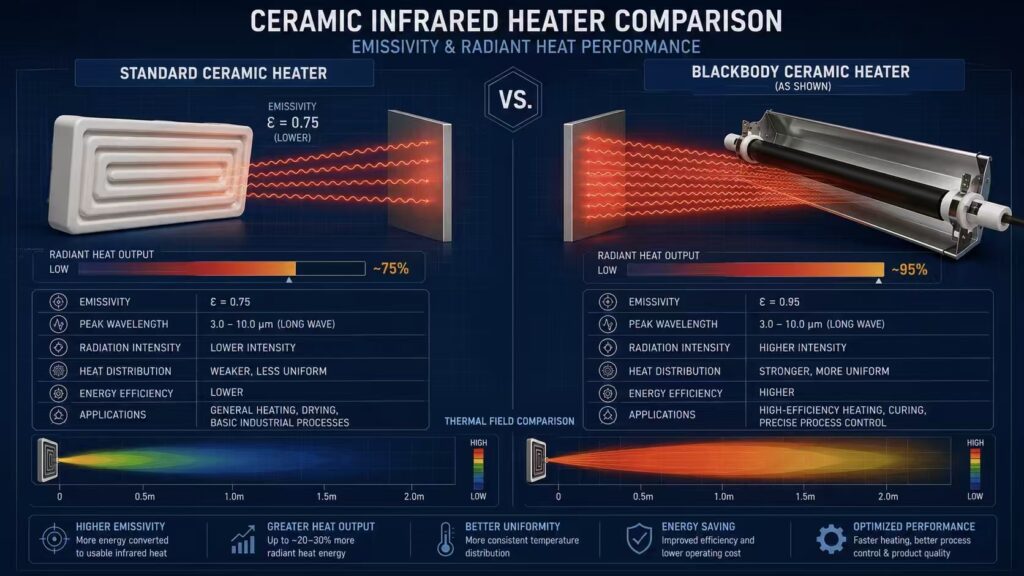
While a true perfect blackbody is theoretical, a high emissivity heater is engineered to aggressively approach this limit, typically achieving an $\epsilon$ value between 0.92 and 0.96. The impact of this higher emissivity is defined by the Stefan-Boltzmann Law:
j* = εσT4
(Where j* is radiant emittance, ε is the emissivity of the material, σ is the Stefan-Boltzmann constant 5.67 x 10⁻⁸ W \cdotm-2K-4, and T is absolute temperature in Kelvin).
Because radiant power increases to the fourth power of absolute temperature, even a minor increase in emissivity—for example, upgrading from a standard 0.75 ceramic to a 0.95 blackbody material—yields a massive, non-linear increase in net radiant thermal output at high processing temperatures.
2. Material Engineering of the Blackbody Infrared Element
Standard Alumina or Steatite ceramics are excellent electrical insulators but possess moderate emissivity that naturally degrades at elevated temperatures. They often reflect back a portion of the internal resistance wire’s energy, trapping heat within the core and leading to premature element failure.
To manufacture a true blackbody infrared element, our metallurgical engineering team utilizes high-purity ceramic substrates doped with specific transition metal oxides (such as Iron, Cobalt, Manganese, or Copper oxides) and select rare-earth elements.
This proprietary microstructural engineering process achieves two critical goals:
- Spectral Broadening: It darkens the ceramic matrix throughout its cross-section, allowing it to highly absorb the short-wave energy from the internal alloy wire and re-radiate it efficiently outward.
- Thermal Shock Resistance: The modified crystal lattice structure provides superior resistance to micro-cracking during rapid thermal cycling.
3. Core High-Temperature Applications
Where does a blackbody ceramic tube heater truly justify its engineering value over standard industrial options?
- Vacuum Heat Treatment Furnaces: In a deep vacuum environment, convective heat transfer is exactly zero; the process relies 100% on radiation. High emissivity tubes ensure rapid, uniform, and highly efficient heating of metal alloys without relying on air as a medium.
- Semiconductor Rapid Thermal Processing (RTP): Silicon wafers require extremely rapid temperature ramp-ups (often hundreds of degrees per second). The high radiant flux of blackbody emitters provides the aggressive yet precise thermal control required for oxidation and annealing.
- Aerospace Component Testing: Simulating the extreme thermal loads of atmospheric re-entry requires durable emitters that maintain consistent radiation output without structural degradation under prolonged stress.
4. Blackbody Ceramic Tube Heater vs. Standard Ceramic Tube
For procurement and system design, here is a direct comparison of how the advanced material performs against standard industrial ceramic tubes:
| Engineering Parameter | Standard Ceramic Tube (Alumina) | Blackbody Ceramic Tube Heater |
| Spectral Emissivity ($\epsilon$) | 0.65 – 0.80 (Degrades at high temp) | 0.92 – 0.96 (Stable at high temp) |
| Max Operating Temperature | Up to 1000°C | Up to 1300°C+ (Material dependent) |
| Radiant Efficiency | Moderate | Maximum achievable |
| Internal Heat Trapping | Higher risk of wire overheating | Low (Efficient outward radiation) |
| Primary Use Case | Standard industrial drying / heating | Vacuum furnaces, RTP, R&D testing |
Elevate Your Thermal Processing with HT-Heater
When your process reaches the limits of standard materials, custom-engineered radiation is the only path forward. To ensure your entire thermal loop is optimized for these extreme environments, we recommend exploring our related technical resources:
- Optimizing High-Temperature Sensing: If you are designing a vacuum chamber that utilizes blackbody emitters, accurate temperature measurement is critical. Read our guide, “Why Upgrade from K-Type to N-Type Thermocouples? (Technical Analysis)“, to learn how to prevent sensor drift at extreme processing temperatures.
- Matching Sensor Durability: Ensure your thermocouple can survive the same harsh environments as your heater. Review our breakdown on “Sheath Material Selection: SS304 vs. Incoloy 800” to pair the correct protective material with your high-temperature application.
- Custom Emitter Solutions: Need to upgrade your current furnace emitters? Contact the HT-Heater engineering team to request material datasheets and discuss custom dimensions for your next blackbody ceramic tube heater integration.