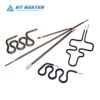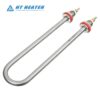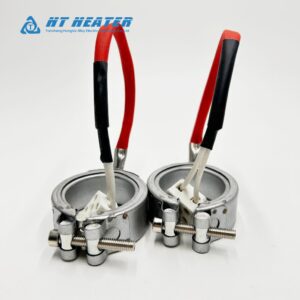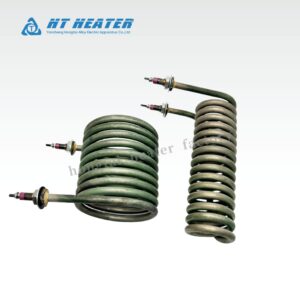
Executive Summary
For US-based industrial manufacturers, the Total Cost of Ownership (TCO) for heating elements extends far beyond the initial unit price. It encompasses operational lifespan, energy efficiency, and logistics integrity.
This case study details how Hongtai (HT-Heater) addressed a critical failure rate in commercial frying equipment for a Texas-based client. We delivered a solution that extended component life by 200% while maintaining a 0% breakage rate during trans-Pacific shipping, proving that the right engineering partner is crucial for supply chain stability.
The Challenge: Thermal Fatigue in 480V Systems
In Q3 2024, a Tier-1 manufacturer of commercial kitchen equipment in the United States approached us with a recurring critical failure. Their existing tubular heaters, sourced from a generic stock supplier, were failing on average every 90 days.
The Symptom The heaters were deployed in large-scale oil fryers running on 480V 3-Phase power. The elements were consistently burning out (open circuit) or shorting to the sheath at the bend points.
The Diagnosis Upon receiving the failed samples at our lab, our engineering team identified two root causes:
- Inappropriate Watt Density: The stock heaters were rated at 45 W/in², which is acceptable for water heating but excessive for oil applications where sludge buildup creates significant thermal lag.
- Material Degradation: The standard Stainless Steel 304 sheath could not withstand the rapid thermal cycling (On/Off switching) and corrosive fatty acids present in the oil, leading to stress corrosion cracking.
Key Insight: Standard “off-the-shelf” heaters often fail in specialized industrial applications because they prioritize general versatility over specific environmental matching.
The Engineering Solution: Material and Structural Optimization
To solve the “90-day burnout” problem, we moved from a simple sales approach to a custom engineering approach. We proposed a revised specification tailored strictly to the client’s operational reality.
1. Material Upgrade: Incoloy 840 vs. SS304
We switched the sheath material from Stainless Steel 304 to Incoloy 840.
- Evidence: Incoloy 840 is a nickel-iron-chromium alloy specifically designed for oxidation resistance at high temperatures. Unlike SS304, which degrades rapidly above 425°C (800°F) in carbon-rich environments, Incoloy 840 remains stable and maintains superior dielectric strength.
- Application: This ensures the heater sheath remains intact even when oil carbonizes on the surface, preventing internal arc-overs.
2. Watt Density Calibration
We redesigned the internal coil pitch to lower the watt density from 45 W/in² to 30 W/in² without changing the physical footprint of the heater.
- Evidence: By increasing the total length of the internal NiCr resistance wire, we distributed the heat load more evenly.
- Result: This reduction lowers the surface temperature of the element relative to the oil, significantly reducing carbon buildup (coking) and thermal stress.
3. Cold Zone Extension
US safety standards (UL 499) require specific clearance for terminal connections. We extended the non-heated “cold zone” by 2 inches, ensuring the terminal housing remains below 100°C to protect the wiring insulation from heat damage.
Logistics and Delivery: The Hidden Risk Factor
For US buyers importing from Asia, the biggest risk is often not manufacturing defects, but shipping damage. Tubular heaters—especially those exceeding 40 inches in length—are prone to bending or internal MgO powder displacement during LCL (Less than Container Load) transit.
The Hongtai Logistics Standard We implemented a strict packaging protocol for this Texas shipment to ensure the “Straightness Tolerance” was maintained upon arrival.
- Custom Wood Crating: Instead of standard cardboard, we utilized fumigated, export-grade plywood crates with a minimum thickness of 15mm.
- Internal Bracing: Heaters were not simply stacked. We used slotted foam dividers to isolate each layer. This prevents metal-on-metal abrasion and absorbs the high-frequency vibrations typical of ocean freight.
- Humidity Control: To prevent moisture absorption (which lowers insulation resistance), all heaters were vacuum-sealed in heavy-duty polyethylene bags with desiccant packs before crating.
Logistics Outcome: Upon arrival in Houston, the client reported zero deformation across a batch of 1,500 units.
Validation and Results
Before shipment, every single unit underwent a rigorous testing protocol to meet US electrical standards:
- Hi-Pot Test: 1500V for 1 second (Leakage current < 0.5mA).
- Insulation Resistance: > 500 MΩ at 500V DC.
- Dimensional Check: Tolerance controlled within ±1% of specified length.
Field Performance Data (6-Month Follow-up)
- Lifespan: The pilot batch has surpassed 180 days of continuous operation with no failures.
- Efficiency: The heat transfer remains consistent due to reduced carbonization on the Incoloy sheath.
- ROI: Although the unit cost of the custom Incoloy heater was 15% higher than the stock SS304 version, the elimination of two maintenance cycles saved the client approximately $12,000 in annual labor and downtime per machine.
Conclusion
This project validates a core principle of industrial procurement: Specification beats Standardization.
For US manufacturers relying on heating elements, the choice is not just about price per unit. It is about choosing a partner who understands the physics of heat transfer and the rigors of trans-Pacific logistics.
At Hongtai, we do not just sell heaters; we engineer longevity.
Frequently Asked Questions (Technical & Logistics)
Can you manufacture heaters compliant with UL standards?
Yes. Our manufacturing process aligns with UL 499 standards for electric heating appliances. We use UL-certified component materials (including MgO powder and sealing agents) to ensure your final equipment can pass certification testing.
What is the typical lead time for custom orders to the United States?
For custom specifications (non-stock), production typically takes 7-10 working days. Shipping options range from 4-6 days (Air Express) for urgent maintenance parts to 25-30 days (Ocean Freight) for bulk production orders. We also offer DDP (Delivered Duty Paid) services to handle all customs clearance for you.
How do you verify the material composition?
We provide Material Test Reports (MTR) with every shipment. This includes spectrographic analysis confirming the Nickel and Chromium content matches the specification (e.g., Incoloy 840 or 800), ensuring you receive exactly what you specified.
Ready to Optimize Your Heating System?
If your current heating elements are failing prematurely or if you are facing logistics headaches with your current supplier, contact our engineering team. We offer a free specification review to help you find the right balance between performance and durability.