Introduction & Context
In a PET blow molding line running at 30,000 bottles per hour, a heating delay of just 3 seconds doesn’t just mean a pause—it means hundreds of preforms are rejected. In high-stakes manufacturing, Time is Thermodynamics.
When your production line moves faster than a ceramic heater can think, you need the Formula 1 engine of the thermal world: the Halogen Quartz Heating Tube.
What is a Halogen Quartz Heater?
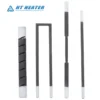
It is a sealed quartz emitter containing a tungsten filament and filled with halogen gas. Operating at a color temperature of 2400K–2500K, it generates peak radiation at 1.0μm (Short-Wave). Its defining engineering characteristic is extremely low thermal inertia, allowing it to reach 100% power in under 1 second.
Common Applications:
- PET Bottle Blowing: Deep penetration for uniform wall thickness.
- Epoxy Curing: Fast, high-intensity heat.
- Metal Annealing: Rapid surface heating.
Ensure you understand the broad spectrum of emitter choices in our pillar guide: Industrial Quartz Heating Tubes: The Complete Engineering Guide to Spectral Matching.
The Physics of Short-Wave: Why Choose Halogen?
1. Depth of Penetration (Volumetric Heating)
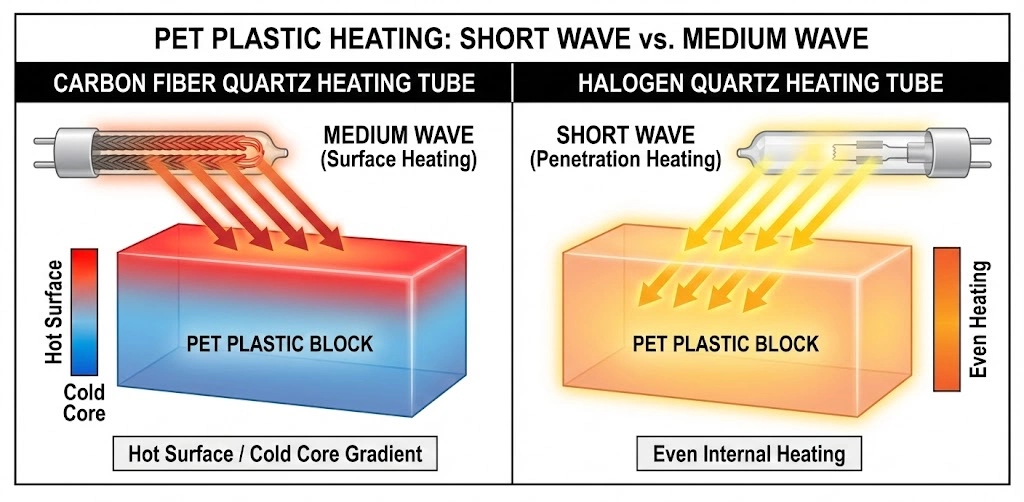
Not all heat is created equal. The primary reason engineers specify Halogen (Short-Wave) over Carbon Fiber (Medium-Wave) isn’t just speed—it’s penetration.
Short-wave photons act like high-velocity needles. Unlike medium-wave radiation, which is often absorbed by the very first micron of a surface (creating a skin effect), short-wave radiation at 1.0μm can transmit through transparent layers (like clear plastics or glass) and penetrate deep into the material substrate.
For a thick PET preform, this is critical. You don’t just want to heat the “skin” of the plastic; you need to soften the entire core so it stretches uniformly without tearing. This is Volumetric Heating.
2. The Halogen Cycle: The Secret to 5000 Hours
A standard tungsten light bulb burns out quickly because the tungsten evaporates and deposits on the glass (blackening).
In our industrial heaters, we use the Halogen Cycle. As tungsten evaporates at high temperatures (2400K), it reacts with the halogen gas to form tungsten halide. This compound circulates back to the filament, where the intense heat dissociates it, redepositing the tungsten back onto the wire.
- Result: The quartz tube remains crystal clear for its entire rated life of 5000 hours, ensuring consistent IR output from Day 1 to Day 500.
Technical Specifications: Pushing the Tungsten Limits
1. Thermal Inertia (Speed Control)
Halogen tubes are the only choice for intermittent or synchronized processes.
- Response Time: 0% to 100% output in < 1 second.
- Engineering Value: If your conveyor belt stops unexpectedly, the heaters can cut off instantly. This prevents the “fire hazard” scenario common with ceramic heaters, which stay hot for minutes after power cut. It also saves up to 40% energy during idle cycles.
2. Color Temperature & Watt Density
- Color Temp: 2400K – 2500K (Bright White/Yellow light).
- Watt Density: High intensity, often exceeding 100 W/cm. This effectively delivers high energy into small areas.
3. The Achilles’ Heel: Inrush Current
If there is one thing that kills halogen systems, it is Inrush Current.
Tungsten has a Positive Temperature Coefficient (PTC). When cold (room temperature), its resistance is incredibly low.
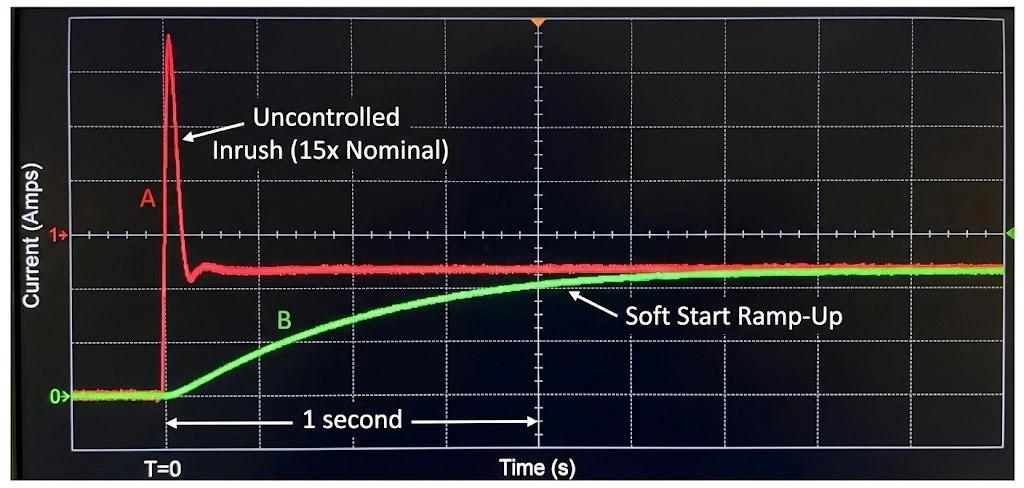
- The Danger: When you flip the switch, the initial current surge can be 10 to 15 times the rated operating current. A 20A heater might pull 250A for a few milliseconds.
- The Solution: You cannot use simple mechanical contactors. You must use a Thyristor Power Controller (SCR) with a Soft Start (Phase Angle Firing) feature. This ramps up the voltage over 2-3 seconds, gently warming the filament and preventing the surge.
The Killer Application: PET Bottle Blowing
In the PET industry, the Halogen heater is the engine. But precision is key to preventing defects like “Pearlescence” (whitening due to overheating) or “Bottle Bursts” (due to cold spots).
Vertical Zone Control
A standard PET reheating oven uses a “Tunnel” of halogen lamps. To ensure the bottle has a thick bottom and a thin neck, engineers use Zone Control.
- Implementation: We stack 6–10 short halogen tubes vertically. Each tube is controlled by an individual voltage regulator.
- Profile: You might run the bottom tube at 220V (high heat for the base) and the neck tube at 110V (low heat to prevent deformation).
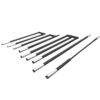
- Customization: We manufacture these tubes in precise lengths (e.g., Voltage: 110-380V, Length: 100-3000mm) to match your specific mold height.
Selection & Customization: Beyond the Standard Tube
1. Reflector Technology: Gold vs. Ceramic
Standard gold reflectors are excellent for directional efficiency (focusing heat forward). However, halogen tubes run hot—surface temperatures can exceed 800°C.
- Standard Gold: Risk of degradation if cooling is insufficient.
- QRC / Ceramic White: For high-density halogen applications, we often recommend a Ceramic White coating (high-temperature nano-ceramic). It withstands temperatures up to 1000°C without peeling, ensuring longevity even in tight, enclosed ovens.
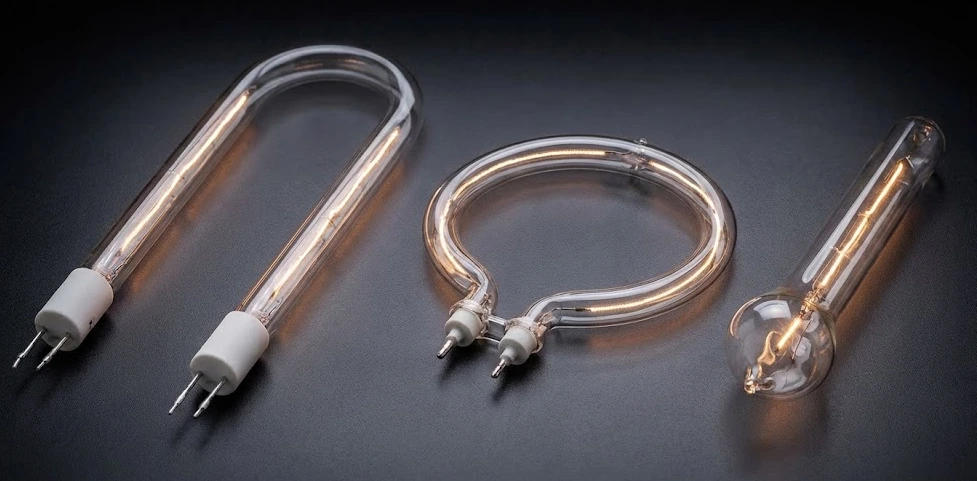
2. Custom Shapes
Not every product is a flat sheet. We bend quartz to fit your geometry.
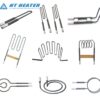
- U-Shape: Connections on one side for easy wiring.
- Omega (Ω) Shape: Ideal for pipe heating.
- Pear Shape: Optimized for specific reflector profiles.
Maintenance Checklist: 5 Golden Rules for Longevity
To get the full 5000 hours from your halogen emitters, follow these rigid maintenance protocols:
- Never Touch: We cannot stress this enough. Oils from bare hands cause devitrification (white spots) that lead to glass failure. Always use cotton gloves.
- Horizontal Only: At 2400K, tungsten wire becomes ductile. If installed vertically or at an angle >15°, the filament will sag and short out against the glass. Note: If you need vertical heating, specify our “Pinched” or “Support Ring” models.
- Clean Reflectors: A dirty reflector absorbs heat instead of reflecting it. This raises the ambient temperature around the tube, causing the seal to overheat and fail.
- Voltage Check: Halogen is sensitive. Running a 230V lamp at 240V (just 4% over) reduces life by 50%. Ensure your supply is regulated.
- Soft Start is Mandatory: Verify your SCR controller is set to a ramp time of at least 300ms to 1 second.
FAQ: Common Engineering Questions
Can I use a halogen heater for drying water-based paint?
You can, but it’s not the most efficient method. Water absorbs energy best at medium wavelengths (2.5–3.0μm). Halogen (1.0μm) will pass through the water and heat the metal substrate. While this works (heating from the inside out), a Carbon Fiber heater would be more energy-efficient for water evaporation.
What is the difference between Ruby and Clear halogen tubes?
It is purely about glare reduction.
Clear: 100% transmission efficiency. Best for closed machines where no one looks at the light.
Ruby (Red): Filters out the blinding white visible light, reducing eye strain for operators. The heat output is slightly lower (~5-10% loss), but the working environment is much safer for human vision.
Why do my halogen tubes fail frequently upon startup?
If they blow immediately when turned on, it is 90% likely an Inrush Current issue. You are likely using a mechanical contactor or a Solid State Relay (SSR) without a soft-start ramp. Switching to a Phase-Angle SCR will solve this immediately.
Conclusion: Speed vs. Control
If your manufacturing process demands speed, synchronization with robotics, or deep penetration into plastics, Halogen Short-Wave is not just an option—it is the only viable engineering choice.
But remember: High power demands high control. Do not plug these Formula 1 engines into a standard wall switch.
Don’t let inrush current kill your system.
Talk to Hongtai’s engineers today. We will help you size the correct SCR Power Controls and Halogen Emitters to ensure your line runs fast—and lasts long.