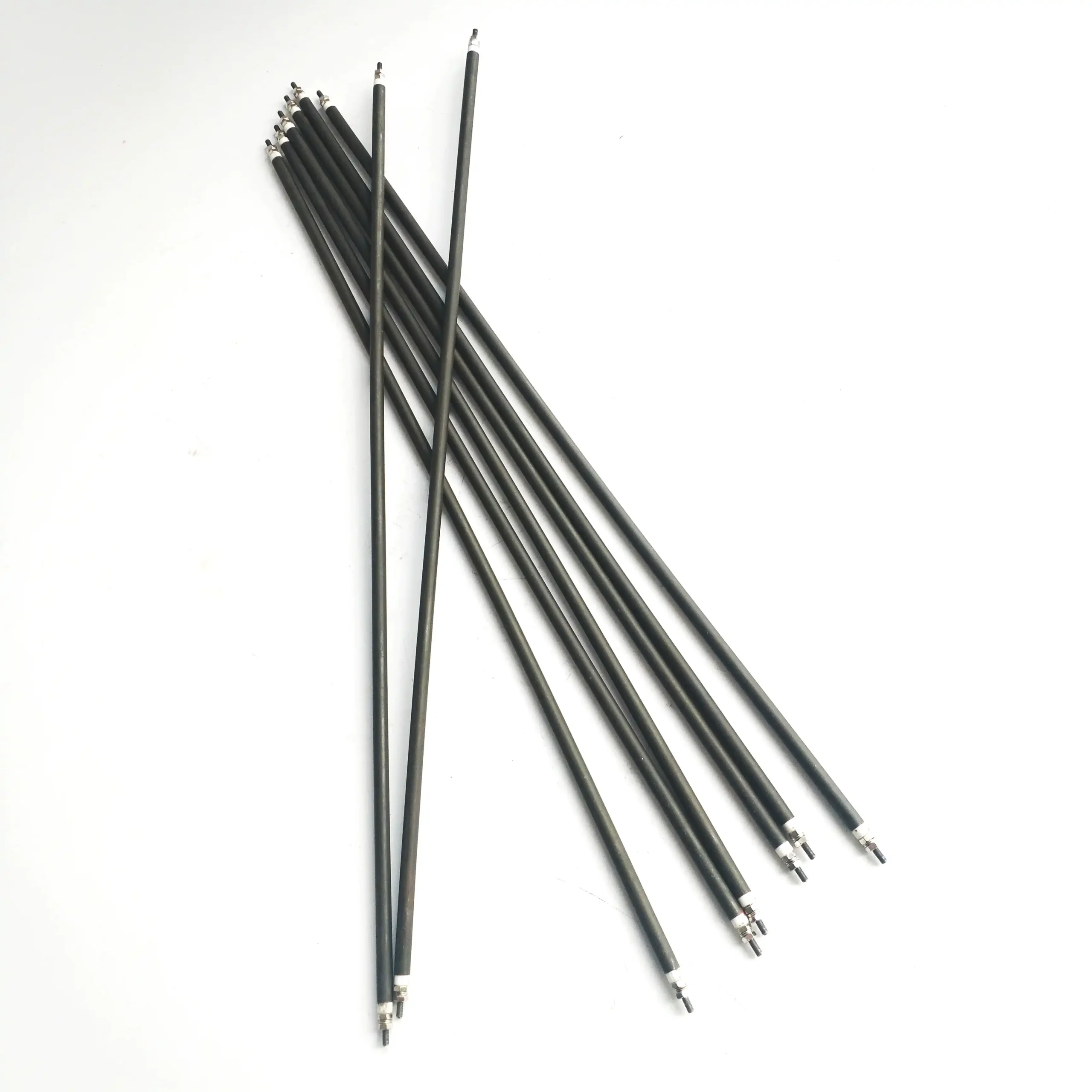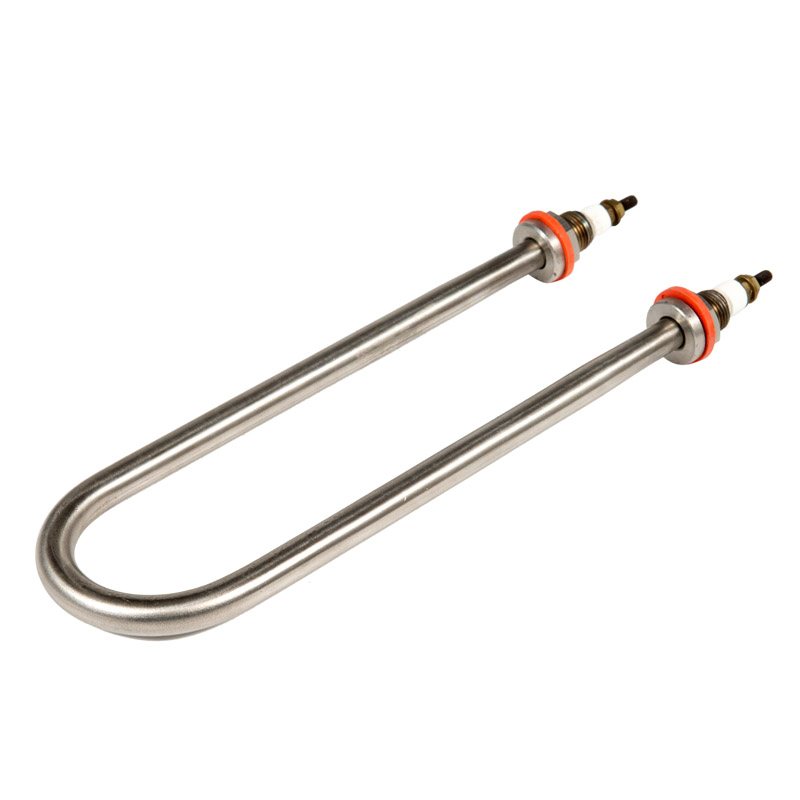


Designed for high-efficiency heat transfer in natural and forced convection environments, these finned tubular air heaters feature a rugged construction suitable for demanding industrial applications. The mechanically-bonded continuous fin design ensures maximum surface area contact and prevents fin vibration even at high air velocities.
-
Tube Diameter: 6mm, 8mm, 10mm, 12mm, 14mm, 16mm, 18mm, 20mm.
-
Voltage Options: 120V, 208V, 240V, 480V (Special voltages available).
-
Fin Construction: Mechanically-bonded continuous fin (Standard SUS304).
-
Max Sheath Temperature: 750°F (400°C) for Steel; 900°F (480°C) for Stainless Steel/Incoloy.
-
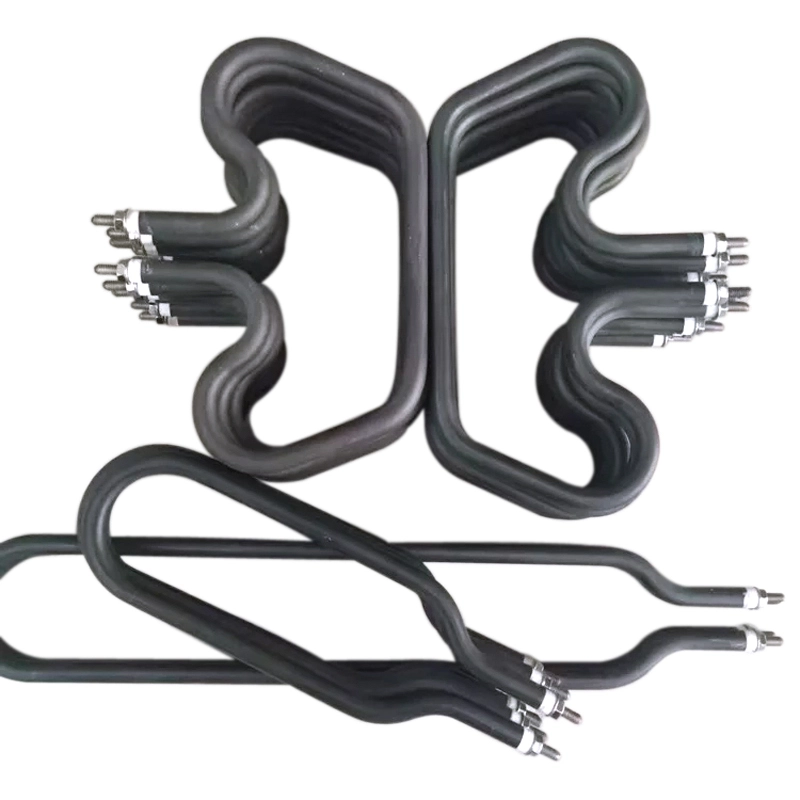
Configurations: Straight, U-Type, W-Type (M-Bend), Round/Coil.
-
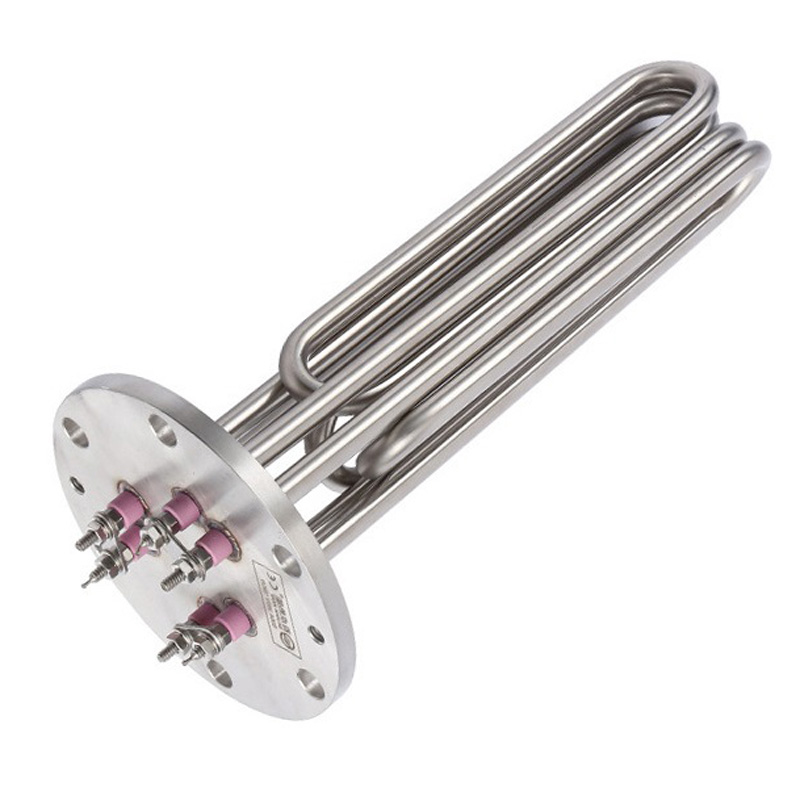
Mounting: Threaded steel terminals or threaded studs with mounting bushings.


SECTION 1: Technical Specifications & Dimensions
The following table outlines the standard engineering parameters for our finned tubular air heaters. Customization is available to meet specific application needs.
| Parameter | Standard Specification | Customizable Options |
| Sheath Material | Stainless Steel / Steel |
Incoloy / Custom Alloys |
| Fin Material | SUS304 (Stainless Steel) |
Other fin materials available |
| Tube Diameters | 6mm – 20mm |
– |
| Voltage | 120V, 208V, 240V, 480V |
Special voltages available |
| Max Temperature | 400°C (Steel) / 480°C (SS) |
– |
| Fin Bonding | Mechanically-bonded |
– |
| Terminations | Threaded Steel Terminal |
Threaded Stud with Mounting Bushings |
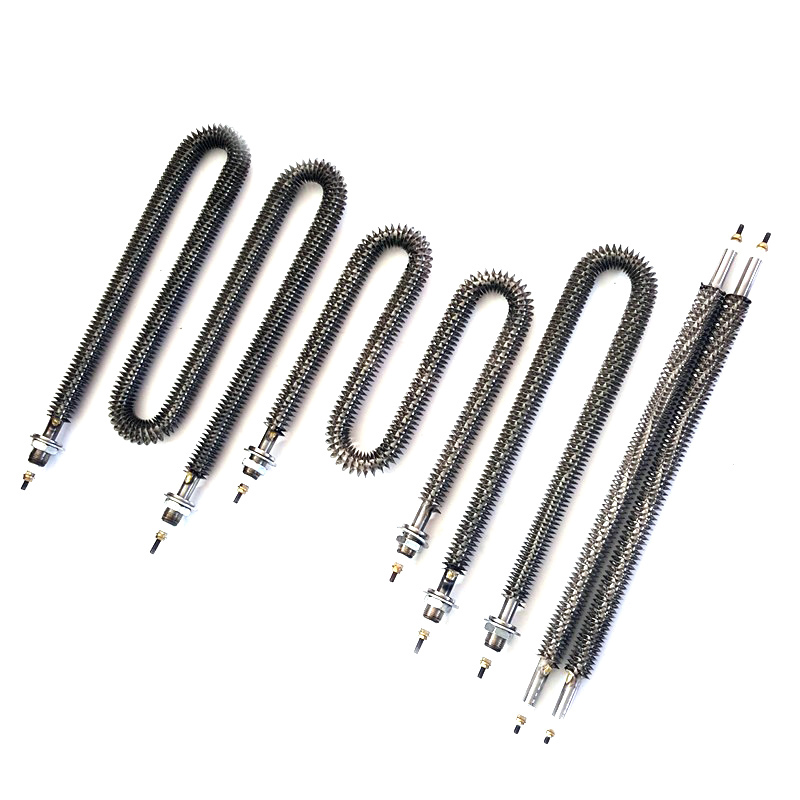
Standard Formations
Figure 1: Standard factory formations include Straight Length, “U” Bend, and “M” Bend (W-Type) configurations. Custom bending (Round type, etc.) is available per CAD drawings to fit specific duct dimensions.

SECTION 2:Industrial Applications
These heaters are specifically engineered for environments requiring increased heat transfer surface area. Common applications include:
-
Forced Convection Heating: Air handling units and HVAC systems.
-
Process Gas Heating: Industrial gas heating systems.
-
Industrial Drying: Ovens and drying cabinets requiring uniform heat distribution.
-
Load Banks: Resistive load testing equipment.
SECTION 3:Installation & Wiring Guide
The heaters are designed with rugged construction for versatility in mounting.
-
Mounting: Standard units often utilize threaded studs with mounting bushings, allowing for secure bulkhead installation through duct walls or terminal enclosures.
-
Orientation: To prevent sagging and ensure uniform heat dissipation, supports are recommended for long straight lengths or complex “M” bends.
-
Wiring: Terminals should be kept in a cool zone (outside the heated air stream) to protect the electrical connection.
SECTION 4:Why Choose Mechanically-Bonded Fins?
Our tubular air heater utilizes a mechanically-bonded continuous fin rather than a loose or spot-welded design.
-
Vibration Resistance: This bonding method secures the fin to the sheath, preventing displacement or rattling vibration caused by high air velocities in forced convection systems.
-
Thermal Efficiency: The tight mechanical bond eliminates air gaps between the fin and the tube, assuring excellent heat transfer from the element to the air stream.
SECTION 5: FAQ
Q: What is the benefit of using a finned tubular air heater over a standard tubular heater?
A: Finned heaters provide a significantly larger surface area compared to standard tubular elements. This allows for increased heat transfer capabilities, making them more efficient for air and gas heating applications where rapid heat exchange is required26.
Q: Can you manufacture custom shapes beyond the standard U and M bends?
A: Yes. While our standard factory formations include Straight, “U” Bend, and “M” Bend, we can customize the heater shape to meet specific application needs, including Round types and complex geometries27272727.
Q: What are the temperature limitations for these heaters?
A: The maximum sheath temperature depends on the material selected. Steel sheath models are rated for up to 750°F (400°C), while Stainless Steel or Incoloy models can operate up to 900°F (480°C)28.
FOR MORE INFORMATION:
The 2026 Engineering Guide to Tubular Heaters: Selection, Customization, and Efficiency